Cleaning · 10 min read
Slippery Patios, Paths and Decking in Winter: Safety, Cleaning and Prevention
By House of Horticulturists · 7 November 2026
Every winter, garden surfaces that felt perfectly safe in summer turn treacherous. A film of algae on a patio, a layer of wet leaves on a path, or a skin of ice on decking can cause a nasty fall, particularly for older people, children and anyone carrying something. The good news is that slippery surfaces are largely preventable. Understanding what makes them slippery, cleaning them properly and safely, and making a few changes to drainage, light and planting can keep paths, patios and decking safe through the coldest months. This guide explains the causes, the safest cleaning and de-icing methods, and how to prevent the problem returning.
Why garden surfaces become slippery in winter
Several things combine in winter. Algae and moss thrive on damp, shaded surfaces and form a slick film that's often hard to see. Wet leaves rot into a greasy layer, particularly on paths and steps. Frost and ice form on cold, exposed surfaces overnight, and low sun means shaded areas stay damp all day.
Some surfaces are naturally more slippery than others. Smooth, polished stone and weathered timber can be treacherous when wet, while textured porcelain, riven stone and grooved decking give better grip. Poor drainage makes everything worse, since surfaces that hold water stay damp longer.
Where problems usually start
- ›Shaded or north-facing patios and paths that rarely dry out.
- ›Steps and slopes, where a slip has more serious consequences.
- ›Areas beneath trees, where leaves and drips keep surfaces wet.
- ›Decking, where algae and mould build up on timber and composite alike.
- ›Spots near drains, gutters or downpipes where water overflows.
- ›Surfaces that have never been cleaned or have poor falls so water pools.
Check your surfaces before winter bites
Walk your garden and look for green or dark patches, mossy edges, leaf build-up, uneven or loose paving and boards, and places where water collects. Pay particular attention to steps, the route to the back door, and anywhere you carry things regularly. Dealing with these now is far easier than after the first hard frost, and our autumn checklist for preparing your garden for winter includes surface checks as part of a wider routine.
Cleaning algae and moss safely
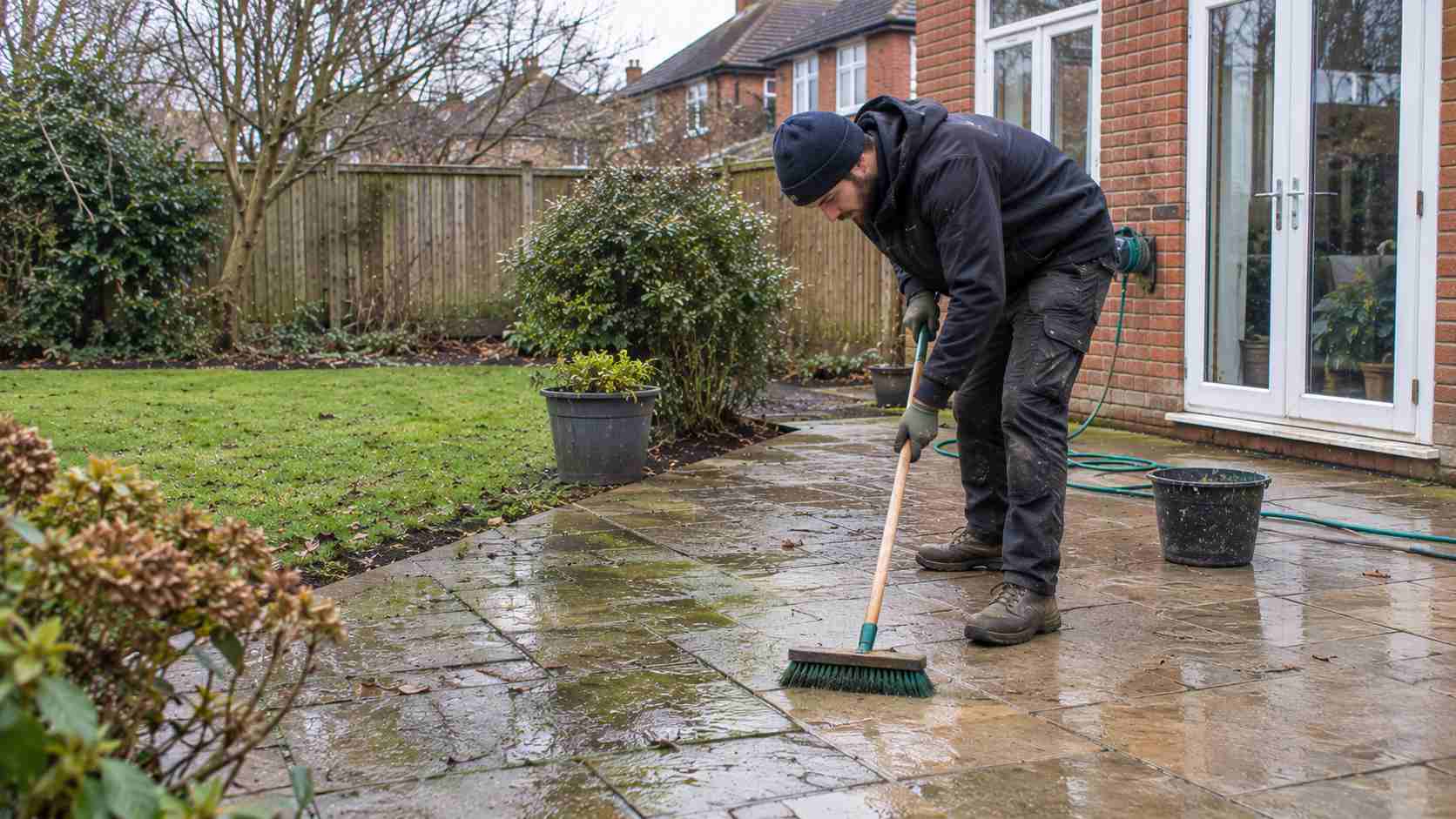
Start by sweeping away loose debris, then scrub with a stiff brush and a cleaner suitable for the surface. A pressure washer is effective on robust paving but can damage soft stone, strip jointing sand and furr up timber, so use care and test a small area first. Our guide to what can and can't be pressure washed safely explains technique and which surfaces suit it.
If you use an algae or moss treatment, follow the instructions carefully, protect nearby plants, ponds and drains, and avoid letting runoff reach watercourses. For large or awkward areas, our Pressure Washing & Waste service cleans surfaces with the right pressure and technique.
Decking in winter
Decking is among the slipperiest garden surfaces once algae takes hold, and it's often the first place people slip. Regular sweeping, cleaning with a suitable deck cleaner and a stiff brush, and keeping the gaps between boards clear all help. Timber decking can also benefit from textured or grooved boards and anti-slip strips, particularly on steps.
Our guide to how to maintain decking covers cleaning, treatment and repairs, and our comparison of composite vs timber decking explains how the two materials differ in grip and upkeep. Our Decking service can advise on slip-resistant options.
Patios and paths
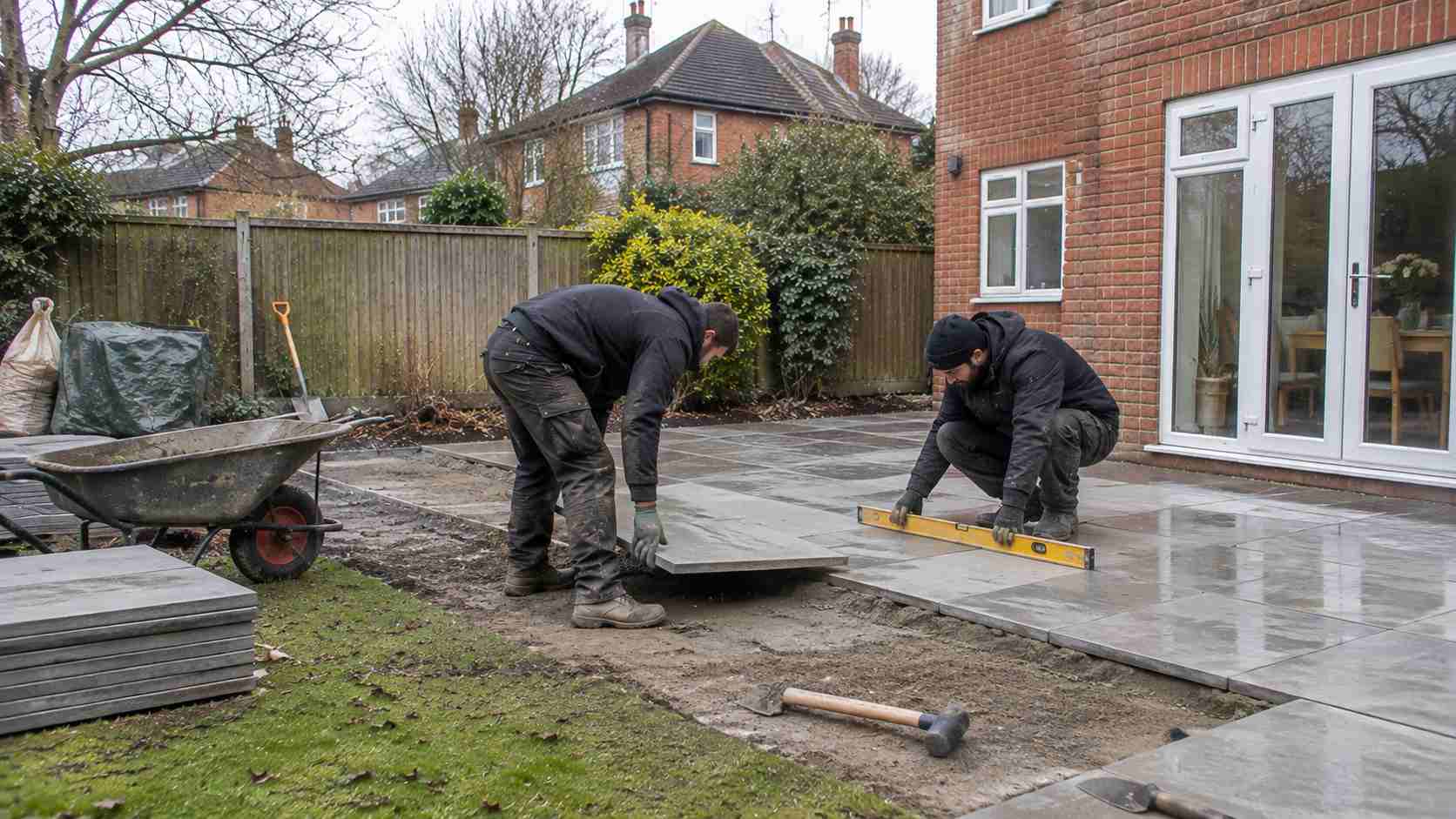
Patios and paths vary a lot in grip. Textured porcelain and riven natural stone usually perform better than smooth or polished surfaces, and a good installer will specify slip resistance suited to outdoor use. Our comparison of porcelain vs natural stone paving explains the differences, and our Patio & Paving service can help you choose a surface that stays safer in wet weather.
If a patio is mossy because it never dries, look at the cause, such as shade, overhanging planting or poor drainage, rather than simply cleaning it repeatedly.
Dealing with frost, ice and snow
- ›Clear snow early with a shovel or brush, since packed snow turns to ice.
- ›Spread sand, grit or similar non-corrosive material on ice for traction.
- ›Avoid rock salt on paving, decking, lawns and plants, which can damage surfaces and harm planting, and check product advice for your surface.
- ›Don't pour hot water on ice, since it can refreeze, and may crack some surfaces.
- ›Use plastic rather than metal shovels on decking and soft surfaces.
- ›Keep a clear, well-lit route to the door and consider handrails on steps.
Leaves, debris and drainage
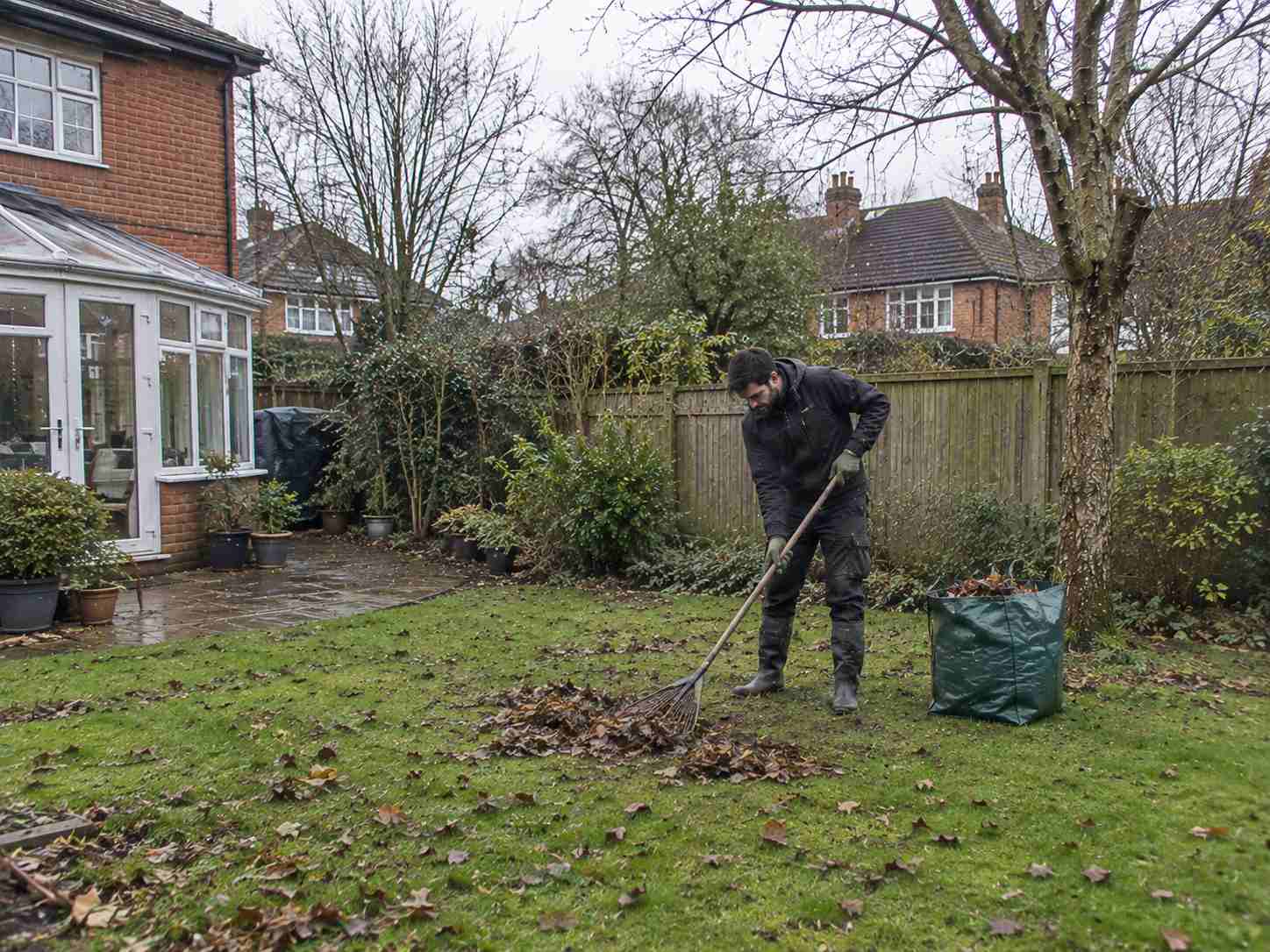
Wet leaves are one of the biggest hazards, so clear them regularly from paths, steps and decks, as our guide to leaf clearance explains. Make sure gutters, downpipes and drains aren't overflowing onto surfaces, and check that patios have a slight fall so water runs away. If water consistently pools, our guide to improving garden drainage explains common causes and fixes.
Prevention: stopping the problem coming back
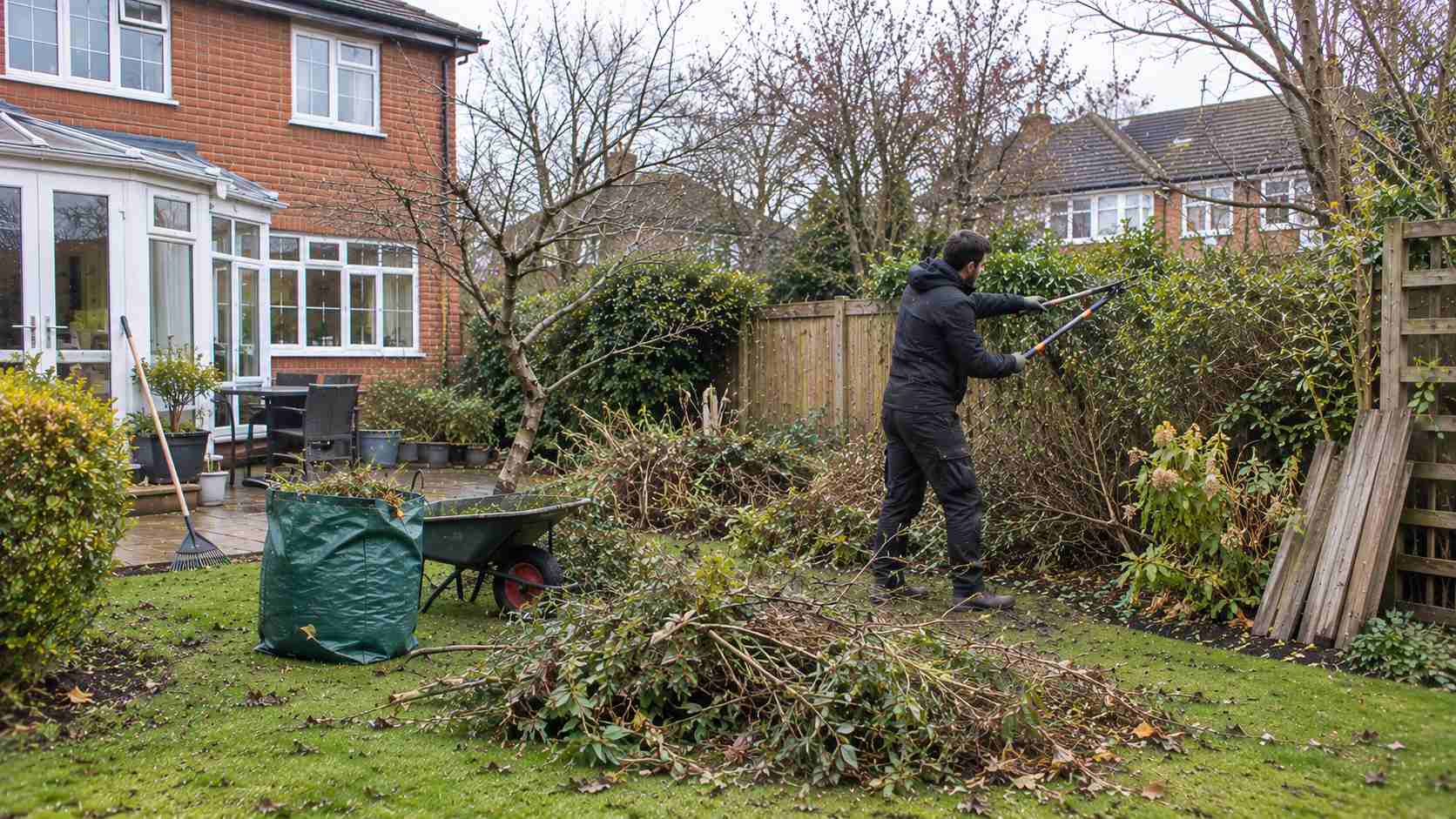
- ›Cut back overhanging plants and branches to let in more light and air.
- ›Clean surfaces regularly, rather than waiting for algae to build up.
- ›Improve drainage and falls so water doesn't linger.
- ›Add anti-slip strips, grooved boards or textured finishes in high-risk areas.
- ›Install lighting on steps and routes, using our garden lighting guide to plan layers.
- ›Choose slip-resistant materials when replacing surfaces, asking suppliers about slip ratings.
- ›Fit handrails on steps and slopes where needed.
Steps, slopes and higher-risk areas
Steps deserve particular attention, since consistent dimensions, good grip, lighting and handrails all reduce the risk. Our guide to landscaping a sloping garden explains how to design safe steps and levels. Where someone has limited mobility or you're elderly, safe access should be built into the garden design from the start.
Slippery surfaces across London and Surrey
Shaded and damp gardens suffer most. Walled courtyards in Kensington, wooded plots around Oxshott, and riverside gardens in Teddington and Walton-on-Thames often stay damp longer, so algae returns faster and regular cleaning matters. Our Garden Maintenance plans can include seasonal cleaning and leaf clearance, and our Garden Design & Landscaping service can redesign surfaces, steps, lighting and drainage so they stay safe all year.
Frequently asked questions
Usually algae, moss or wet leaves on a damp, shaded surface. Frost and ice add to the problem. Regular cleaning and improving drainage and light help.