Lawns · 9 min read
Winter Lawn Care: What to Do (and Not Do) Between November and February
By House of Horticulturists · 1 November 2026
Lawns slow right down in winter, and it's tempting to forget about them until spring. But what you do, and just as importantly don't do, between November and February has a real effect on how well the grass recovers. The biggest winter lawn mistakes are usually walking on frozen or waterlogged ground, leaving leaves to smother the grass, and feeding or cutting at the wrong time. This guide explains what a lawn actually needs through winter, how to adapt it to wet London clay or free-draining ground, and how to set the lawn up for a strong spring.
What happens to a lawn in winter
Grass doesn't die in winter, it slows down. Growth drops sharply as soil temperatures fall, roots keep working slowly, and the lawn becomes more vulnerable to damage, disease and compaction than at any other time of year. In mild spells grass can keep growing a little, while hard frosts and waterlogged ground leave it fragile.
That means winter lawn care is mostly about protection and tidiness rather than active improvement. The heavy lifting, such as scarifying, overseeding and feeding, is best done in early autumn and spring, as explained in our guide to fixing a patchy lawn.
What to do: the essential winter jobs
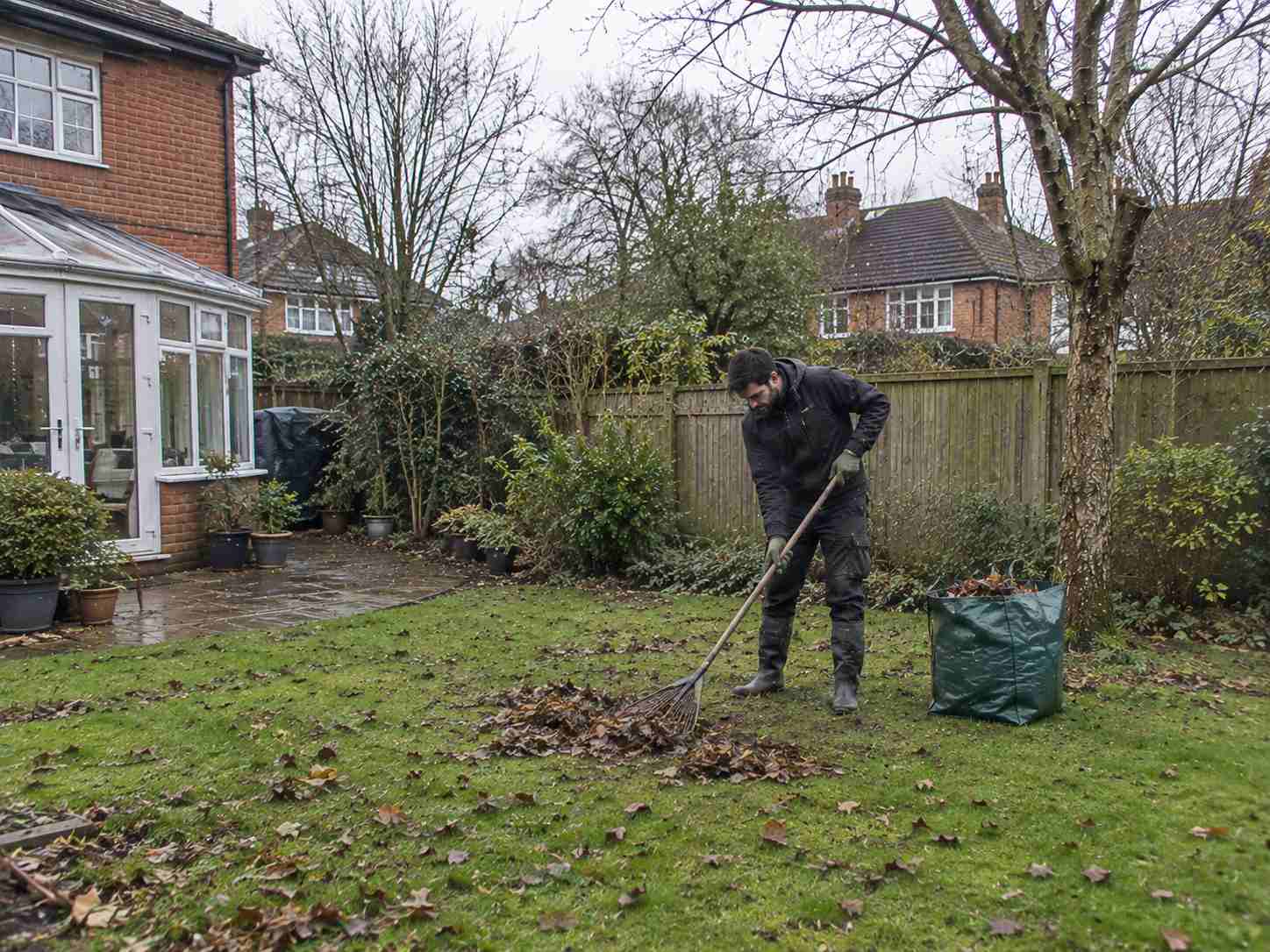
- ›Clear fallen leaves regularly so they don't smother the grass and encourage disease, using our guide to leaf clearance.
- ›Keep off the lawn when it's frozen, frosty or waterlogged, using boards or paths if you need access.
- ›Raise the mower height and cut only in mild, dry spells if the grass is still growing.
- ›Check drainage and look for areas where water collects, which may need aeration or longer-term work.
- ›Service and sharpen the mower while it's out of use, ready for spring.
- ›Use the quiet months to plan spring renovation, reseeding or a new lawn.
What not to do: common winter lawn mistakes
- ›Walking, working or placing heavy items on a frozen or frosty lawn, which damages the grass blades and leaves footprints that turn brown.
- ›Cutting too short, or cutting wet or frosted grass, which stresses the lawn and tears the blades.
- ›Applying high-nitrogen feed, which encourages soft growth that's vulnerable to cold and disease.
- ›Scarifying or heavy raking, which can damage a lawn that isn't growing strongly enough to recover.
- ›Leaving leaves, debris or garden furniture sitting on the grass for weeks.
- ›Using rock salt or harsh de-icers near the lawn, which can scorch and damage grass.
November: finishing the autumn jobs
November is the last chance for some jobs. If leaves are still falling, keep clearing them, and give the lawn a final cut if it's still growing, raising the mower blade for the last few cuts. If you haven't yet aerated compacted areas, a dry spell in early November can still work on soil that isn't frozen or waterlogged.
It's also the time to finish anything left on your autumn checklist for preparing your garden for winter, since conditions rarely improve from here.
December: leave it alone and protect it
December is mostly about restraint. Growth is minimal, and the main job is staying off the lawn when it's wet, frozen or frosty. Keep leaves cleared, avoid piling snow or heavy items on the grass, and don't be tempted to cut unless there's a genuine mild, dry spell. Worm casts can appear in mild weather, and are best left until dry and then brushed away lightly, rather than flattened when wet.
January and February: plan and prepare
The coldest months are usually quiet. Keep off waterlogged ground, check drainage, and use the time to service tools and plan spring work. In a mild dry spell, a very light tidy or a first high cut can be fine, but there's no rush.
Late February can be a good moment to start thinking about spring, such as ordering turf or seed and booking renovation, so you're ready to feed, scarify and overseed when growth restarts, usually from March. Our Lawn Installation & Turfing service can plan spring renovation or a new lawn in advance.
Moss, waterlogging and drainage
Winter is when moss and waterlogging become obvious, particularly on heavier ground. Persistent damp, shade and compaction all favour moss, and our guide to why moss takes over a lawn explains the causes and the right order of treatment. A lawn that sits under water for days after rain usually has a drainage or compaction problem, and our guide to improving garden drainage covers realistic fixes, from aeration to designed drainage.
Frost, disease and other winter problems
Cold, damp conditions can encourage lawn diseases such as fusarium patch, which shows as patches of dying grass, particularly where leaves or thatch hold moisture. Good airflow, clearing leaves and avoiding heavy winter feeding all reduce the risk. Frozen lawns are best left alone, since walking on them can cause lasting damage. If you see patches that don't recover in spring, our guide to fixing a patchy lawn explains how to diagnose the cause and repair it.
Can you lay turf or sow seed in winter?
Generally it's not ideal. Seed germinates poorly in cold soil, and turf laid on frozen or waterlogged ground struggles to root. In mild, workable conditions turfing is sometimes possible, but early autumn and spring are far better windows, as explained in our guide to why autumn is the best time to plant. If you want a new lawn for next summer, winter is the time to plan and prepare, with groundwork and laying done when conditions suit.
Different soils across London and Surrey
Winter lawn care varies with your ground. On heavy clay, common around Wimbledon and New Malden, lawns are more prone to waterlogging and compaction, so staying off wet grass and improving drainage matters most. On chalky, free-draining ground such as around Epsom, lawns stay drier but can be thin and need feeding in spring, while riverside gravel in places like Kingston upon Thames can be damper on low-lying plots.
Getting help with your lawn
If your lawn is waterlogged, mossy or beyond a DIY fix, a site visit can identify the cause and a plan for spring. Our Lawn Installation & Turfing service can renovate or replace tired lawns, our Garden Maintenance plans can look after lawn care through the seasons, and where drainage is the underlying problem, our Garden Design & Landscaping service can design a proper solution. For a dry summer, our guide to keeping your lawn green through a dry summer covers the other end of the year.
Frequently asked questions
Only if the grass is still growing in a mild, dry spell, and then with a high cut. Avoid mowing wet or frosted grass.