Decking · 10 min read
Composite vs Timber Decking: Costs, Looks and Longevity
By House of Horticulturists · 25 June 2026 · Updated 20 September 2026
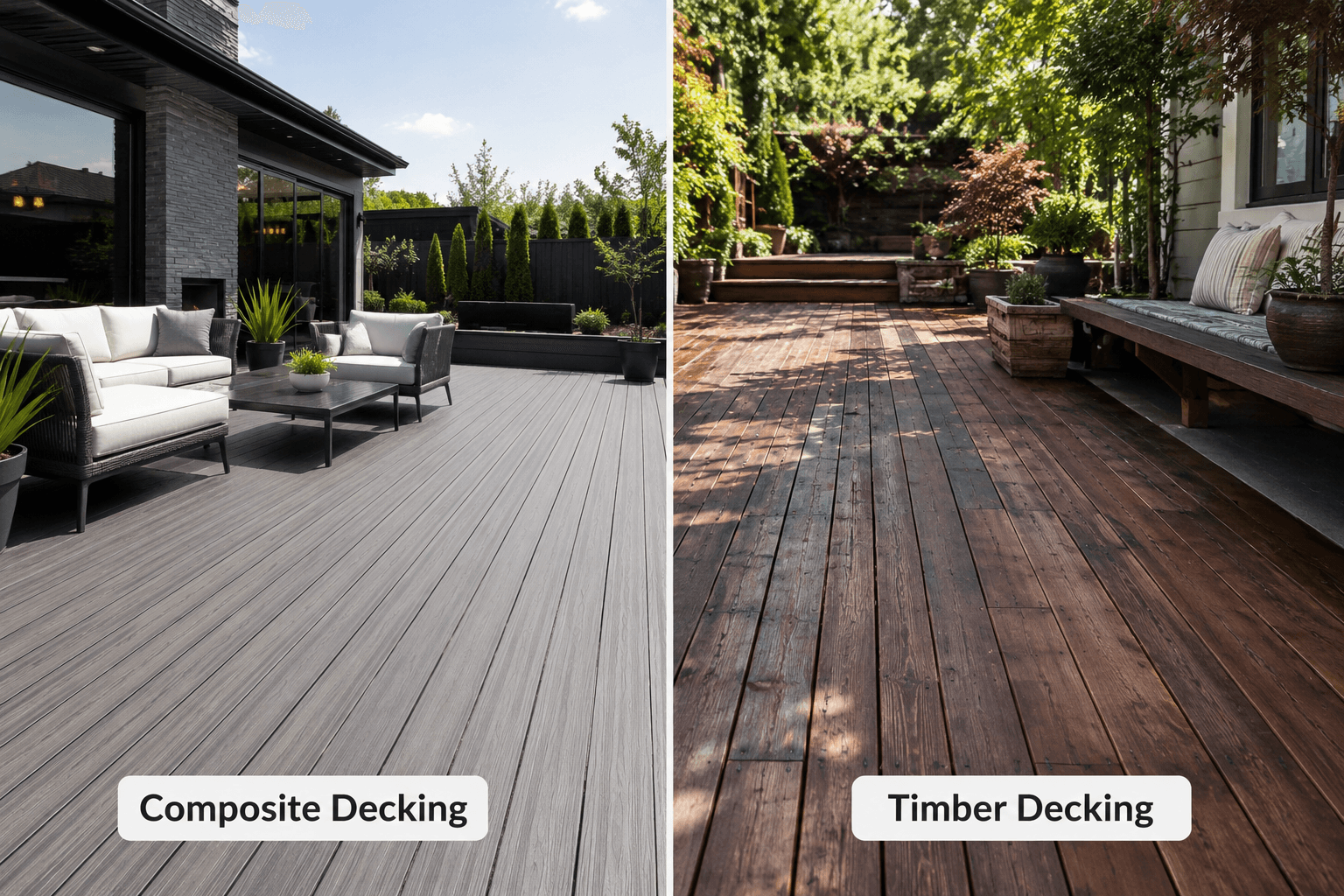
Decking is one of the few garden decisions where the two main material options, timber and composite, genuinely suit different priorities rather than one simply being better than the other. Timber gives a natural look, a lower starting cost and the option to work with it yourself, while composite trades a higher upfront price for dramatically lower maintenance and a longer realistic lifespan. Understanding how they actually differ, in cost, appearance, upkeep and durability, is what makes the right choice obvious for your specific garden rather than a guess based on which one sounds more appealing on paper.
Timber decking: the case for it
Timber remains a hugely popular choice, and for good reason, it has a natural warmth and texture that manufactured materials still struggle to fully replicate, it's generally more affordable to install than composite, and it can be sanded, repaired, repainted or re-stained relatively easily if its appearance changes or damage occurs in one area. Softwoods like pressure-treated pine are the most affordable option, while hardwoods such as oak or the naturally durable tropical species offer better inherent resistance to rot and insect damage at a higher price point.
The trade-off is ongoing maintenance, timber decking needs regular cleaning, and typically an annual or biennial treatment with oil, stain or preservative to keep both its appearance and its weather resistance intact. Skipped maintenance doesn't just affect looks, untreated timber deteriorates measurably faster, becoming more prone to splintering, rot and eventual structural failure.
Composite decking: the case for it
Composite decking, typically manufactured from a blend of recycled wood fibres and plastic, is designed specifically to minimise the maintenance burden that comes with timber. It doesn't need annual staining or treatment, resists rot, insect damage and splintering far better than timber, and holds its colour more consistently over time, without the fading and greying that untreated or infrequently maintained timber experiences.
The trade-offs are a higher upfront cost and, for some people, a look that doesn't quite match natural timber's warmth and grain variation, though modern composite boards have improved considerably on this front, with realistic wood-grain embossing and a far wider range of colours than early composite products offered. Composite also can't be sanded or refinished the way timber can, so surface damage is generally addressed by replacing the affected board rather than repairing it in place.
Comparing cost
Timber decking generally costs less to install initially, softwood in particular sits at the more affordable end of the market, while composite sits at a higher starting price point across the board, reflecting its manufacturing process and the premium placed on low maintenance. This initial cost gap is usually the deciding factor for anyone working to a tighter upfront budget.
Total cost over the deck's lifetime tells a different story. Timber's ongoing maintenance, annual or biennial treatment, occasional board replacement, and the labour or product cost involved each time, adds up over 15 to 20 years, while composite's higher initial outlay is largely a one-off cost with minimal spending afterward beyond routine cleaning. For anyone planning to keep a deck for well over a decade, the total cost gap between timber and composite is often narrower than the initial price difference suggests.
Comparing maintenance
- ›Timber needs regular cleaning and typically annual or biennial treatment with oil, stain or preservative to maintain both appearance and weather resistance.
- ›Composite needs only occasional cleaning, generally with soapy water or a gentle wash, with no staining or sealing required at any point.
- ›Timber can develop splinters over time, particularly on softwood, requiring occasional sanding to keep the surface safe and comfortable underfoot.
- ›Composite doesn't splinter and maintains a consistent surface texture throughout its life without any sanding needed.
- ›Timber allows localised repair, a damaged board can be sanded, patched or refinished; composite generally requires full board replacement for any significant damage.
Comparing appearance and feel
Timber has a natural grain, colour variation and warmth that's genuinely difficult to replicate artificially, and it develops a distinctive, weathered character over time that many homeowners specifically want, a deck that looks the same on day one as it does after a decade doesn't appeal to everyone. Timber also tends to feel slightly different underfoot, generally described as warmer and more natural than composite, particularly noticeable barefoot in summer.
Composite has closed the appearance gap considerably in recent years, with high-quality boards now featuring realistic wood-grain texture and a wide range of colours, and it offers something timber can't, complete visual consistency with no risk of warping, cupping or colour variation between boards. For a clean, contemporary, low-maintenance look, composite often suits modern garden design particularly well.
Comparing durability and lifespan
Composite decking generally offers a longer realistic lifespan than timber when comparing like for like, its resistance to rot, insect damage and moisture absorption means it holds up to UK weather with considerably less deterioration over time, provided it's properly installed on an adequate frame with sufficient ventilation beneath.
Timber's lifespan varies enormously depending on species and, more importantly, maintenance consistency, a well-maintained hardwood deck, properly treated on schedule, can last several decades, while a neglected softwood deck can show serious deterioration within just a handful of years. This variability is really the core trade-off, composite gives consistent, low-effort longevity, while timber's lifespan is largely in the owner's hands.
Environmental considerations
Both materials have a reasonable environmental case depending on how they're sourced and manufactured. FSC-certified timber comes from sustainably managed forestry and is a genuinely renewable material, while composite decking is typically made significantly from recycled wood fibre and plastic, diverting material that would otherwise go to landfill.
At end of life, timber is generally more straightforward to dispose of or repurpose, while composite, being a mixed material, is harder to recycle in most current waste streams, though this is an area actively improving as composite decking technology develops. Neither option is a clear-cut environmental winner over the other, it depends on sourcing, certification and what happens to the material at the end of its working life.
Which one actually suits your garden
- ›Lowest upfront cost and a natural, traditional look: timber, particularly softwood, is the more affordable starting point.
- ›Minimal ongoing maintenance and long-term consistency: composite's higher initial cost pays off in reduced effort over the deck's life.
- ›A period or traditional-style garden: timber's natural texture and ageing character generally suits this setting better.
- ›A modern, low-maintenance design: composite's clean, consistent finish complements contemporary gardens particularly well.
- ›Anyone planning to sell within a few years: timber's lower upfront cost may suit better, since the long-term maintenance saving of composite matters less to a departing owner.
- ›A long-term family garden with limited time for upkeep: composite's minimal maintenance burden is usually the more practical choice.
Installation and getting the base right
Whichever material you choose, the frame and groundwork underneath matter enormously, a properly specified joist frame with adequate support, correct spacing and sufficient ventilation beneath the boards is what actually determines how long a deck lasts, regardless of whether the surface itself is timber or composite. This is particularly important on sloping or uneven gardens, where raised or split-level decking needs additional structural consideration, something we cover in more detail in our guide to landscaping a sloping garden.
It's also worth planning ahead for how the deck will actually be used, running electrical cabling for garden lighting or planning a safe base for a fire pit or outdoor heater is far easier and cheaper done during construction than retrofitted into a finished deck.
Choosing the right decking for your garden
Riverside and waterside gardens, common in towns like Kingston upon Thames and Maidenhead, often see particularly high humidity and moisture exposure, conditions where composite's resistance to rot and moisture absorption offers a genuine practical advantage over timber, which needs more diligent maintenance in these damper settings to perform well over the long term.
In drier, more sheltered gardens further from water, timber generally performs perfectly well with standard maintenance, and the choice comes down more to budget, look and how much ongoing upkeep you're happy to commit to. Our Decking service installs both materials to a proper structural standard and can talk through which genuinely suits your specific garden, budget and maintenance appetite, and our Garden Design & Landscaping service can plan a new deck in as part of a wider outdoor living space from the outset.
Frequently asked questions
It depends on priorities. If minimal ongoing maintenance and long-term durability matter most, composite's higher upfront cost is usually worthwhile over the deck's lifetime. If a lower starting cost and natural timber character matter more, and you're happy with regular treatment, timber remains an excellent choice.