Landscaping · 10 min read
Can You Do Landscaping in Winter? What Can and Can't Be Built Between November and March
By House of Horticulturists · 5 November 2026
Many homeowners assume landscaping has to wait for spring, but a good deal of garden work can go ahead through winter. Groundwork, fencing, decking, garden rooms and bare-root planting all suit the colder months, and starting in winter often means your garden is finished and ready to enjoy when spring arrives. Other jobs, such as laying turf, pouring concrete or resin surfacing, depend on the weather and are better timed carefully. This guide explains what can and can't be built between November and March, how weather affects each job, and how to plan a winter project so it runs smoothly.
The short answer: yes, with caveats
Landscaping in winter is perfectly possible, but the right answer depends on the job and the weather on the day. Many tasks aren't affected much by cold, while others need conditions that are dry, above freezing and workable. A good contractor will plan the order of work so that the weather-sensitive jobs fall in suitable spells and the rest keeps moving.
It also helps to think of winter as a planning and groundwork season. Design, permissions, ordering and groundwork can all happen now, so the finishing and planting can follow in spring, which is often the quickest route to a finished garden.
Jobs that suit winter
- ›Design and planning, including surveys, drawings, material selection and quotes.
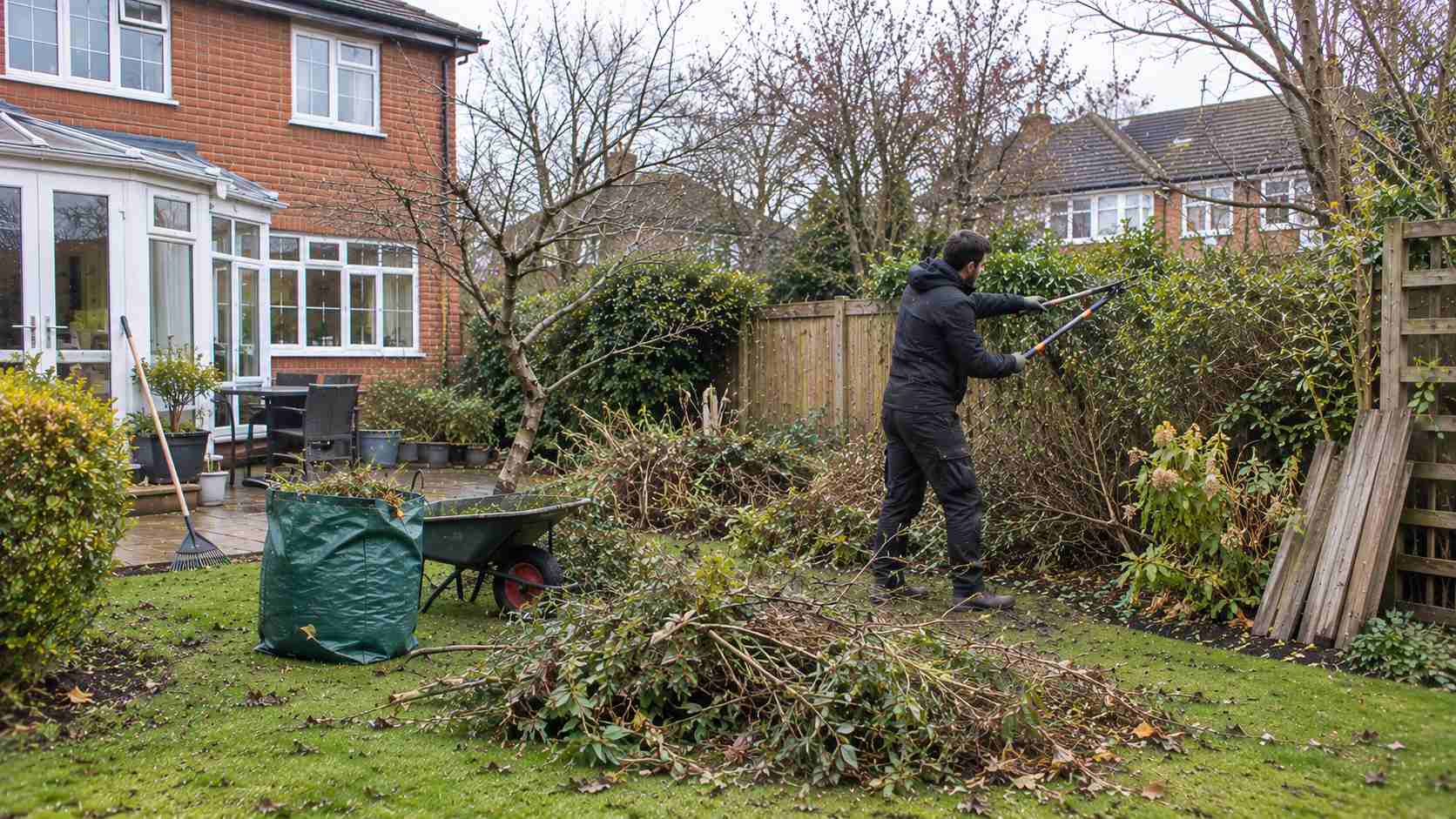
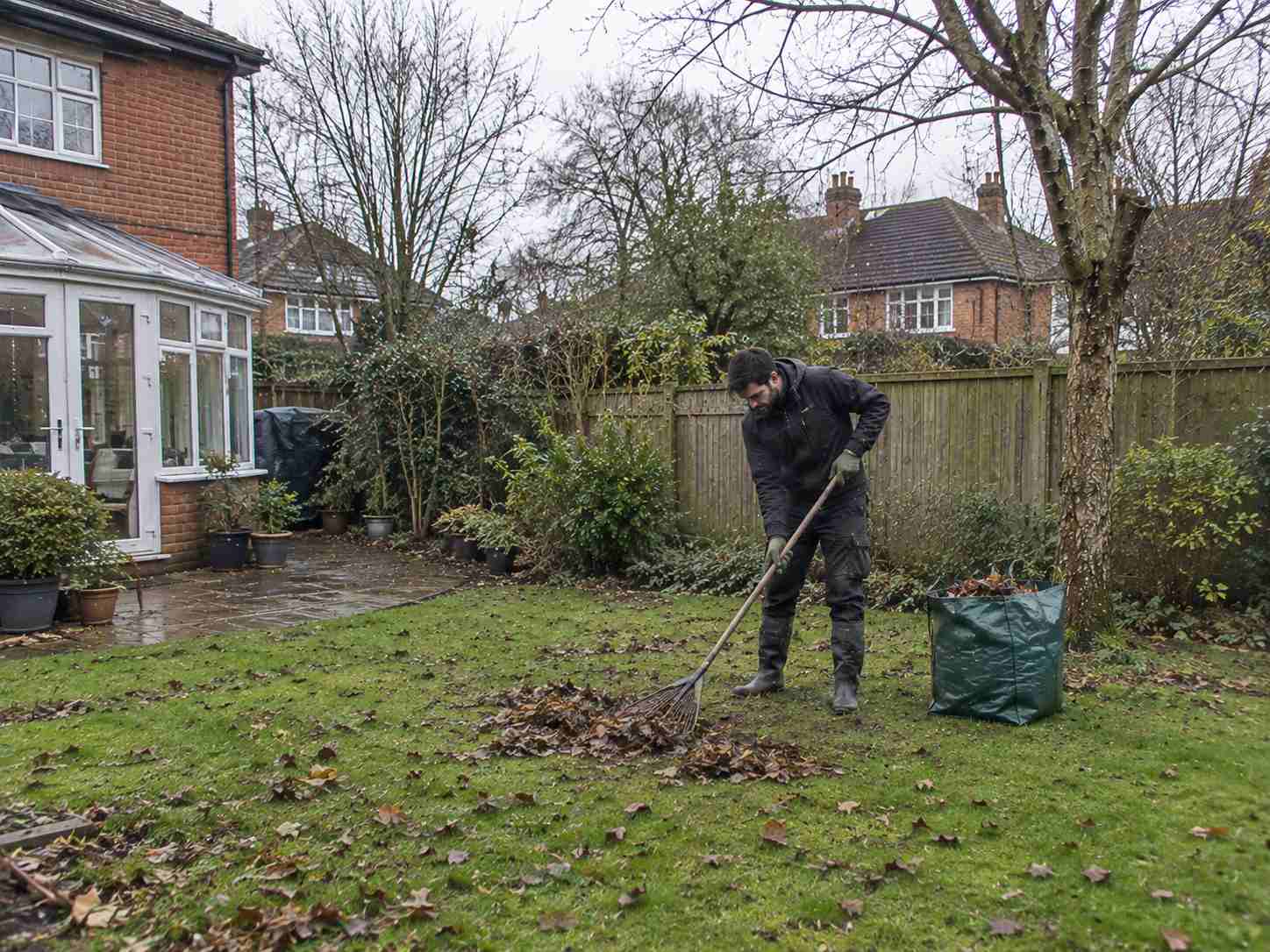
- ›Clearance of old structures, overgrown borders and green waste, as explained in our guide to garden clearance in winter.
- ›Groundwork and excavation, when the ground isn't frozen or waterlogged.
- ›Fencing, which generally isn't affected by cold, though posts can't be set in frozen ground.
- ›Timber decking, which can be built in most dry conditions.
- ›Garden room bases and construction, particularly using methods less sensitive to weather.
- ›Bare-root hedging, trees and shrubs, which are sold and planted in the dormant season.
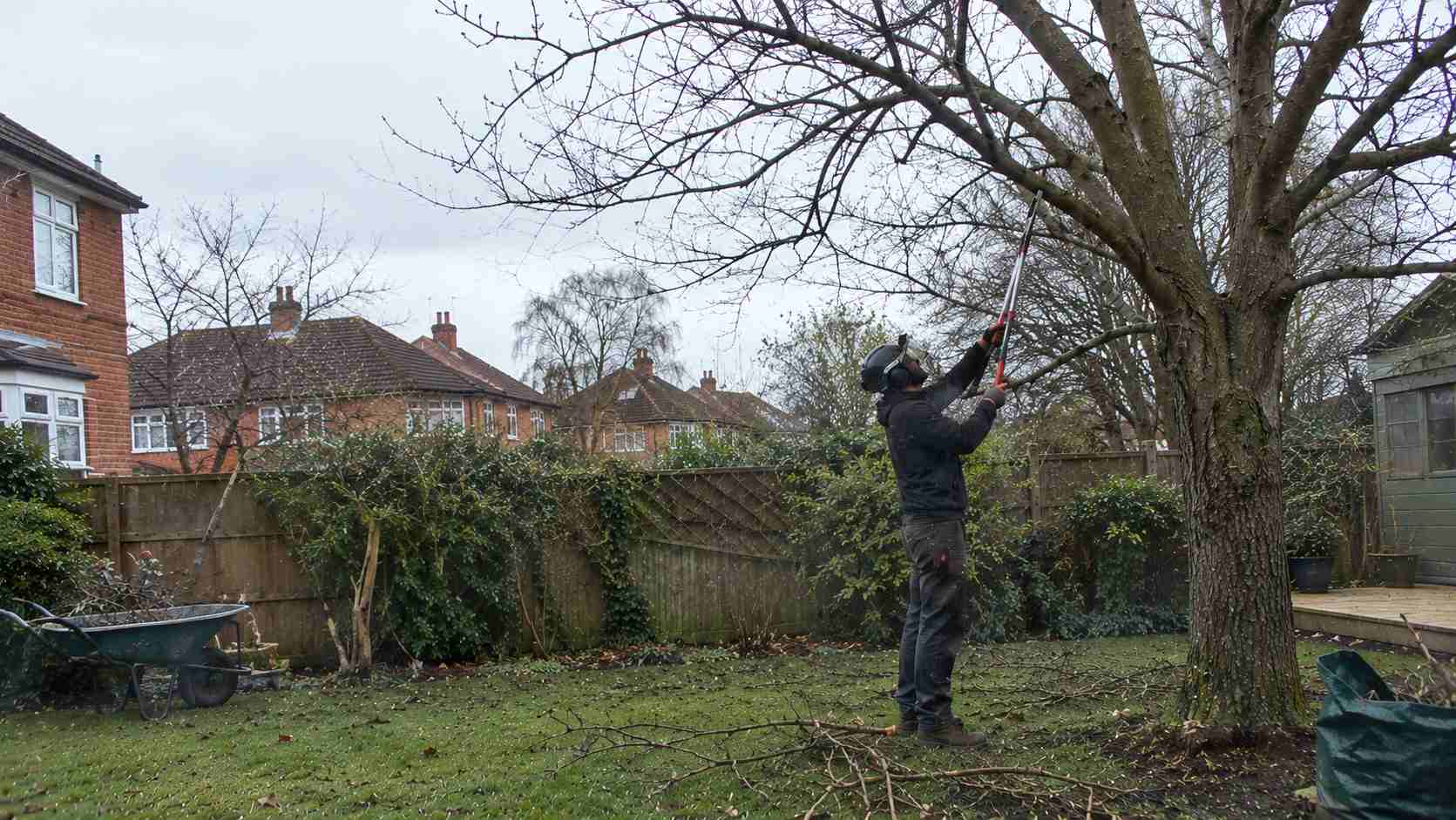
- ›Pruning of dormant trees and shrubs, covered in our guide to winter tree pruning in London.
Jobs that are weather-dependent
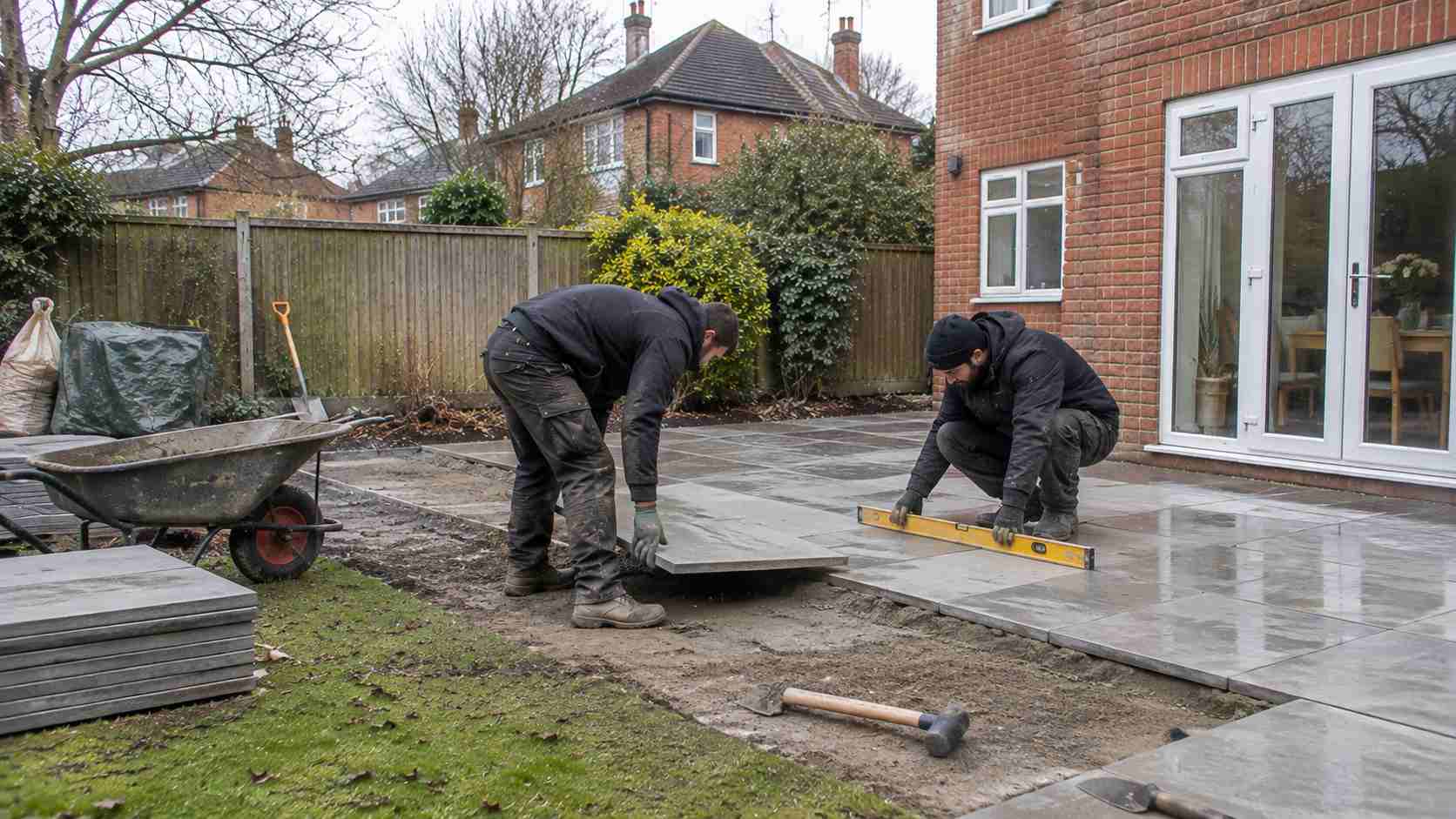
- ›Paving, which is best laid in dry conditions above freezing, since frost can stop mortar and bedding materials setting properly.
- ›Concrete work and foundations, which shouldn't be placed or left to cure in frost without precautions.
- ›Resin-bound and similar surfacing, which needs dry, suitably warm conditions to cure properly.
- ›Turfing, which struggles on frozen or waterlogged ground.
- ›Drainage work, which depends on the ground being workable rather than saturated.
- ›Painting, staining and sealing, which need dry weather and suitable temperatures.
Jobs best left until spring
- ›Sowing grass seed, since cold soil leads to poor germination.
- ›Planting tender or half-hardy plants that can't tolerate frost.
- ›Final planting of borders that need warm soil to establish.
- ›Any finish that requires warm, dry curing conditions in an exposed position.
Hard landscaping in cold weather
Paving and hard surfaces can be laid in winter during suitable weather, but the groundwork underneath matters more than ever. Frozen or waterlogged ground can't be properly compacted, and materials that rely on curing need protection or a milder spell. Good contractors choose their moment, or complete the groundwork first and lay the surface when conditions allow.
Our Patio & Paving service plans around the weather, and our guide to how long a new patio takes to install explains how stages and curing affect the timeline. For driveways, our guide to choosing a driveway surface covers materials, including those more sensitive to temperature.
Fencing, decking and garden rooms
These are some of the best winter jobs. Fencing and decking are less sensitive to cold than surfaces that need curing, and new structures can be finished well before spring. Our Fencing & Screens and Decking services work through the colder months, and our guide to composite vs timber decking helps you choose a material.
Garden rooms can also be built in winter, particularly once the base is done and the shell is weathertight, after which internal work can continue in any weather. Our guide to how long a garden room takes to build explains the stages, and our Garden Rooms & Sheds service designs and builds them throughout the year.
Planting in winter
Winter is the season for bare-root planting, when hedging, trees and some shrubs are sold dormant and cost less than potted stock. They should be planted while dormant, in ground that isn't frozen or waterlogged. Our guides to choosing the right hedging plant and why autumn is the best time to plant explain more, and our Hedges, Pruning & Planting service can plant hedging and trees through the dormant season.
Lawns and turf in winter
Winter is a poor time for sowing seed and usually not ideal for laying turf, though a mild spell on workable ground can sometimes allow it. It's often better to do groundwork now and lay the lawn in early spring, which our Lawn Installation & Turfing service can plan around. Our guide to winter lawn care explains what existing lawns need.
Month by month: November to March
- ›November: finish autumn jobs, start groundwork, fencing and clearance, and plant bare-root stock.
- ›December: design, planning and ordering continue, with outdoor work in suitable spells.
- ›January: often the coldest month, so focus on design, permissions and sheltered or internal work.
- ›February: groundwork and structural work resume in milder spells, with preparation for spring.
- ›March: weather improves, and paving, turfing and planting start to ramp up.
Practical considerations for winter projects
Shorter days mean less working time, and wet weather can interrupt progress, so build flexibility into the programme. Heavy machinery on wet ground can damage lawns and compact soil, so access routes may need protecting. Permissions and checks can take time, so start early, and our guides to permitted development rights for gardens and the Party Wall Act and garden work explain the general framework. Materials can also have lead times, which is another reason to start planning now.
Why starting in winter can pay off
Booking a project in winter means design, ordering and groundwork are done before the spring rush, so your garden is finished and ready when the weather turns. Contractors are often more flexible on scheduling, though this varies, and you can phase the work, with weather-sensitive finishing done later. For budgeting, our landscaping cost guide explains what drives cost, and our guide to questions to ask before hiring a landscaper will help you compare quotes.
Landscaping across London and Surrey in winter
Ground conditions affect winter work. On heavier clay around Cobham, Esher and Wimbledon, waterlogged ground can pause groundwork, so timing and sequencing matter, while compact London gardens in places like Fulham often face access constraints that are the same in every season. Our Garden Design & Landscaping service plans projects around both the weather and your ground, and our Garden Maintenance plans keep the finished garden in good shape.
Frequently asked questions
Yes. Design, groundwork, fencing, decking, garden rooms and bare-root planting all suit winter, while paving, concrete, turfing and resin surfacing depend on suitable weather.