Cleaning · 9 min read
What Can (and Can't) Be Pressure Washed Safely
By House of Horticulturists · 11 August 2026
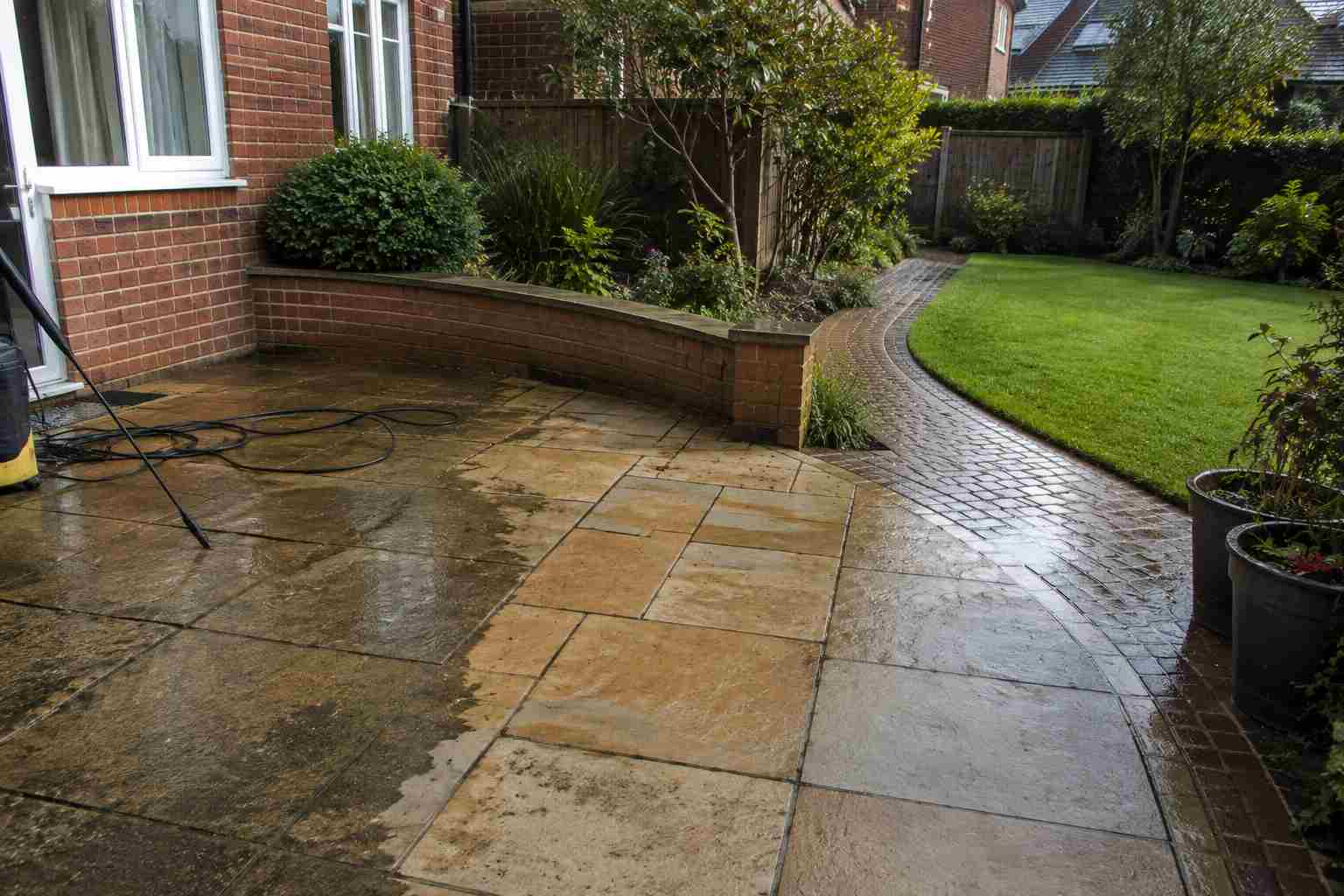
A pressure washer can make tired surfaces look new again in an afternoon, but the same power that lifts years of grime, moss and algae can just as easily carve up soft stone, blast out jointing sand, or strip and gouge timber. Knowing exactly what to blast and what to spare, and using the right technique on each, is what separates a genuinely transformed patio from an expensive mistake.
Why pressure washing works so well
Pressure washing works by using concentrated water pressure to physically lift dirt, algae, moss and grime from a surface, rather than relying on chemicals to dissolve it. On the right surfaces this is dramatically faster and more thorough than scrubbing by hand, and it reaches into texture and pores that a brush simply can't get into. That's exactly why it's so effective on driveways, patios and paths, and exactly why it needs respect on anything softer or more delicate.
Great candidates
Robust, hard-wearing surfaces generally take pressure washing well. Concrete, most types of paving, and driveways can be genuinely transformed, going from years of built-up algae and grime back to looking close to new within a couple of hours. It's the quickest, most cost-effective way to lift moss and staining from hard landscaping, and the before-and-after results on a neglected patio or path can be genuinely dramatic.
Brick paving, block paving and most concrete flags generally cope well with a moderate to high pressure setting, provided the surface itself is sound and not already cracked, spalling or loose.
Be careful with
- ›Soft or older natural stone, such as sandstone or limestone, which can be pitted, etched or eroded by high pressure applied too close.
- ›Paving joints, high pressure will blast out the jointing sand between slabs, and you'll need to re-sand or re-point afterward.
- ›Timber decking and fencing, which can be furred up, splintered or gouged if the pressure is too high or the lance held too close.
- ›Anything already loose, cracked or failing, pressure finds and exploits every weak spot rather than being forgiving of them.
- ›Delicate render, painted surfaces and old lime mortar, all of which can be stripped, chipped or washed away entirely.
- ›Roof tiles, especially older or more brittle ones, which can be dislodged or damaged and are generally best left to specialist, lower-pressure roof cleaning methods.
Technique matters as much as the machine
Keep the lance moving rather than dwelling on one spot, hold it at a sensible distance from the surface, work in one consistent direction for an even finish, and always test a discreet, low-visibility area first before tackling the whole surface. Blasting too close or lingering in one place is what gouges timber, etches stone and leaves visible stripes or patches across a patio.
Pressure and nozzle choice matter too, a narrow, concentrated jet is far more aggressive than a wide fan spray, and dialling down pressure for softer materials is usually safer than assuming maximum power gets the job done faster. After washing paving, be ready to re-sand the joints, since even careful technique will wash out some jointing sand, and leaving joints empty invites weeds and instability.
Common pressure washing mistakes
- ›Using too high a pressure setting or too narrow a nozzle on a delicate surface without testing first.
- ›Holding the lance too close, which concentrates force into a small area and causes gouging or etching.
- ›Working in patches rather than smooth, overlapping passes, which leaves an obviously patchy, streaky finish.
- ›Skipping the re-sanding of paving joints afterward, leaving gaps open to weeds and frost damage.
- ›Pressure washing render, paint or old mortar without checking its condition first, stripping more than intended.
- ›Assuming a pressure washer alone will fix a genuinely damaged or failing surface, cleaning won't repair cracks, sinking or structural issues underneath.
Timing it right
Pressure washing tends to be most useful in spring and autumn, spring to clear off the moss and algae that build up over a damp winter before the garden comes back into use, and autumn to give hard landscaping a clean start before winter weather sets back in. Avoid washing during a hard frost, since water forced into porous stone or brick can freeze and cause damage, and avoid it during very dry, hot spells if you're also planning to reseed nearby lawn areas, since run-off and overspray can affect newly germinating grass.
When to get it done properly
For robust surfaces and small, straightforward jobs, a careful DIY wash is perfectly fine. But when you're unsure whether a surface can take the pressure, the area is large, or the surface is delicate, old or valuable, it's usually worth having it done properly, both to protect the surface long-term and to get the even, streak-free finish that makes the real difference between a patio that looks clean and one that looks patchy.
This is exactly the kind of job our pressure washing and waste removal service is built around, using the right pressure and technique for each specific surface rather than one setting for everything. It also pairs well with wider hard landscaping work, if a patio or driveway is coming up cracked, uneven or generally tired underneath the grime once it's clean, that's often the moment to look at our patio and paving installation service instead of repeatedly cleaning a surface that's past its best.
Keeping surfaces cleaner for longer
A one-off clean will always fade over time as algae and moss regrow, particularly on shaded, north-facing or damp areas of a garden. Applying a patio or driveway sealant after cleaning can slow this regrowth considerably and make future cleaning easier, while simply improving drainage and airflow around a heavily shaded patio, sometimes by lightly pruning back overhanging planting, reduces how quickly moss returns in the first place. Gardens with more shade and damp corners, common in mature, tree-lined areas like parts of Fulham or Chelsea, tend to need more frequent cleaning than open, sunnier plots for exactly this reason.
Frequently asked questions
Robust stone often copes well, but soft or older natural stone can be pitted or etched by high pressure. Test a discreet area first, keep the lance moving and at a sensible distance, and if in doubt clean it more gently or have it done professionally.