Landscaping · 6 min read
Why Your Garden Floods, and How to Improve Drainage
By House of Horticulturists · 28 July 2026
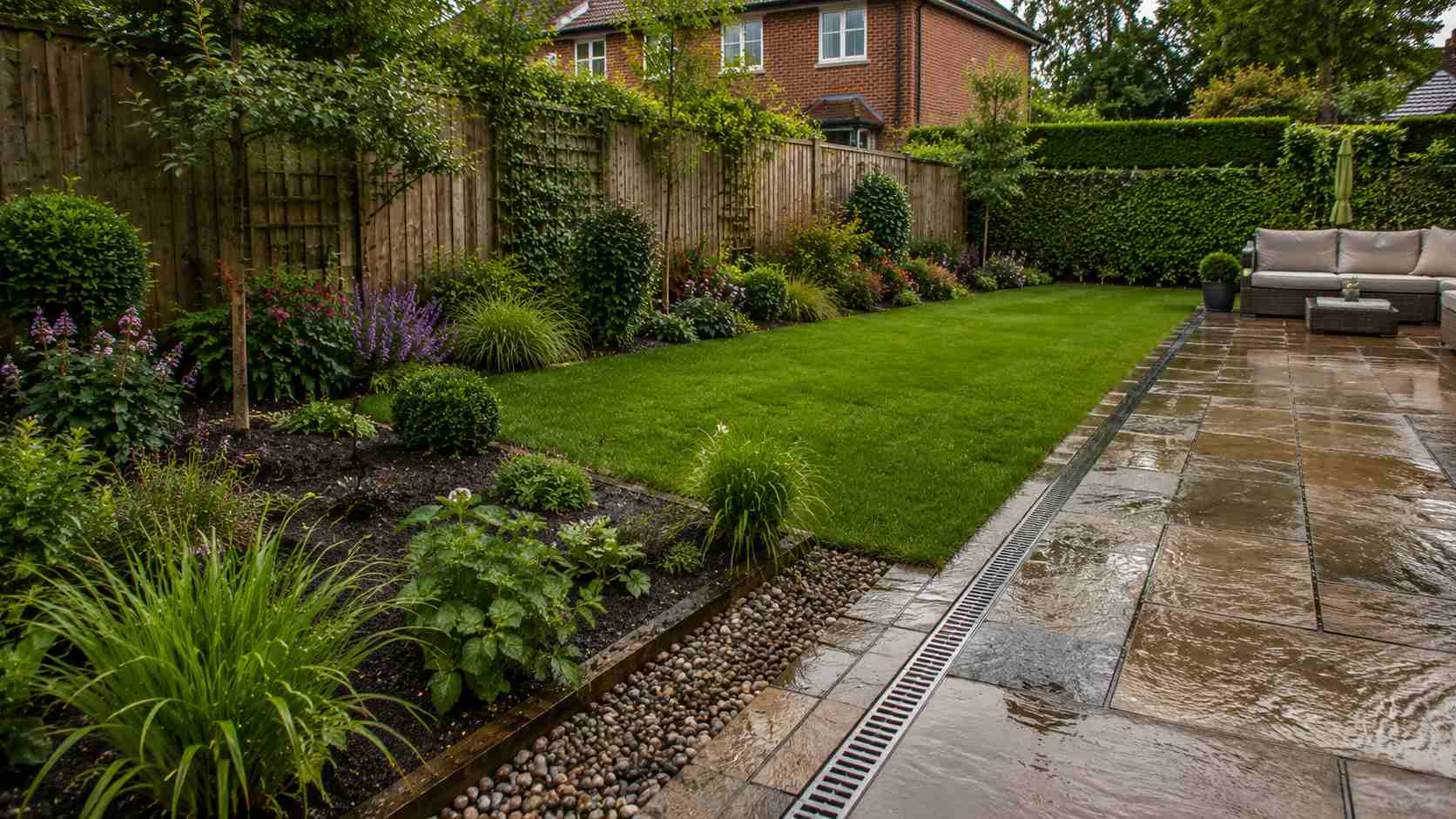
If your lawn sits under water after every downpour, it's not just annoying, standing water suffocates grass roots, rots planting and makes half the garden unusable for months. The fix depends on the cause, so it's worth diagnosing before digging.
Common causes
Heavy clay soil that drains slowly, compaction from foot traffic, a high water table, or the garden simply sitting low so water collects. Many gardens across Surrey and the river valleys sit on heavier ground, so this is a common local problem rather than a sign something unusual is wrong.
What actually helps
- ›Aerate lawns to relieve compaction and let water through.
- ›Improve soil structure over time with organic matter and top dressing.
- ›Reshape levels so water flows away from the house and problem areas.
- ›For persistent waterlogging, a piped drainage system or soakaway may be needed.
- ›In the worst spots, bog planting or a rain garden works with the water rather than against it.
Hard landscaping is part of the answer
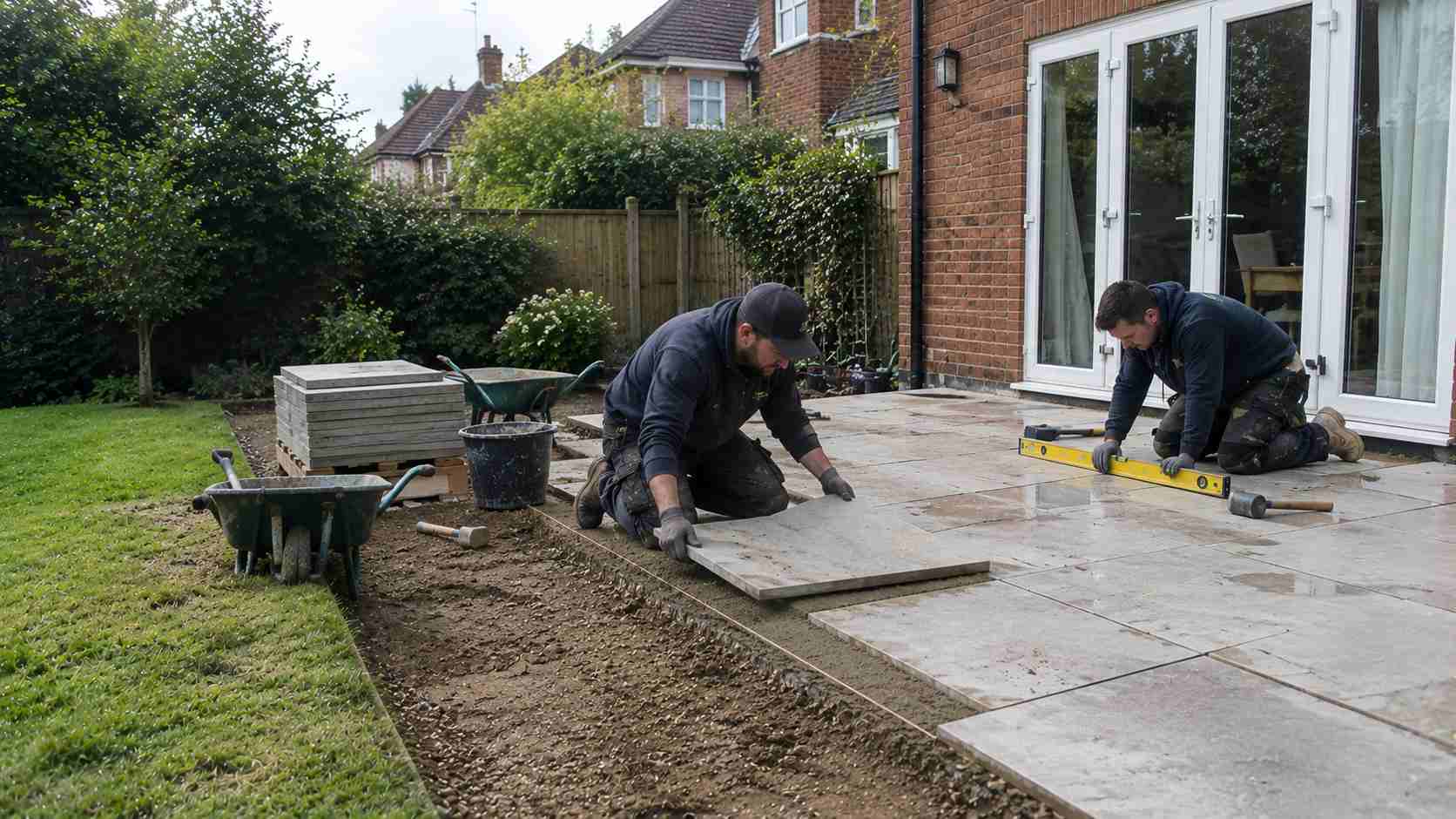
Drainage isn't only a lawn problem. Patios and paths need the right fall so water runs off rather than pooling, and surfaces should never send water toward the house. If you're planning new patio and paving, designing the drainage in from the start is far cheaper than correcting it later, the falls and sub-base are decided before a single slab goes down.
Design the water in, don't fight it
The best results come from treating drainage as part of the garden's design. A full garden design and landscaping plan considers levels, soil and where the water naturally wants to go, because drainage done badly just moves the problem, often onto a neighbour. For persistently wet gardens in low-lying areas like parts of Walton-on-Thames and the river towns, an assessment of your specific ground beats guesswork.
Frequently asked questions
Usually heavy or compacted soil, a low-lying plot, or a high water table. Aeration and soil improvement help milder cases; persistent standing water usually points to needing designed drainage such as a piped system or soakaway.