Paving · 9 min read
Porcelain vs Natural Stone Paving: Which Is Right for You?
By House of Horticulturists · 25 August 2026
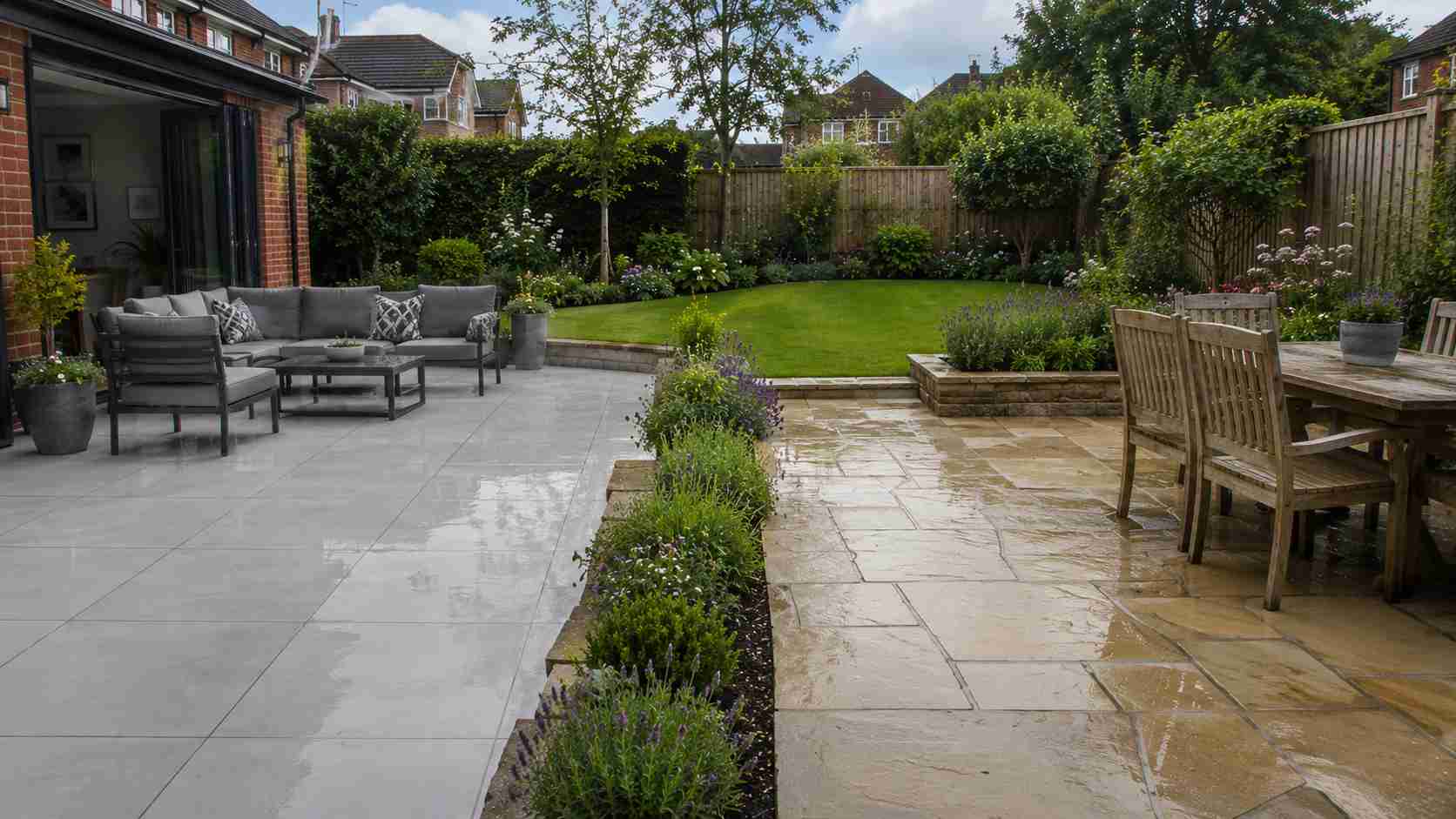
Once you've settled on a paved patio, the next choice is usually the material. Porcelain and natural stone are the two most popular options by a clear margin, and while both can look genuinely beautiful, they behave very differently underfoot, over the years, and in how much upkeep they actually demand. Getting this choice right means understanding those differences rather than picking on looks alone.
Porcelain
Porcelain is dense, extremely hard-wearing and very low-maintenance, it resists staining, algae growth and fading far better than most natural materials, stays colour-consistent across the whole patio, and typically only needs an occasional clean to keep looking sharp. Its uniform edges and consistent thickness give a crisp, contemporary look that suits modern gardens particularly well, and manufacturing means large-format slabs and a genuinely wide range of finishes, from stone-effect to timber-effect, are all readily available.
The trade-offs are real, though. It costs more per slab than most natural stone options, and because it's so dense and hard, it needs skilled cutting equipment and correct laying technique, making it considerably less forgiving of a rushed or inexperienced installation. A poorly cut or badly bedded porcelain slab is far more likely to crack under load than an equivalent mistake with natural stone.
Natural stone
Natural stone has a character and variation porcelain can't quite replicate, every single slab differs slightly in colour, veining and texture, giving a patio genuine individuality rather than a manufactured, repeated pattern. This suits traditional, period and country-style gardens particularly well, and it tends to age with a softness that many homeowners specifically want rather than a flaw to correct for.
It's generally more porous than porcelain, which means it can need sealing at installation and more regular cleaning to control staining, and it will weather and grow algae over time, particularly in shaded or damp corners of a garden. For many people that gentle weathering and softening of colour is genuinely part of the charm rather than a downside, but it's worth being honest with yourself about whether you want a patio that stays looking identical for years or one that develops character as it ages.
Comparing durability and lifespan
Both materials, properly laid, last for decades, so durability differences are more about how they age than whether they'll survive. Porcelain's density makes it highly resistant to frost damage, staining and fading, so a porcelain patio laid today will look very close to identical in ten years' time, provided the installation was done correctly. It's also less prone to surface pitting from freeze-thaw cycles than more porous natural stones.
Natural stone can be equally long-lasting structurally, but its appearance changes more visibly over time, colours mellow, texture develops, and some algae or lichen growth is common in damper spots unless it's cleaned regularly. Neither of these is a defect exactly, it's simply a different relationship with time, and worth factoring into which material actually suits your expectations.
Comparing cost
Cost comparisons genuinely depend on the specific product rather than the material category as a whole. Some natural stone options can be more affordable per square metre up front than premium porcelain, while high-end natural stone can easily cost more than mid-range porcelain, so it's worth comparing like-for-like products rather than assuming one material is categorically cheaper than the other.
Installation cost also differs, porcelain's hardness means cutting and laying typically takes more time and specialist equipment, which can add to labour costs even where the material itself is competitively priced. Over the long term, porcelain's lower maintenance needs can offset a higher initial cost, since it needs less ongoing cleaning, sealing and attention than a natural stone patio kept looking its best.
Choosing between them
- ›Lowest maintenance and a sharp, modern look → porcelain.
- ›Natural character and a softer, traditional feel → natural stone.
- ›Shaded, damp areas prone to algae → porcelain tends to stay noticeably cleaner with less effort.
- ›A tight budget → some natural stone can be more affordable up front; premium porcelain sits higher.
- ›A period or countryside property → natural stone typically suits the architecture and setting better.
- ›A contemporary new-build or extension → porcelain's clean lines and consistency tend to complement modern design.
- ›Either way, the sub-base and drainage beneath matter more than the slab choice for how long the finished patio actually lasts.
Which suits your garden's conditions
Beyond style preference, it's worth thinking practically about your specific garden's conditions. A shaded, north-facing patio under mature trees, common in wooded areas like Richmond or Kensington, will grow algae faster regardless of material, but porcelain's density means it stays cleaner between washes than a more porous natural stone in the same spot. A sunnier, more open garden narrows that particular gap considerably, since algae growth is far less of an issue either way.
Heavy footfall areas, around a kitchen door or a well-used dining space, also tend to favour porcelain's resistance to staining from spilled food and drink, while a quieter, more ornamental part of the garden is exactly where natural stone's character can be appreciated without the practical pressures of daily hard use.
The part people forget
Whichever material you choose, the finished patio is only ever as good as what's underneath it, the excavation depth, the properly compacted sub-base, the correct fall for drainage, and the laying method used to bed the slabs. A beautiful, expensive slab laid on a poor base still sinks, rocks loose or lets water pool exactly the same as a cheap one would. It's the least visible part of the job, and unfortunately the first thing corners get cut on with a cheap quote, since it's the part a homeowner can't easily inspect once it's finished.
This is exactly why we treat groundwork as the priority on every patio and paving installation we take on, the material decision matters for look and feel, but the base decides whether the patio is still flat, stable and draining properly in fifteen years. For a wider project where paving is just one part of a larger scheme, our garden design and landscaping service plans material choices alongside levels, drainage and planting from the outset, rather than treating the patio as a decision made in isolation from everything else in the garden.
Frequently asked questions
It varies by product. Some natural stone can be more affordable up front, while premium porcelain sits at the higher end. Because porcelain is harder to cut and lay, installation can also add cost. The base and groundwork affect the total more than the slab choice alone.