Garden Maintenance · 9 min read
Leaf Clearance: Why It Matters and How Often to Do It
By House of Horticulturists · 18 September 2026
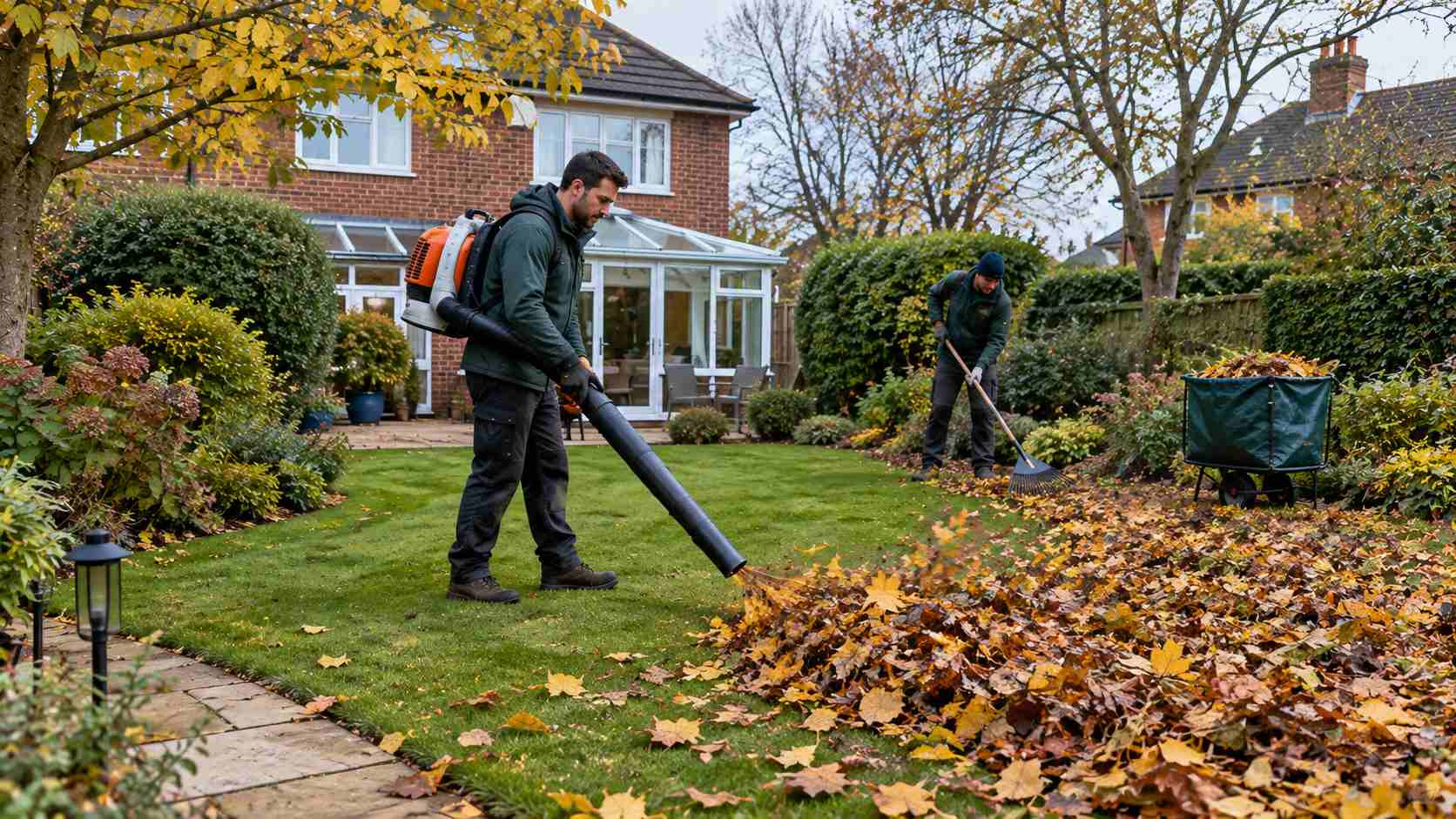
Fallen leaves seem like one of the more harmless features of autumn, and in some parts of a garden they genuinely are. But left to build up on a lawn, sit in guttering, or block drainage channels through a wet British winter, they cause real, avoidable damage, weakened grass, waterlogged surfaces, slippery paths and blocked drains. The trick isn't clearing every last leaf from the entire garden, it's knowing which areas genuinely need clearing regularly, which are better left alone, and how to put the leaves you do collect to genuinely good use.
Why fallen leaves cause problems
A layer of wet leaves sitting on grass blocks light and traps moisture against the surface, and grass left under that blanket for weeks weakens, thins and eventually dies back, leaving bare patches that moss and weeds colonise readily come spring. The damage happens faster than most people expect, a few weeks of heavy leaf cover through a wet autumn is enough to leave visible patches on an otherwise healthy lawn.
Leaves also cause problems well beyond the lawn. They block gutters and downpipes on houses, sheds and garden rooms, they clog drainage channels around patios and driveways, and once wet and decomposing on hard surfaces they become genuinely slippery, a real safety concern on steps and paths through the darker months when they're harder to see.
Where leaves need clearing
- ›Lawns, the highest priority, since grass suffers fastest and most visibly under prolonged leaf cover.
- ›Paths, steps and patios, where wet leaves become slippery and present a genuine trip and slip hazard.
- ›Drainage channels, gullies and gratings, blockages here are a common cause of winter waterlogging and standing water.
- ›Guttering on the house, sheds and garden rooms, blocked gutters send water down walls and against structures rather than away from them.
- ›Ponds, where decomposing leaves affect water quality over winter and are far easier to prevent with netting than to remove afterward.
- ›Around the base of garden buildings, where trapped damp leaves hold moisture against timber and accelerate rot.
Where leaves are better left alone
Not every leaf needs removing, and over-clearing is a genuine mistake in its own right. A layer of fallen leaves across borders and beds acts as natural mulch, insulating plant roots through frost, suppressing weeds, and breaking down over winter to feed the soil, exactly the sort of free soil improvement most gardens benefit from.
Leaves left in quieter corners, under hedges or in a dedicated pile also provide genuinely valuable shelter for insects, amphibians and hedgehogs through the coldest months, something we cover more fully in our guide to making your garden more wildlife-friendly. A garden cleared to bare soil everywhere looks tidy in November but strips out food, shelter and free soil conditioning all at once.
How often to clear leaves
Through peak leaf fall, typically from mid-October into late November depending on the year and the trees involved, lawns and hard surfaces benefit from clearing roughly once a week. This sounds like a lot, but each clearance is far quicker when leaves haven't been allowed to build into a thick, wet, matted layer, and weekly light clearing through the peak weeks is genuinely less total effort than a few heavy sessions.
Outside peak fall, every two to three weeks is usually sufficient, and by midwinter most gardens need only occasional attention beyond checking that gutters and drainage remain clear. Gardens with mature deciduous trees, or those downwind of neighbouring trees, inevitably need more frequent attention than gardens with little overhead cover, so frequency is worth matching to your specific situation rather than a fixed schedule.
The best tools for the job
- ›A spring-tine rake works well on lawns, gathering leaves without tearing at the grass underneath.
- ›A leaf blower saves considerable time on larger areas and hard surfaces, particularly for moving leaves into a collection point.
- ›A garden vacuum with a shredding function both collects and reduces leaf volume, useful if you're making leaf mould afterward.
- ›A stiff brush handles paths, steps and patio surfaces where a rake is impractical.
- ›Gutter clearing tools or a simple scoop for accessing guttering safely, working from a properly secured ladder.
- ›Pond netting, put in place before leaf fall starts, saves far more work than clearing leaves from water afterward.
Making leaf mould from what you collect
Collected leaves are genuinely valuable rather than waste. Leaf mould, made simply by piling leaves in a wire cage or bagging them in perforated sacks and leaving them to break down, produces an excellent soil conditioner and mulch at no cost beyond a little patience, it typically takes a year or two to fully mature, so it's worth starting a new batch each autumn.
Leaves break down differently to general garden waste and are usually better composted separately rather than mixed in bulk into a general compost heap, where large quantities can slow the process considerably. That said, smaller amounts mixed in as a carbon-rich "brown" component work well, something covered in more detail in our beginner's guide to composting at home.
Leaf clearance as part of wider autumn preparation
Leaf clearance rarely stands alone, it's usually one part of a broader set of autumn jobs that together determine how well a garden comes through winter, alongside final lawn cuts, scarifying, drainage checks and protecting tender planting. Our full autumn checklist for preparing a garden for winter covers how these jobs fit together and roughly when each is best tackled.
For gardens where regular clearance simply isn't practical to keep on top of personally, particularly larger plots or those with significant mature tree cover, our Garden Maintenance service can build leaf clearance into scheduled autumn visits, and our Pressure Washing & Waste service handles both the removal of collected green waste and cleaning down paths and patios once leaf staining and algae have built up over the wetter months.
Gardens that need more attention than most
How much leaf clearance a garden actually needs varies enormously with its setting. Mature, tree-lined streets and plots with established canopy, common across areas like Richmond and the wooded plots around Walton-on-Thames, can see genuinely heavy leaf fall over a concentrated few weeks, often including leaves blown in from neighbouring gardens and street trees well beyond your own boundary.
More open, newly developed gardens with limited tree cover typically need far less frequent attention, sometimes only occasional clearing of hard surfaces and drainage points. It's worth judging frequency by what your garden actually accumulates rather than a general rule, since the difference between a heavily wooded plot and an open one can easily be several hours of work each autumn.
Frequently asked questions
Roughly weekly through peak leaf fall, typically mid-October into late November, then every two to three weeks as fall slows. Frequent light clearing is considerably less total effort than letting leaves build into a thick, wet layer that's harder to remove and more damaging to the grass beneath.