Hedges · 10 min read
Choosing the Right Hedging Plant for Your Garden
By House of Horticulturists · 13 August 2026
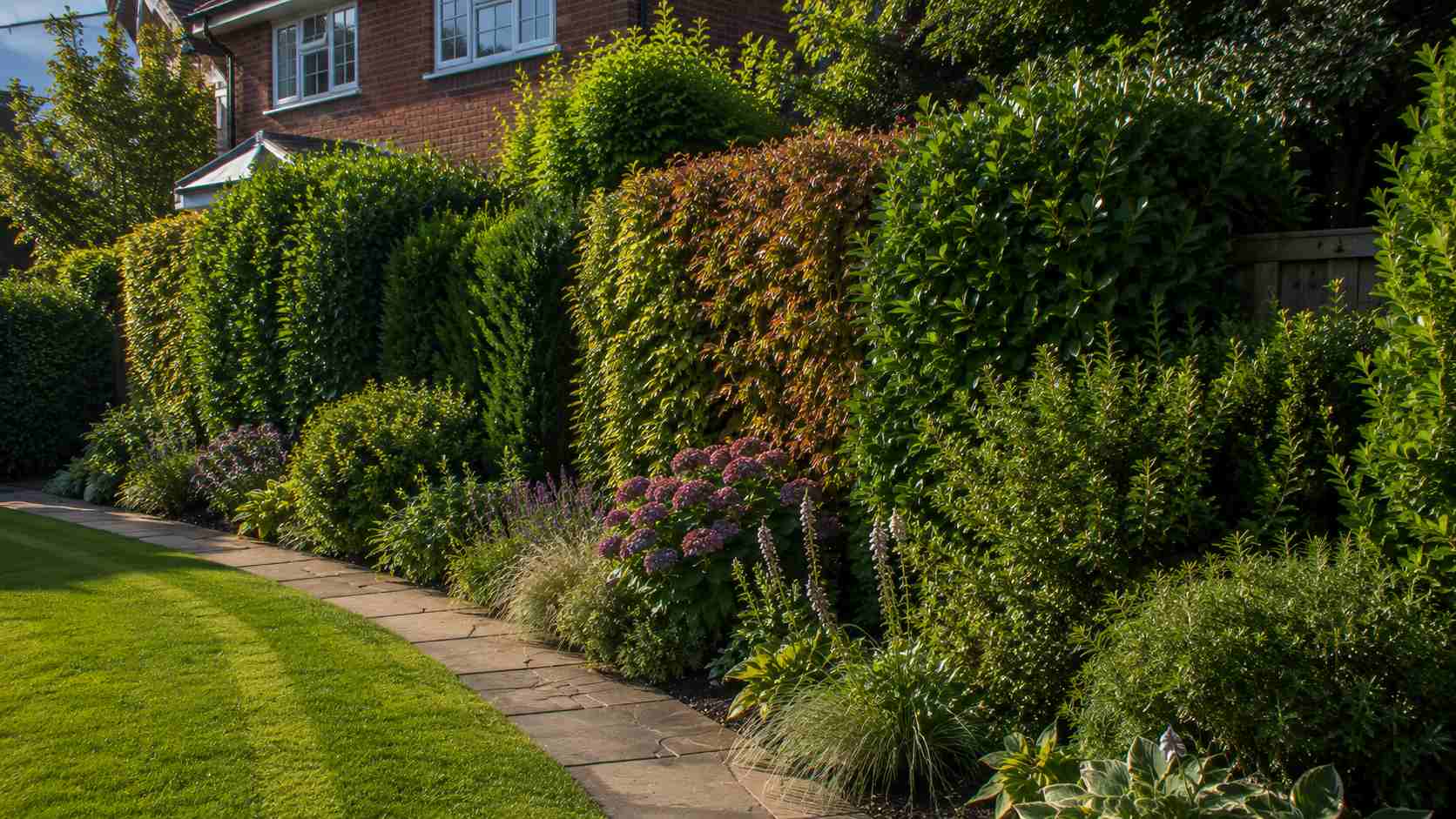
A hedge is a long-term feature, often outliving several owners of the same house, so it's worth choosing the right one from the start rather than living with the wrong choice for years. The best pick depends on whether you want privacy, a formal look, wildlife value or genuinely low maintenance, and how much trimming you're realistically prepared to keep up with. Getting this decision right upfront saves a difficult, expensive rip-out-and-replant job further down the line.
Match the hedge to the job
- ›Formal evergreen (box, yew, privet): neat, dense, year-round screening, needs regular trimming to stay crisp.
- ›Native mixed hedging (hawthorn, hazel, field maple, blackthorn): great for wildlife and a softer, informal look, with lower ongoing effort.
- ›Flowering hedges (escallonia, forsythia, berberis): seasonal colour and interest, usually cut back once a year after flowering.
- ›Fast-growing conifers (leylandii, western red cedar): quick privacy, but need frequent, disciplined control to stay manageable and avoid becoming a genuine problem.
- ›Beech and hornbeam: technically deciduous but hold onto their brown leaves through winter when clipped, giving a formal look with a distinctive seasonal change.
Popular hedging plants and what they suit
Box (Buxus sempervirens) is the classic choice for low, formal edging around beds and paths, dense, slow-growing and easy to keep neat, though it needs monitoring for box blight and box tree caterpillar. Yew (Taxus baccata) makes an excellent tall, formal, dark green hedge, slow to establish but extremely long-lived and tolerant of hard pruning if it ever needs renovating.
Privet (Ligustrum ovalifolium) grows faster than box or yew and takes clipping well, making it a practical, budget-friendly formal hedge, though it needs slightly more frequent trimming to stay sharp. Beech and hornbeam both give a similarly formal look with the bonus of coppery winter foliage, and both tolerate a wide range of soils, including the heavier clay found in many gardens.
For anyone prioritising wildlife, a native mixed hedge of hawthorn, blackthorn, hazel, field maple and dog rose gives flowers for pollinators in spring, berries for birds in autumn, and shelter and nesting habitat year-round, all while asking for only a single trim each year.
Think about upkeep before you plant
A crisp formal hedge looks wonderful but wants two or three trims a year to stay looking sharp; a native or informal hedge is far more forgiving and generally needs just one. Be genuinely honest about how much maintenance you'll actually keep up with rather than how much you'd like to in theory, a beautiful hedge you can't maintain quickly becomes a problem rather than an asset, and an overgrown hedge is considerably harder and more expensive to bring back under control than it ever was to keep tidy in the first place.
If you know upkeep isn't something you'll manage yourself, factoring in a regular trimming service from the outset is often more realistic than assuming a formal hedge will stay looking good on its own.
Evergreen or deciduous?
Evergreen hedges screen all year round, which is usually what people actually want when privacy is the main goal, no gaps appear over winter just when neighbouring windows and gardens become more visible through bare branches elsewhere. Deciduous and mixed hedges lose their leaves in winter but often reward you with flowers, berries and far more value for wildlife than a solid evergreen block ever will.
Some semi-evergreen options, such as privet in milder winters, hold onto much of their foliage without being fully evergreen, offering something of a middle ground. It's worth thinking honestly about whether year-round screening or seasonal interest and wildlife value matters more to you, since it genuinely changes which species makes sense.
Spacing, height and boundary considerations
Correct spacing at planting has a big effect on how quickly and evenly a hedge fills in, planted too far apart it takes years longer to knit together and leaves gaps at the base; planted too close, plants compete for water and nutrients and can grow thin and leggy. As a general guide, most formal hedging is planted at around 3 plants per metre in a single row, or a staggered double row for a thicker, faster-establishing screen, though the ideal spacing does vary by species and it's worth checking guidance for the specific plant you're choosing.
It's also worth knowing that hedges over a certain height along a shared boundary can be subject to high hedge rules if a neighbour raises a complaint, this varies by circumstance and is worth checking before letting any boundary hedge grow unchecked to a significant height.
Give it the right start
Whatever you choose, autumn and the dormant season are ideal for planting, giving roots months to establish at the right spacing and depth into well-prepared ground before spring growth begins. Bare-root hedging planted in season is a genuinely economical way to plant a long run, considerably cheaper than the same plants bought potted later in the year. Matched correctly to your soil and aspect, and kept watered through its first spring and summer, a new hedge establishes with far less fuss and far fewer losses than one planted at the wrong time or left to fend for itself.
This is exactly the groundwork our hedge trimming and planting service is built around, choosing the right species for your soil and purpose, planting at the right time and spacing, and setting up a hedge to thrive rather than struggle. For anyone planning a wider garden redesign around a new hedge, whether that's screening, structure or dividing up a larger plot, our garden design and landscaping service can plan the hedge in alongside everything else rather than as an afterthought.
Common hedge planting mistakes
- ›Choosing a fast-growing conifer for quick privacy without accounting for the ongoing trimming it will demand for decades afterward.
- ›Planting too close to a boundary, causing disputes or restricted access for trimming from one side.
- ›Skipping soil preparation, hedges planted into compacted or poor soil establish slowly and unevenly along their length.
- ›Underestimating eventual height and spread, leading to a hedge that quickly outgrows the space allotted to it.
- ›Letting a new hedge dry out in its first summer, this is one of the most common causes of patchy establishment and gaps.
Choosing the right hedge for your soil and setting
Local ground conditions genuinely affect which hedging thrives with least fuss. On the sandy, free-draining soil around areas like Kingston upon Thames, plants that dislike wet roots, such as yew and privet, tend to establish easily, while heavier clay ground, more typical of parts of Richmond, suits hawthorn, hornbeam and field maple particularly well, since all three tolerate damper, denser soil without sulking. Choosing hedging suited to your specific plot, rather than whatever's cheapest or most familiar, is what makes the difference between a hedge that thrives and one that limps along for years.
Frequently asked questions
A native or informal mixed hedge, hawthorn, hazel and field maple for example, is usually the most forgiving, needing roughly one cut a year, and it's great for wildlife too. Formal evergreen hedges look sharper but need two or three trims a year to stay crisp.