Planting · 9 min read
How to Plant Tulips and Spring Bulbs in November
By House of Horticulturists · 13 November 2026
Few garden jobs are as rewarding for the effort as planting bulbs. An hour or two in November, with a trowel and a bag of bulbs, delivers months of colour the following spring, from the first crocuses and daffodils through to tulips and alliums. November is actually the best month for tulips, planted later than most other bulbs, and it's far from too late for a number of others. This guide explains which bulbs to plant now, how deep and how far apart to plant them, how to adapt planting to heavy clay or pots, and how to look after them so they flower well, whether you have a London courtyard or a larger Surrey garden.
Why November is the right time for tulips
Tulips are planted later than most spring bulbs, typically from late October through November. Planting them once the ground has cooled helps reduce the risk of a fungal disease known as tulip fire, and the bulbs still have plenty of time to root before spring. Planting too early in warm soil makes them more vulnerable, so there's no advantage in rushing.
That makes November an ideal month for planting tulips, and it's also a good time to finish off planting other bulbs. Our guide to why autumn is the best time to plant explains how autumn conditions suit many plants, and our autumn checklist for preparing your garden for winter shows how bulbs fit into the seasonal routine.
Which bulbs can you plant in November?
- ›Tulips, best planted from late October through November.
- ›Daffodils and narcissi, which can go in until the ground freezes, though earlier is generally better.
- ›Hyacinths, which like cool soil and are good for pots and borders.
- ›Alliums, which are happy planted in autumn and give sculptural flowers in late spring.
- ›Crocuses and other small bulbs, which are ideally planted earlier but can still go in if conditions allow.
- ›Fritillaries and other specialist bulbs, subject to availability and the supplier's advice.
Choosing good bulbs
Buy firm, plump bulbs with no soft spots, mould or damage, and avoid anything that looks shrivelled. Larger bulbs generally produce better flowers. Plant them soon after purchase, or store them somewhere cool, dry and ventilated until planting, since bulbs left in warm, damp conditions can deteriorate.
Different varieties flower at different times, so choosing early, mid and late flowering types extends the display. Species and smaller tulips often return more reliably year after year than large hybrids, which can fade after the first season.
Where to plant
Most spring bulbs prefer a sunny or lightly shaded position with good drainage, since waterlogged soil causes bulbs to rot. Borders, beneath deciduous trees and shrubs, along paths, in lawns and in containers all work well. Tulips in particular like a sunny, well-drained spot.
Think about where you'll see them from, such as a window, the front path or a seating area, and plant in groups rather than single rows for more impact.
How deep and how far apart
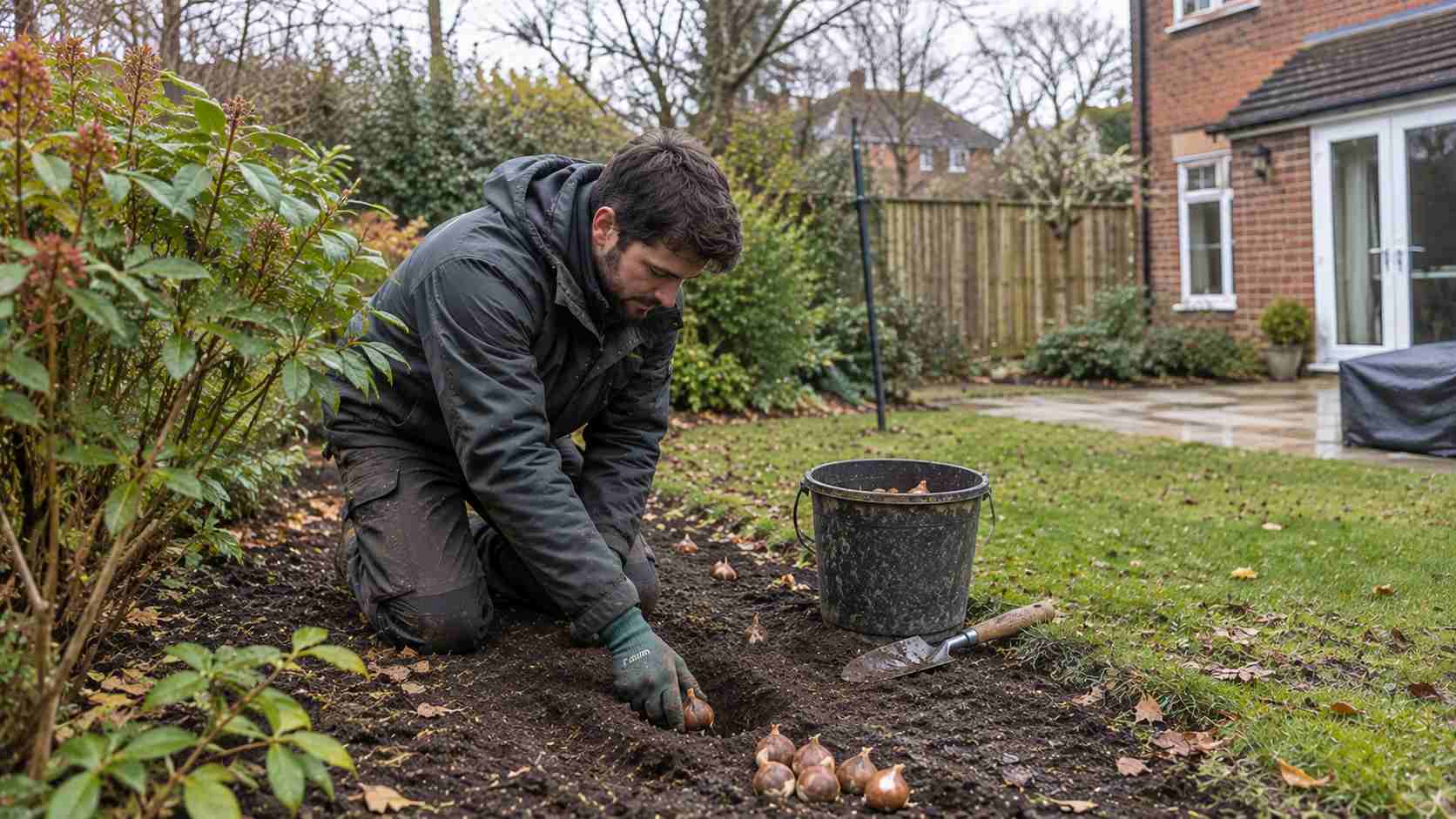
A useful general rule is to plant bulbs at around two to three times their own height, pointed end up, though the specific depth and spacing can vary by type, so check the supplier's guidance. Plant in clusters, with bulbs a few centimetres apart, rather than scattering them singly, for a fuller display.
Deeper planting can help tulips survive in subsequent years in some conditions, and protects bulbs from digging animals in some cases, but avoid planting so deep that shoots struggle to reach the surface.
Step-by-step planting
- ›Loosen the soil and remove weeds in the planting area.
- ›Mix in a little grit or compost if the soil is heavy or poor.
- ›Dig individual holes or a wider trench to the right depth.
- ›Place bulbs pointed end up in groups, with a few centimetres between them.
- ›Backfill with soil, firm gently and water lightly if the ground is dry.
- ›Label the area or mark it, so you don't dig the bulbs up by accident.
- ›Protect against squirrels and other digging animals with mesh or a covering if needed.
Planting in heavy clay or poorly drained soil
Bulbs dislike sitting in cold, wet soil, so heavy clay needs a little help. Mix grit or sharp sand into the planting hole, raise planting areas slightly, or plant in containers. Around areas such as Cobham, where ground is heavier, this makes a real difference to success, while free-draining ground near Epsom often suits bulbs naturally. If water regularly collects in your garden, our guide to improving garden drainage explains the causes and fixes.
Bulbs in pots and containers
Containers are ideal for small gardens, courtyards and balconies, which is where many people in places such as Chelsea grow their displays. Use a good, free-draining compost, ensure pots have drainage holes, and plant bulbs fairly close together, since they won't need as much room as in a border. Layering different bulbs, with later-flowering ones deeper and earlier ones shallower, gives a long succession from a single pot. Keep pots from sitting in water, and protect them in very hard frosts, as covered in our guide to protecting plants from frost. Our guide to small garden design ideas has more ideas for compact spaces.
Naturalising bulbs in lawns and borders
Daffodils, crocuses and snowdrops can naturalise in grass and under trees, building up impressive drifts over the years. If you plant in a lawn, leave the grass uncut until the bulb foliage has died back, which means delaying the first mow, so choose a spot where that's acceptable. This also helps wildlife, since early flowers are a valuable food source for emerging pollinators, as covered in our guide to making your garden more wildlife-friendly.
After planting: aftercare through winter and spring
- ›Water if the ground is very dry after planting, but avoid waterlogging.
- ›Clear fallen leaves from over the bulbs, as explained in our leaf clearance guide.
- ›After flowering, deadhead and leave the foliage to die back naturally, which feeds the bulb for next year.
- ›Feed lightly with a suitable fertiliser as shoots emerge or after flowering, if you want to encourage a repeat display.
- ›Keep bulbs and bulb waste away from pets and children, since some bulbs can be harmful if eaten.
Common mistakes to avoid
- ›Planting tulips too early, in warm soil, which raises the risk of disease.
- ›Planting too shallow or too deep.
- ›Planting in waterlogged or heavy soil without improving drainage.
- ›Planting single bulbs in rows rather than groups.
- ›Cutting back foliage too soon after flowering.
- ›Forgetting where bulbs are planted and digging them up accidentally.
Designing a spring bulb display
The best displays come from a little planning, such as combining bulbs that flower in succession, repeating colours across the garden, and planting bulbs among perennials that will cover the fading foliage. Our guide to winter interest in the garden shows how to build year-round structure, and our guide to low-maintenance garden design explains how to choose planting that delivers without constant upkeep.
Our Garden Design & Landscaping service can plan seasonal planting schemes, including bulbs, as part of a wider garden design, and our Hedges, Pruning & Planting and Garden Maintenance services can plant and care for borders through the year. We work across London and Surrey, including Richmond, where established borders suit large drifts of spring bulbs.
Frequently asked questions
No. November is ideal for tulips, which are planted later than most bulbs to reduce the risk of disease.