Garden Design · 10 min read
Small Garden Design Ideas That Make the Most of the Space
By House of Horticulturists · 11 July 2026 · Updated 26 September 2026
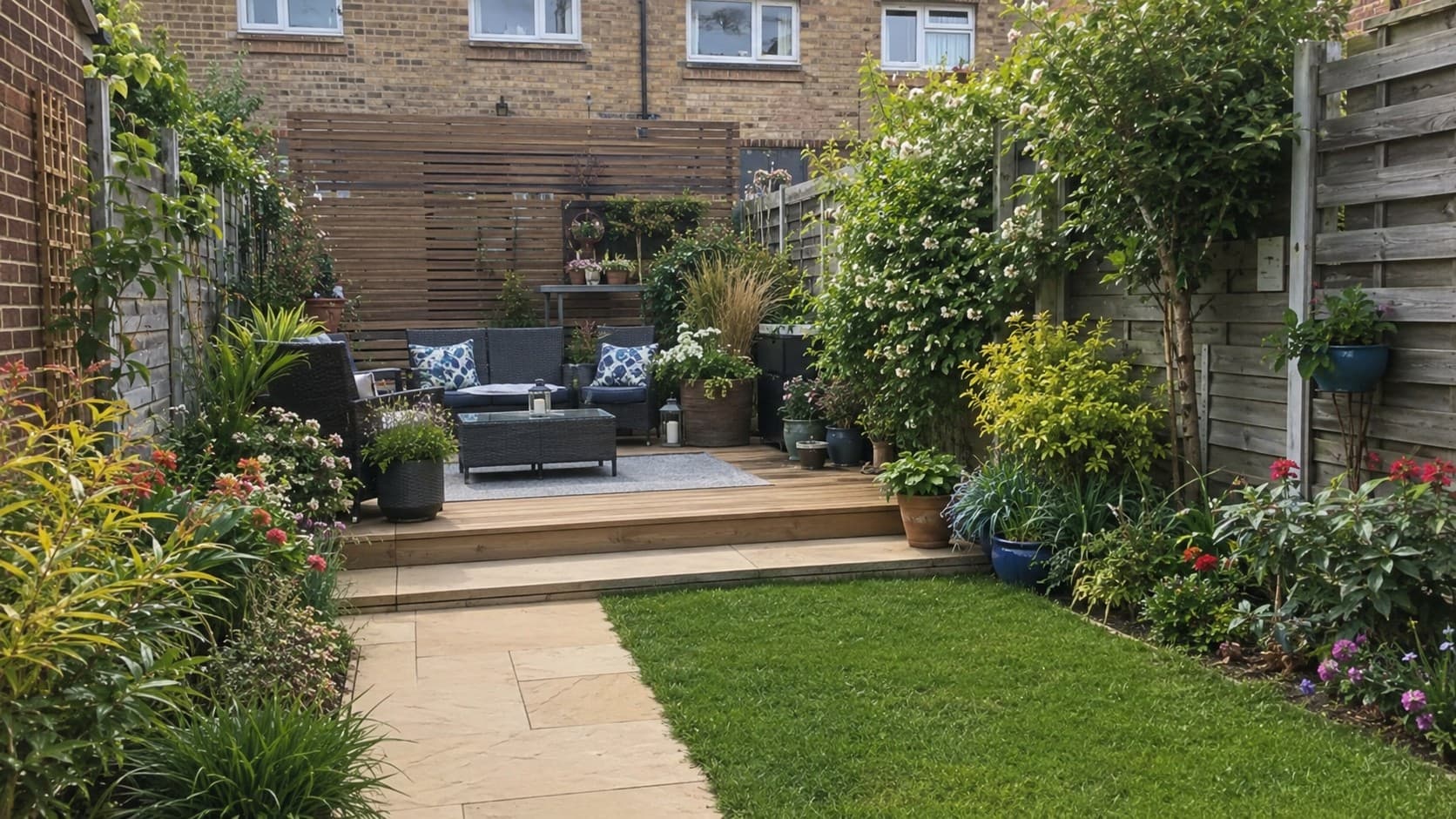
A small garden presents a genuinely different design challenge to a large one, not simply a scaled-down version of the same thinking. Every plant, every piece of furniture and every surface material has to earn its place, and a design approach that works beautifully at scale in a large garden can feel cluttered and overwhelming compressed into a compact courtyard or terrace. The good news is that a well-designed small garden can feel considerably more spacious and usable than its actual footprint suggests, here's how to get there.
Zoning a small space properly
Counterintuitively, dividing a small garden into distinct zones, rather than treating it as one open area, generally makes it feel larger rather than smaller, because it creates a sense of discovery and depth that a single flat view doesn't offer. Even a modest change, a slightly raised seating area, a change in paving material, or a simple screen or trellis partially dividing one section from another, gives the eye somewhere to travel rather than taking in the entire garden in a single glance.
This doesn't need elaborate structural work, sometimes a change in planting height or a strategically placed pot is enough to suggest a boundary between a dining area and a planted corner, without actually losing any usable floor space to a physical divide.
Going vertical
When floor space is limited, vertical space is where a small garden can genuinely expand without sacrificing anything usable underneath. Climbing plants trained up walls, fences and pergolas add real greenery and softness without taking up valuable ground area, our guide to the best climbing plants for shade covers several strong options for exactly this kind of vertical planting in a compact, often shaded courtyard setting.
Wall-mounted planters, tiered plant stands and hanging baskets all achieve a similar effect, bringing planting up off the ground plane and making full use of boundary walls and fences that would otherwise sit as plain, unused surfaces. This layered, vertical approach to planting is often what separates a small garden that feels genuinely lush from one that feels sparse despite similar plant quantities.
Choosing furniture and features at the right scale
Furniture proportioned for a small space matters enormously, oversized furniture is one of the most common mistakes in compact gardens, immediately making the whole space feel cramped regardless of how well everything else is designed. Folding, stacking or multi-purpose furniture, a bench that doubles as storage, a table that folds flat against a wall when not in use, keeps a small garden feeling open when it's not actively being used for dining or entertaining.
The same principle applies to any hard landscaping features, a small garden generally benefits from one well-considered focal point rather than several competing features, a single striking specimen plant, a compact water feature, or a considered piece of sculpture tends to work far better than multiple smaller distractions competing for attention in a limited space.
Planting strategy for small gardens
- ›Choose fewer, larger specimen plants rather than lots of small ones, which tends to read as more considered and less cluttered.
- ›Prioritise evergreen structure so the garden doesn't feel bare through winter, when a small space has fewer distractions to draw the eye elsewhere.
- ›Use a restrained, cohesive colour palette rather than a wide mix, which helps a compact space feel calm rather than visually busy.
- ›Repeat a small number of plant varieties rather than including many different ones, repetition reads as intentional design rather than a collection of individual choices.
- ›Consider scent as well as look, a small garden is experienced up close far more than a large one, making fragrant planting particularly worthwhile.
Using light and colour to create the illusion of space
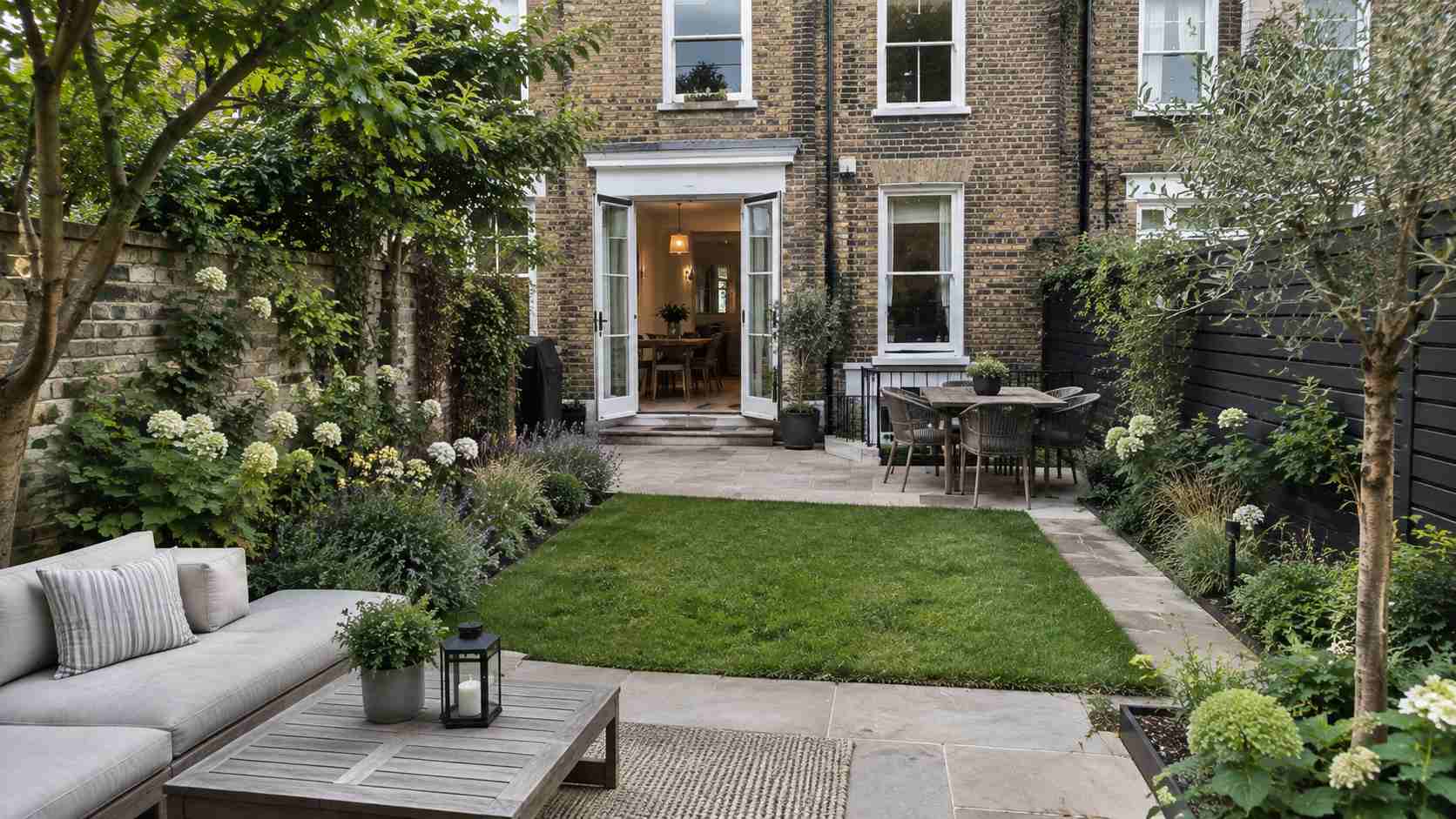
Light-coloured hard landscaping, paving, render, fencing paint, reflects available light around a small, often shaded space far more effectively than darker materials, and can make a genuine visible difference to how open a compact garden feels, particularly one enclosed by walls or fencing on multiple sides. This matters especially in the tightly enclosed courtyard gardens common across parts of Fulham and similar dense urban settings, where natural light is often already at a premium.
Mirrors, used carefully, are a genuinely effective trick for suggesting additional depth in a small garden, positioned to reflect planting rather than a hard wall, they can make a boundary feel like it continues beyond where it actually ends. It's a technique worth using sparingly and thoughtfully rather than as a dominant feature, since an obviously placed mirror loses the illusion it's meant to create.
Making a small garden properly multi-functional
Small gardens generally need to do more with less, working as a dining space, a relaxation spot and sometimes a play area all within one modest footprint, rather than having room for entirely separate zones dedicated to each. Furniture and layout that can shift purpose through the day, or across seasons, tends to serve a compact garden considerably better than a fixed, single-purpose design.
Garden lighting plays a particularly valuable role in small gardens specifically, extending usable hours into the evening without needing any additional floor space at all, often one of the highest-value additions available for a compact garden precisely because it adds genuine usability rather than competing for already-limited space.
Reducing lawn, or removing it entirely
A small patch of lawn in a compact garden often ends up being neither a genuinely usable area nor particularly attractive, too small to comfortably sit or play on, and disproportionately high-maintenance relative to the modest benefit it provides. Many small garden designs work better replacing lawn entirely with hard landscaping, gravel, or a mix of paving and dense planting, freeing up the space for genuinely usable seating or dining rather than a strip of grass that's awkward to mow and rarely used.
Where some green, soft ground cover is still wanted, low-maintenance alternatives to traditional lawn, certain hardy ground cover plants or artificial grass for particularly shaded or heavily used corners, can achieve a similar visual effect without the maintenance burden a small patch of real lawn actually demands relative to its size.
Storage without sacrificing style
Storage is easy to overlook in small garden design but becomes a genuine problem quickly without proper planning, bins, tools and outdoor equipment need somewhere to live, and an afterthought storage solution can undo an otherwise well-considered design. Built-in bench seating with storage beneath, a slim, well-designed storage unit integrated into the boundary, or a small, well-proportioned garden room style structure can all solve this without the compromise a bulky standalone shed brings to a compact space.
Planning storage into the design from the outset, rather than squeezing something in once everything else is finished, consistently produces a far more cohesive result in a small garden than retrofitting a solution later.
Designing a small garden that genuinely works
The most successful small garden designs come from a proper site assessment rather than applying generic ideas without considering the specific space, its orientation, existing boundaries, and how it's actually going to be used day to day. This matters particularly in the tightly enclosed, often overlooked courtyard and terrace gardens common across areas like Wandsworth and Worcester Park, where privacy, light and clever use of every available surface all need balancing within a genuinely limited footprint.
Our Garden Design & Landscaping service specialises in exactly this kind of considered small-space design, and our Patio & Paving and Decking services can help specify the right materials and layout to make a compact garden feel considerably more spacious than its actual dimensions suggest.
Frequently asked questions
Zoning the space into distinct areas, using light-coloured hard landscaping, adding vertical planting on walls and fences, and choosing fewer, larger plants rather than many small ones all help create a sense of depth and space beyond the garden's actual footprint.