Hedges · 10 min read
Bare-Root Hedging and Trees: Why November to March Is the Cheapest Time to Plant
By House of Horticulturists · 11 November 2026
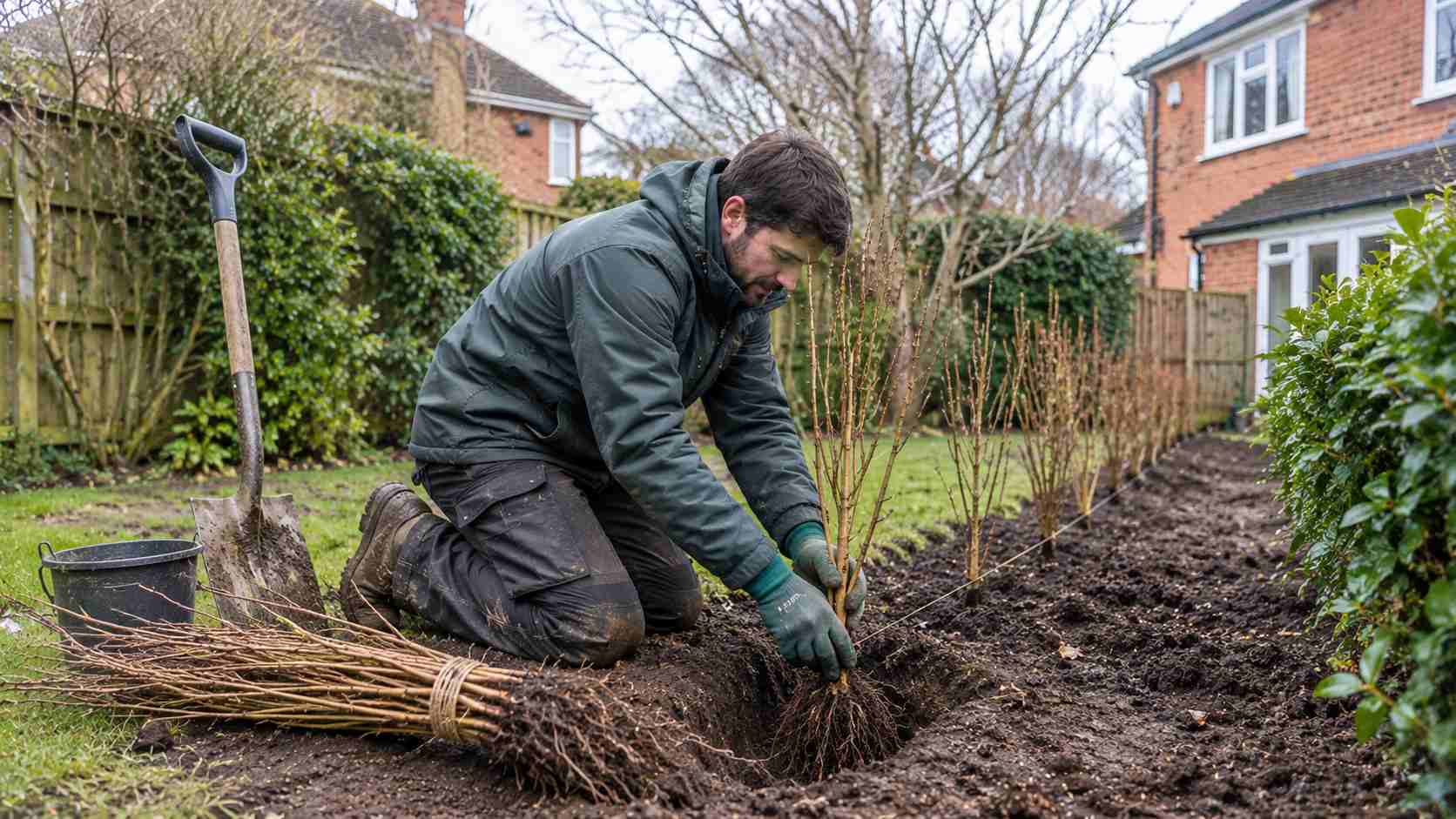
If you're planning a new hedge, a row of young trees or a handful of roses, the dormant season is the time to buy bare-root. Bare-root plants are lifted from nursery fields in winter and sold without pots or compost, which makes them lighter, easier to handle and generally cheaper than the same plants sold in containers. They also tend to establish well, because they're planted while dormant and put their energy into roots before spring growth begins. This guide explains what bare-root means, why November to March is the season, which plants suit it, and how to plant and look after them so they thrive.
What bare-root means
Bare-root plants are grown in nursery fields, lifted while dormant in autumn and winter, and sold with their roots bare, usually wrapped or bundled to keep them moist. They have no pot and no compost, so they're cheaper to grow, store and transport than container-grown plants. Because they're dormant, they can be moved with little stress, then settle in and root before the growing season starts.
The trade-off is timing. Bare-root plants must be planted during the dormant season, roughly from late autumn to early spring, and they shouldn't be left with exposed roots for long. That's why the window is short, and why planning ahead pays off.
Why November to March is the season
Bare-root planting runs while plants are dormant, usually from around November through to March, as long as the ground isn't frozen or waterlogged. Planting in this window gives roots time to establish before spring growth demands water and nutrients, which often leads to stronger plants than those planted in the heat of summer.
Our guides to why autumn is the best time to plant and landscaping in winter explain how the colder months suit planting and groundwork, with bare-root hedging and trees among the best jobs for the season.
Is bare-root really cheaper?
As a general rule, yes. Bare-root plants usually cost noticeably less than the same species sold in pots, since there's no container, compost or extended nursery time to pay for, and they're easier to transport in bulk. This makes bare-root the most economical way to plant a long run of hedging, and a good option for woodland-style planting or young trees.
Prices vary by species, size and supplier, and the cost of preparation and labour still applies, so it's worth comparing quotes on the whole project. Our landscaping cost guide explains what drives the price of garden work.
Other benefits of bare-root
- ›Wide choice of species and varieties, especially for native and mixed hedging.
- ›Strong root development, since roots are planted into the soil while dormant.
- ›Lighter and easier to handle, which helps with large orders.
- ›Less plastic and packaging than container-grown stock.
- ›Often good value for larger quantities such as long hedges or woodland planting.
What suits bare-root planting
- ›Native and mixed hedging such as hawthorn, blackthorn, hazel, field maple, hornbeam and beech.
- ›Young trees, including whips, feathered trees and many fruit trees.
- ›Roses and many deciduous shrubs.
- ›Soft fruit bushes and some climbers.
- ›Woodland and wildlife planting schemes.
What doesn't suit bare-root
Many evergreens are sold in containers or as root-balled plants rather than bare-root, because they don't tolerate having bare roots out of the ground. If you want year-round screening from evergreens, ask about suitable stock for the time of year. Our guides to choosing the right hedging plant and planting for privacy explain the options, including mixed hedging that gives good cover.
Tender plants and anything that needs warm soil to establish should wait until spring and be planted from pots.
Choosing the right plant for your soil
Choosing species suited to your ground makes a big difference. On heavier clay, hornbeam, hawthorn and field maple tend to cope well, while lighter, sandier ground suits a different range. Chalky soils favour species that tolerate alkaline, free-draining conditions. In places such as Cobham, where ground is heavier, and Oxshott, where it's sandy and free-draining, the right choice can differ even though the gardens are close together.
Gardens around Epsom and Weybridge also vary, from chalk to riverside ground, so check your soil before choosing. Our Hedges, Pruning & Planting service can advise on the right species for your plot.
How to plant a bare-root hedge
- ›Prepare the ground by clearing weeds and loosening compacted soil along the planting line.
- ›Keep roots moist and covered until the moment of planting, and soak them if needed.
- ›Dig a trench or individual holes wide enough for the roots to spread naturally.
- ›Plant at the right spacing, following the supplier's guidance, with a double staggered row for a thicker hedge if wanted.
- ›Set plants at the same depth as they grew in the nursery, shown by a soil mark on the stem.
- ›Backfill, firm gently, and water in well, even if the ground is damp.
- ›Mulch around the base to suppress weeds and hold moisture, and protect against rabbits or deer if needed.
How to plant a bare-root tree
Dig a hole wide enough for the roots to spread, but no deeper than the root system, so the tree sits at its nursery depth. Spread the roots, backfill with the soil you removed, firm lightly and water thoroughly. Stake young trees securely so wind doesn't rock the roots, and use a guard or tree shelter if rabbits, deer or strimmers are a risk. Remove or loosen ties as the trunk thickens.
Planting at the right depth matters. Too deep and the roots can suffocate, too shallow and they can dry out.
Aftercare in the first year
Bare-root plants need little effort beyond watering and weeding in their first year. Water through dry spells, especially in the first spring and summer, keep the base free of weeds and top up mulch. Check ties and stakes, and in the early years, light formative pruning helps hedging thicken from the base.
Our guide to winter tree pruning in London covers dormant-season pruning, and our Garden Maintenance plans can look after new planting through its first year.
Common bare-root mistakes
- ›Leaving roots exposed to wind and sun before planting.
- ›Planting in frozen or waterlogged ground.
- ›Planting too deep or too shallow.
- ›Choosing species unsuited to the soil or position.
- ›Forgetting to water through the first spring and summer.
- ›Planting too close or too far apart for the desired result.
Wildlife and design benefits
Mixed native hedging is excellent for wildlife, providing blossom, berries and shelter, and our guide to making your garden more wildlife-friendly explains how planting supports birds and insects. A new hedge can also provide privacy, wind protection and a natural boundary, and our Fencing & Screens service can combine fencing with planting for instant cover while hedging establishes.
Planting bare-root hedging and trees with us
The bare-root season is short, so it's worth deciding early. Our Hedges, Pruning & Planting service plants hedging and trees through the dormant season, and our Garden Design & Landscaping service can plan planting as part of a wider scheme. We work across south west London and Surrey, from Cobham and Oxshott to Epsom and Weybridge, and a site visit helps us advise on species, spacing and the best planting time for your ground.
Frequently asked questions
Bare-root plants are sold dormant without a pot or compost, with their roots exposed. They're lifted in autumn and winter and planted while dormant.