Seasonal Gardening · 9 min read
Protecting Plants From Frost: What Needs Covering and What Doesn't
By House of Horticulturists · 20 September 2026
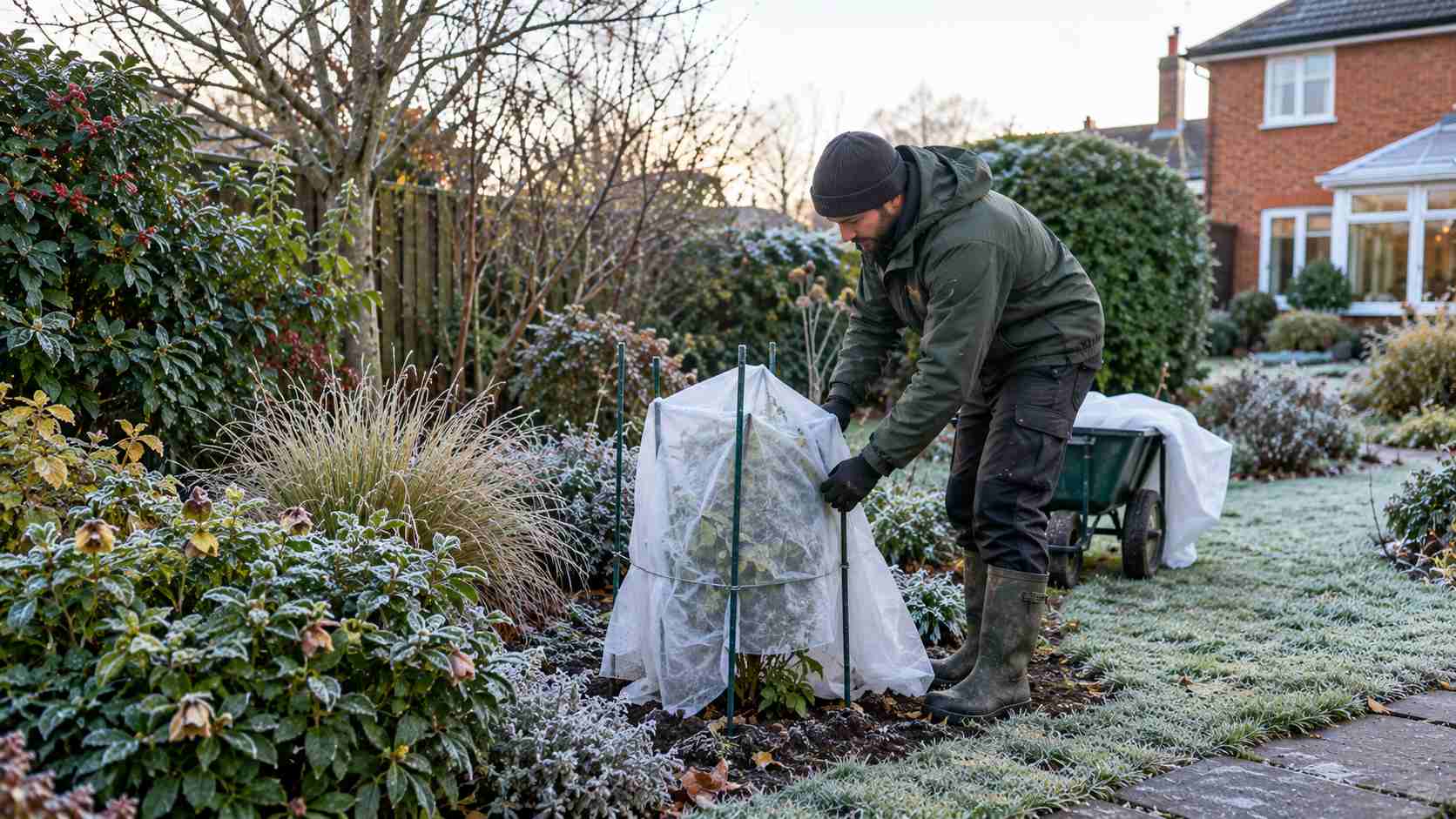
As the first proper frosts of the season approach, it's easy to either panic and cover everything in sight, or ignore the whole issue until something's already been damaged. Neither is the right approach. Frost genuinely threatens certain plants, tender exotics, recent plantings, anything in a pot, while most hardy, established garden plants cope with a UK winter completely unprotected and are often better off left alone. Knowing the difference, and using the right protection method when it's actually needed, saves both wasted effort and genuine plant losses.
Why frost damages plants
Frost damages plant cells directly, ice crystals forming within plant tissue rupture cell walls, and once thawed, that damage shows up as blackened, mushy or collapsed growth, most visible on soft, tender foliage rather than tougher, woody material. This is exactly why tender, fast-growing summer plants suffer so badly from even a light frost, while hardy, slower-growing plants have evolved cellular mechanisms that cope with freezing far better.
Newly planted specimens are also more vulnerable than established ones regardless of species, a young plant's root system hasn't yet developed the depth and resilience that comes with a full growing season or two in the ground, making it more susceptible to both root damage from freezing soil and general winter stress.
Plants that genuinely need protecting
- ›Tender perennials and exotics, dahlias, cannas, tender salvias and similar plants with no real frost tolerance, need lifting, moving under cover, or heavy protection where they're left in the ground.
- ›Container-grown plants generally, pots offer far less insulation around the roots than open ground, so even reasonably hardy plants can suffer root damage in a pot that they'd shrug off if planted directly in soil.
- ›Recently planted shrubs, trees and perennials, particularly anything planted within the last growing season, still establishing and more vulnerable to both frost and general winter stress than mature specimens.
- ›Tender herbs like basil and lemongrass, covered in more detail in our guide to which herbs to bring indoors for winter, alongside which hardy herbs are genuinely fine left outside.
- ›Half-hardy bedding and summer patio displays, which have no meaningful frost tolerance and will collapse at the first proper cold snap regardless of any protection short of bringing them inside entirely.
- ›Citrus trees and other Mediterranean container specimens, which need moving to a frost-free space, greenhouse or conservatory well before the first hard frost arrives.
Plants that generally don't need protecting
A large proportion of what's actually growing in a typical UK garden is genuinely hardy and needs no winter protection at all. Established trees, hardy shrubs, most perennials once they're a season or two into the ground, and the vast majority of native and long-cultivated garden plants have evolved to cope with a UK winter without any intervention, and covering them unnecessarily can do more harm than good by trapping damp against the foliage or stems.
Evergreen structural planting, discussed in more detail in our guide to winter interest in the garden, is generally chosen precisely because it copes with winter conditions well, and most of it needs nothing beyond what it would naturally experience outdoors. If in doubt about a specific plant, checking its stated hardiness rating is more reliable than assuming based on how delicate its summer growth looks.
Fleece: the most versatile protection
Horticultural fleece is the most commonly used and genuinely effective frost protection for garden plants, lightweight enough not to crush foliage, breathable enough to avoid trapping damaging condensation, and simple to drape over borders, wrap around pots, or use as a temporary cover during a specific cold snap. It typically offers a few degrees of protection, enough to make the difference during a light or moderate frost, though it won't save genuinely tender plants during a hard, prolonged freeze.
Fleece works best applied before frost arrives, ideally in the late afternoon while some warmth remains trapped underneath, and removed or vented during milder daytime spells so plants aren't kept permanently covered and deprived of light and air unnecessarily.
Cloches and cold frames
Cloches, whether simple cut-down plastic bottles for individual small plants or purpose-made glass or plastic covers, offer more robust protection than fleece for specific vulnerable plants, trapping warmth while still allowing light through. They're particularly useful for protecting tender seedlings, young vegetable plants, or specific specimens rather than an entire border.
Cold frames provide a step up again, a semi-permanent, ventilated structure ideal for overwintering slightly tender plants, hardening off young plants in spring, or protecting a small collection of pots through the coldest months without needing full greenhouse space.
Mulching for root protection
Mulch, a thick layer of compost, bark chip or well-rotted organic matter spread over the root zone, protects roots from freezing rather than protecting top growth, making it particularly valuable for borderline-hardy perennials and recently planted specimens where root damage is the greater risk. A generous mulch layer applied in autumn, before the ground itself freezes, insulates the soil and can be the difference between a marginal plant surviving winter or not.
This pairs naturally with wider autumn soil improvement, since the same compost or organic matter that protects roots through winter also feeds the soil as it breaks down, exactly the approach covered in our autumn garden checklist.
Protecting pots specifically
- ›Move pots close to the house wall, particularly against a south or west-facing wall, where they benefit from a few extra degrees of radiated warmth.
- ›Wrap pots in bubble wrap or hessian to insulate the root ball, since roots in a container are considerably more exposed to cold than roots in open ground.
- ›Raise pots off the ground on pot feet, preventing waterlogging and cold transferring directly from a frozen or wet surface.
- ›Group pots together, which reduces the surface area exposed to cold air compared with pots spaced apart individually.
- ›Move genuinely tender container plants into a greenhouse, porch or indoors entirely rather than relying on outdoor protection alone.
Common frost protection mistakes
- ›Covering plants too early, before real frost risk arrives, unnecessarily blocking light and trapping damp against foliage.
- ›Using plastic sheeting directly against foliage, which traps condensation and can cause more damage than the frost itself.
- ›Forgetting to protect the roots of container plants, focusing entirely on top growth while ignoring that pots are actually the more vulnerable part.
- ›Leaving fleece or covers on permanently through mild spells, when plants would benefit from light and air rather than staying covered.
- ›Assuming all evergreens are equally hardy, some evergreen shrubs, particularly Mediterranean species, still need protection despite holding their leaves year-round.
Timing frost protection correctly
Frost risk in most of south west London and the surrounding Surrey and Berkshire towns typically begins in earnest from late October or early November, though this varies year to year and by local conditions, with more open or elevated sites often seeing frost earlier and more often than sheltered, built-up areas. Keeping an eye on the forecast through autumn and having protection ready to deploy at short notice is more effective than working to a fixed calendar date, since an unusually mild or early cold snap can catch out anyone relying purely on the season rather than the actual forecast.
Frost pockets, low-lying or more open areas where cold air naturally settles and lingers, can see harder and more frequent frosts than surrounding gardens even a short distance away, something worth being particularly mindful of in more open, semi-rural settings like parts of Chessington, or lower-lying ground near the Wandle valley around Wallington, where cold air can pool more than on higher, more exposed sites nearby.
Getting the garden ready before frost arrives
Frost protection works best as part of a wider autumn routine rather than a last-minute scramble once a cold snap is already forecast, tender plants lifted or moved in good time, mulch applied while the ground is still workable, and fleece and cloches ready rather than being sourced in a rush. Our full autumn checklist for preparing a garden for winter covers how frost protection fits alongside the other seasonal jobs worth tackling through September and October.
For anyone with a garden full of tender or borderline-hardy planting who'd rather have this handled properly each year, our Garden Maintenance service can build frost protection into scheduled autumn visits, and our Garden Design & Landscaping service can help choose genuinely hardy planting for exposed positions from the outset, reducing how much protection a garden needs year after year.
Frequently asked questions
Most tender plants are at risk once overnight temperatures approach freezing, so it's worth having protection ready from late October or early November in most of south west London and the surrounding area, adjusting based on the actual forecast rather than a fixed date.