Garden Design · 9 min read
Winter Interest: Plants and Structure for a Garden That Doesn't Disappear in Winter
By House of Horticulturists · 14 September 2026
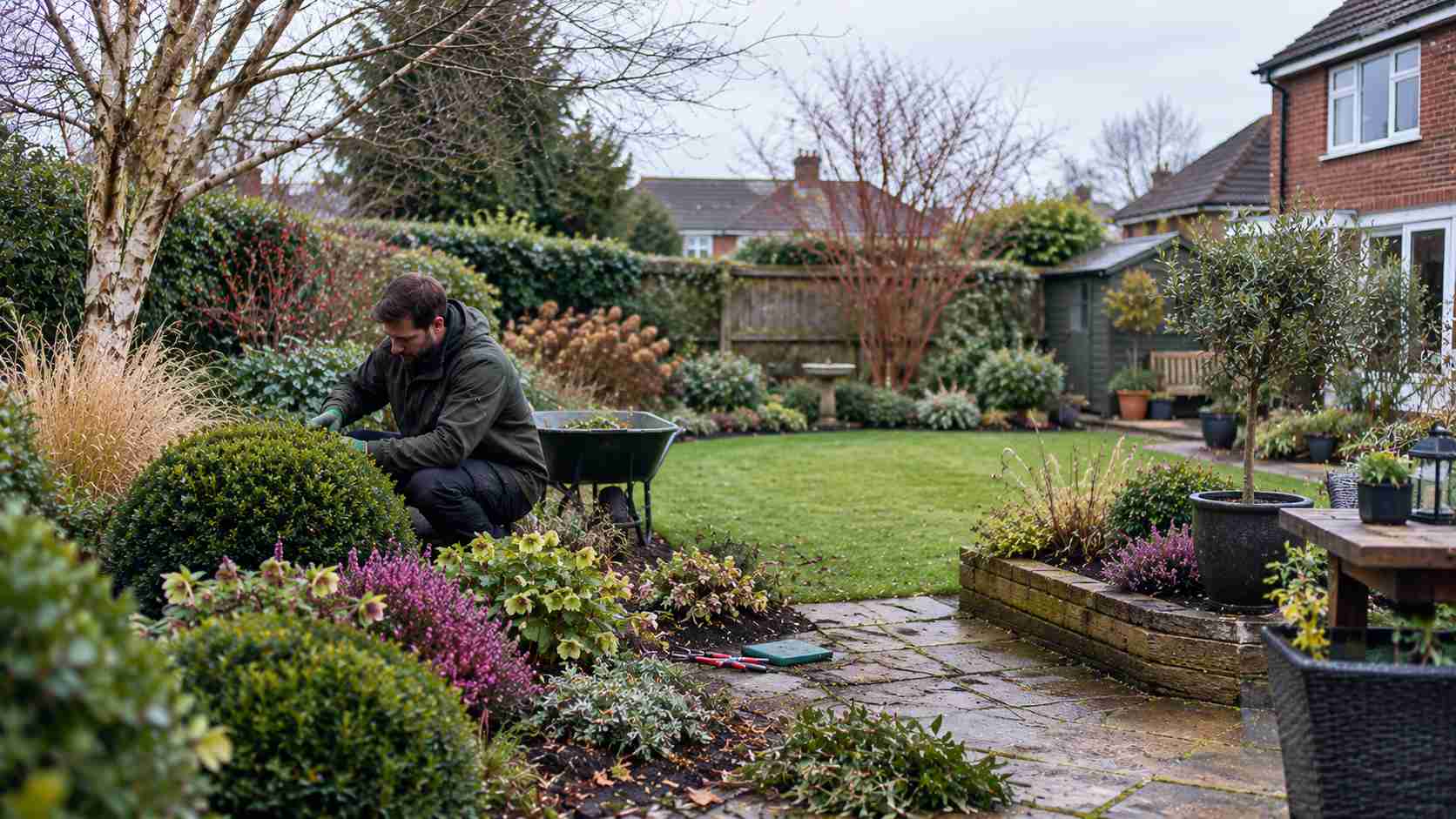
Most garden planning happens with spring and summer in mind, borders bursting with colour, a lawn at its lushest, everything designed around the months a garden gets used and looked at the most. The result, all too often, is a garden that quietly disappears for four or five months of the year, reduced to bare stems and empty borders just when the low winter light and long evenings make a view from the window matter more than ever. A garden genuinely designed for winter interest, structure, evergreen planting, berries, bark and a few well-chosen winter flowers, looks considerably better through the colder months without sacrificing anything in summer.
Why winter interest is worth designing for
A garden is viewed from indoors far more in winter than in summer, shorter days and colder weather mean far more time looking out at it through a window than actually standing in it. That makes winter structure and interest arguably more valuable per hour of enjoyment than summer colour, even though it's consistently the part of garden design left as an afterthought.
Winter interest also isn't about creating a second, separate garden for the colder months, it's about layering in elements, structure, evergreen backbone, a few well-placed winter performers, that work quietly in the background through summer and then genuinely earn their place once everything else has died back.
Structure and evergreens: the backbone of a winter garden
Structure is what separates a garden with genuine winter presence from one that simply looks bare. Evergreen shrubs and hedging provide year-round shape and mass, giving a garden something solid to look at even when every deciduous plant around them has lost its leaves. Clipped box, yew or holly, whether as hedging or shaped specimens, hold their form through winter and give a garden a sense of intention rather than emptiness.
Hard landscaping plays a genuine role here too, well-designed paths, walls, steps and a considered layout give a garden structure that doesn't rely on plants at all, meaning the garden still reads as designed and cared for even at the point in the year when planting is doing the least work. This is exactly the kind of thinking we build into every Garden Design & Landscaping project, planning for how a garden looks in January as much as June.
Berries and seed heads
Berrying shrubs and trees, holly, pyracantha, cotoneaster and viburnum among the most reliable, bring genuine colour and life into a winter garden at exactly the point when most other planting has faded to brown and grey. They also do real ecological work, providing a crucial food source for birds through the leanest months of the year, which is part of why we'd always encourage leaving some spent perennial seed heads standing through winter rather than cutting everything back in a full autumn tidy, something we cover in more detail in our guide to making your garden more wildlife-friendly.
Ornamental grasses left uncut over winter add a similar quiet value, catching frost and low winter light beautifully while also providing shelter for insects, a genuinely low-effort way to add movement and texture to a border that would otherwise be empty until spring.
Bark and stem colour
Once leaves have dropped, bark and stem colour become far more visible, and a handful of plants are specifically worth including for exactly this reason. Dogwoods (Cornus) are the classic choice, with stems in vivid red, orange or yellow that genuinely glow in low winter light, particularly effective planted where late afternoon sun can catch them directly. Birch trees, with their pale, often peeling bark, and certain maples with striking coral or coppery stems, both add a similar quality of interest that's completely invisible in summer behind full leaf cover.
These plants work best given a clear line of sight from wherever they'll actually be seen, a kitchen window, a main path, rather than tucked away in a corner rarely passed through during the shorter winter days.
Winter-flowering plants worth including
- ›Winter jasmine, producing cheerful yellow flowers on bare stems through the coldest months, easy to grow and genuinely reliable.
- ›Hellebores, flowering from midwinter into early spring in shades from white through pink to deep purple, thriving in the partial shade many other plants struggle with at this time of year.
- ›Witch hazel (Hamamelis), with fragrant, spidery flowers on bare branches through winter, a genuine focal point when little else is happening in the garden.
- ›Winter honeysuckle, producing small but strongly scented flowers through the depths of winter, valuable as much for fragrance as visual impact.
- ›Snowdrops and winter aconites, among the earliest bulbs to flower, bringing genuine colour to a garden well before spring officially arrives.
Evergreen climbers and screening
Evergreen climbers earn their keep especially in winter, holding leaf and providing screening and structure on walls and fences at exactly the point when a garden's boundaries would otherwise feel most exposed. Ivy, despite its reputation, is genuinely valuable here, along with evergreen climbing hydrangea varieties and certain honeysuckles that hold onto more foliage through milder winters than their fully deciduous relatives.
For anyone specifically weighing up climbers for a shaded wall or fence, our guide to the best climbing plants for shade covers several options worth considering alongside their winter performance, not just how they behave through the growing season.
Common mistakes with winter garden design
- ›Cutting everything back hard in autumn, removing seed heads, grasses and structure that would otherwise provide genuine winter interest and wildlife value.
- ›Relying entirely on deciduous planting, leaving a garden with no evergreen backbone once leaves have dropped.
- ›Positioning winter-performing plants, bark colour especially, somewhere they're rarely seen or lit well during the shorter days.
- ›Treating winter interest as an entirely separate planting scheme rather than layering it into the existing design alongside summer planting.
- ›Forgetting hard landscaping's role, a garden with strong structural bones from paths, walls and evergreen hedging still looks considered even with minimal flowering.
Designing winter interest into your garden
The most successful winter gardens aren't the result of a single big planting scheme, they're built up gradually, an evergreen hedge here, a dogwood positioned to catch the low sun there, hellebores tucked under a tree that's otherwise bare from November onward. It's entirely possible to layer this into an existing garden over time rather than needing a full redesign, though thinking about it from the outset on a new project generally gives a more cohesive, considered result.
This applies just as much to smaller, more enclosed gardens, common across parts of Fulham, where a few well-chosen evergreen and winter-flowering plants can transform a compact space that would otherwise feel bare for months, as it does to larger, more established plots like those near Richmond, where structural evergreens and bark-interest trees have real room to become genuine focal points. Our Garden Design & Landscaping service can plan winter interest into a new or existing garden properly, so the view from your window still has something worth looking at long after the summer borders have finished.
Frequently asked questions
Dogwoods (Cornus) with brightly coloured stems, witch hazel with fragrant flowers on bare branches, and hellebores flowering from midwinter are among the most reliable choices, alongside berrying shrubs like holly and pyracantha for colour and wildlife value together.