Landscaping · 8 min read
Patio vs Decking: Which Is Better for Your Garden?
By House of Horticulturists · 21 November 2026
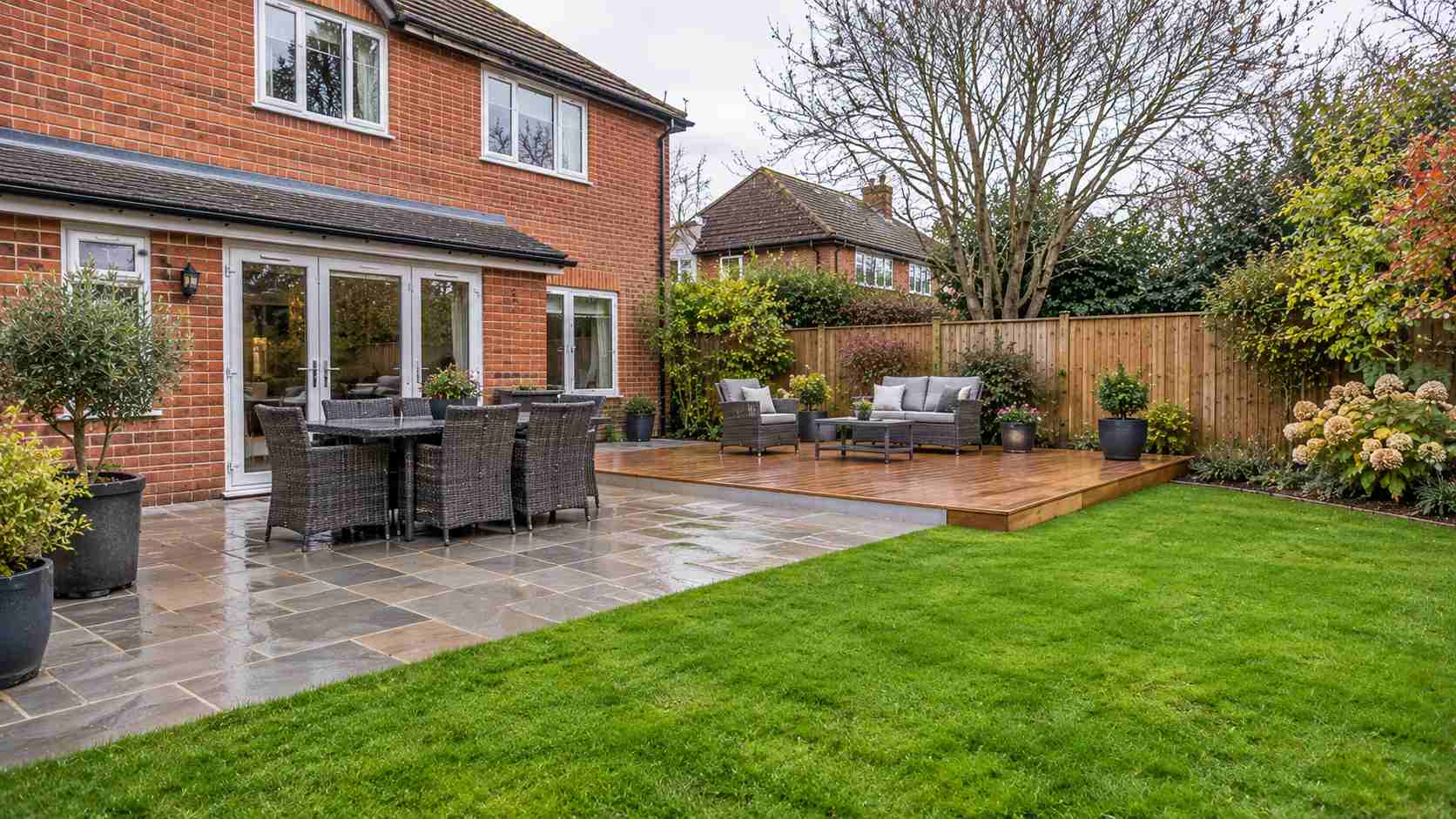
Patio or decking is one of the first decisions in almost every garden project, and there's no single right answer. Both can look superb and last for decades. Which one suits your garden depends on its levels, how much sun it gets, how you'll use the space, how much upkeep you're happy with and, of course, budget. This guide compares the two honestly, point by point, so you can decide with confidence, or see why many gardens end up with a bit of both.
At a glance
- ›Level garden, sunny spot, want minimal upkeep: a patio is usually the better choice.
- ›Sloping garden, or a door that sits well above the lawn: decking is usually simpler and cheaper.
- ›Heavily shaded or damp garden: porcelain paving or capped composite decking, with good drainage or ventilation either way.
- ›Tight budget on level ground: a softwood deck is often the cheapest way to create a seating area, but it needs more maintenance.
- ›Longest lifespan with least fuss: a well-laid patio, followed closely by quality composite or hardwood decking.
Cost: it depends on the ground
On flat, firm ground, a simple softwood deck is often cheaper to install than a patio, because it needs less excavation and fewer materials. Quality composite or hardwood decking costs about the same as, or more than, good porcelain or natural stone paving.
The picture changes on a slope. Building a patio on falling ground means digging out, building retaining walls and taking away spoil, which can add considerably to the cost. A deck sits on adjustable posts and can bridge the change in level with far less groundwork. Over the long term, factor in maintenance too: softwood decking needs regular treatment and eventually replacement, while a well-built patio needs little more than cleaning. For a wider look at what drives project costs, see how much landscaping costs.
Slopes and level changes
This is where decking really earns its place. If your back door is a metre above the lawn, or the garden falls away from the house, a deck can create a level platform straight off the kitchen without the engineering a terraced patio would need. Multi-level decks connected by wide steps can turn an awkward slope into usable space.
Patios can of course work on slopes, but they usually need retaining walls, steps and careful drainage. Sometimes that's the right investment, especially if you want a solid, permanent look. Our guide to landscaping a sloping garden explores both approaches.
Shade, damp and slipperiness
Many London and Surrey gardens are shaded by trees or neighbouring buildings, and both surfaces can turn green and slippery in shade. The material makes a big difference.
- ›Porcelain paving absorbs almost no water, so it resists algae and dries quickly. Choose a textured, slip-rated finish for shaded spots.
- ›Natural stone such as sandstone is more porous, so it greens more readily in shade and benefits from sealing and regular cleaning.
- ›Softwood decking in shade can become slippery and is more prone to rot if the frame isn't well ventilated.
- ›Capped composite decking resists rot and algae better than timber, and grooved or textured boards help with grip.
Maintenance and lifespan
A well-laid patio on a proper base can last for decades with occasional cleaning and, for natural stone, resealing every few years. Porcelain needs the least care of all.
Decking varies more. Pressure-treated softwood needs cleaning and treating regularly and typically lasts around 10 to 15 years. Hardwood and quality composite last much longer, often 25 years or more, with composite needing little beyond an occasional wash. In every case, the frame underneath matters as much as the boards. For details, see composite vs timber decking and how to maintain decking.
Look and feel
A patio tends to feel solid, permanent and architectural. Natural stone suits period homes, while large-format porcelain gives a clean, contemporary finish that can run seamlessly from inside to out. Our guide to porcelain vs natural stone paving compares the options.
Decking feels warmer and softer underfoot, and can make a garden feel more relaxed, like an outdoor room. It's particularly effective for raised platforms with views across the garden, around hot tubs, or in gardens with a woodland or waterside feel.
Drainage and heavy soil
A patio is a hard surface, so the rain that falls on it has to go somewhere. It must be laid with a gentle fall that sends water away from the house, often to a channel drain or soakaway. On heavy clay, a patio also needs a deeper, well-compacted base to stay stable.
Decking lets rain pass between the boards to the ground below, so it adds less run-off. On clay, its footings need to sit below the zone where the soil moves seasonally. If your garden already struggles with standing water, see quick fixes vs proper drainage for waterlogged lawns before deciding.
Planning rules to know
- ›Patios in back gardens generally don't need planning permission.
- ›In front gardens, covering more than five square metres with impermeable paving that drains towards the road usually needs permission, so permeable paving or drainage to a planted area is the norm.
- ›Decking is generally permitted development if it's no more than 30cm above the ground and, together with outbuildings, covers no more than half the garden.
- ›Raised decks above 30cm usually need planning permission, and may raise overlooking concerns for neighbours.
- ›Listed buildings and conservation areas can bring extra requirements, especially for front gardens and anything close to protected trees.
Practical points people forget
- ›Heat: dark composite boards and dark paving can get very hot in full summer sun. Lighter colours stay cooler underfoot.
- ›Barbecues and fire pits: these are safer on paving. On a deck, use a suitable heat-resistant base and follow the manufacturer's guidance.
- ›Wildlife underneath: a low, enclosed deck can attract rodents if food falls through the gaps, so good edging and regular cleaning help.
- ›Furniture: heavy furniture and planters sit well on paving. Narrow chair legs can catch in deck board gaps.
- ›Pets and children: both work well. Decking is softer underfoot, while paving is easier to keep clean.
Why not both?
Many of the best gardens combine the two: a paved terrace by the house for dining and barbecues, with a deck further out to catch the evening sun or step down a slope. Using one material close to the house and the other as a destination can give a garden distinct zones and make it feel larger. The key is designing the levels, drainage and materials together, so they look like one scheme.
Getting it right in your garden
Whichever you choose, the result depends on what's underneath: a proper base for a patio, a well-built, ventilated frame for a deck. That's where the real difference in quality lies. See our patio and paving and decking services, or our local guides for decking in Wimbledon, patios in Wimbledon, decking in Richmond, patios in Richmond and decking in Kingston upon Thames. If you'd like advice on your own garden, get in touch for a free site visit, and we'll tell you honestly which option suits it best.
Frequently asked questions
On level ground, a softwood deck is often cheaper to install than a patio, while composite or hardwood decking costs about the same as quality paving. On sloping ground, decking is usually cheaper because it avoids heavy excavation and retaining walls.