Lawns · 8 min read
Garden Flooding and Waterlogged Lawns This Winter: Quick Fixes vs Proper Drainage
By House of Horticulturists · 17 November 2026
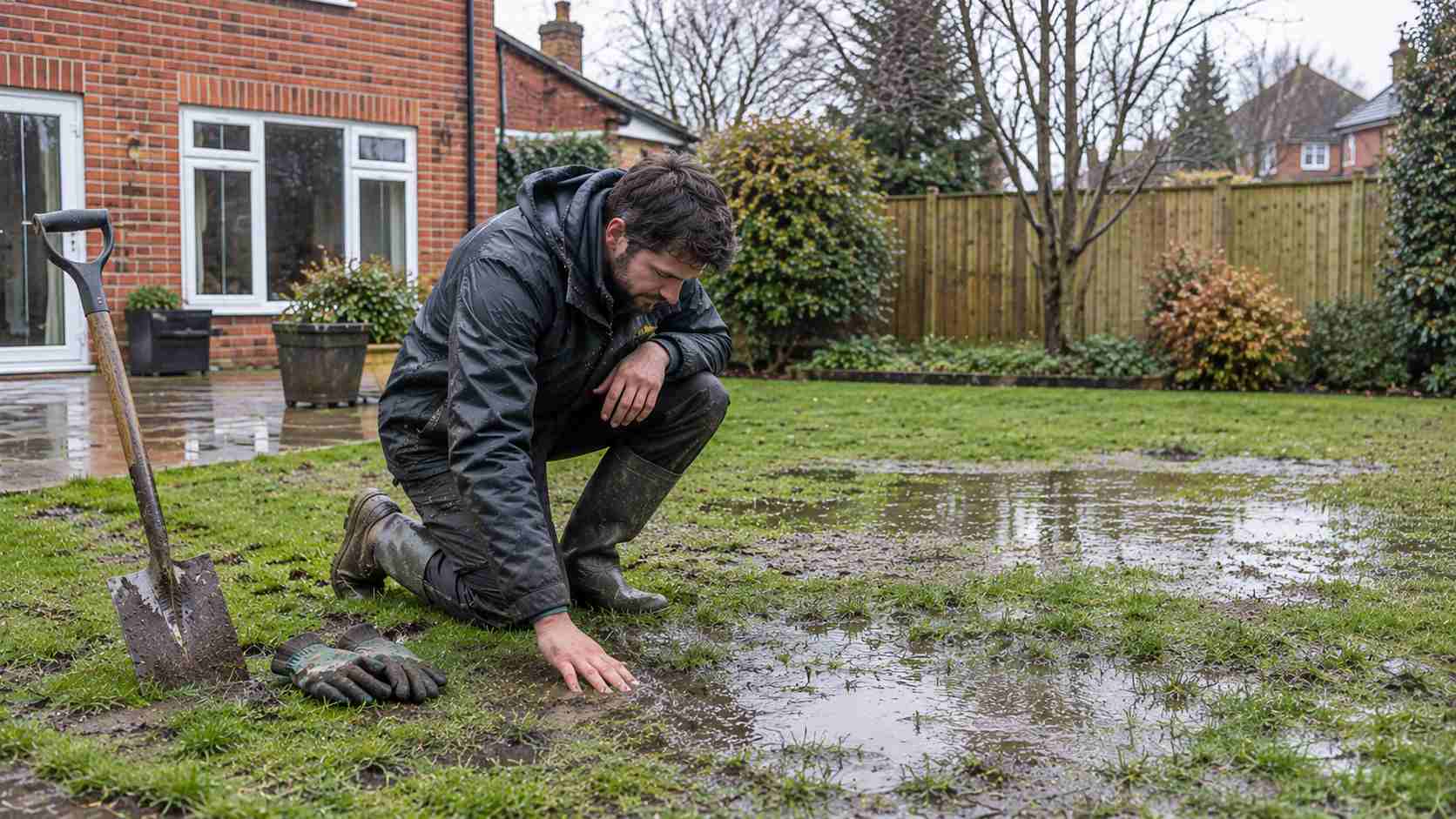
After a spell of heavy rain, many gardens across London and Surrey end up with puddles that sit on the lawn for days, soggy patches that squelch underfoot and water creeping towards the patio. Some of this is normal in a wet winter. Some of it is a sign of a drainage problem that will come back every year until it's fixed. This guide explains how to tell the difference, the quick fixes that genuinely help right now, the ones that make things worse, and when it's worth investing in proper drainage.
First: is it flooding or waterlogging?
It helps to separate two different problems. Flooding is water arriving from outside the garden, from a river, an overwhelmed drain or surface water running off roads and neighbouring land. Waterlogging is water that falls on the garden and can't get away, because the soil is too compacted, too heavy or too saturated to absorb it.
If your garden is close to a river such as the Thames, the Mole or the Wey, or water is flowing in from elsewhere, check the Environment Agency's flood map for your address and sign up for its free flood warnings. Garden drainage can't hold back a river, and safety comes first. Most of the soggy lawns we see in winter, though, are waterlogging rather than flooding, and that is something you can improve.
Why lawns waterlog in winter
- ›Heavy clay soil: much of London and parts of Surrey sit on clay, which drains slowly and stays wet for long periods once saturated.
- ›Compaction: years of foot traffic, play and mowing squeeze the air out of the soil, so water sits on the surface instead of soaking in.
- ›Poor levels: hollows collect water, and a lawn that slopes towards the house sends run-off where you least want it.
- ›Downpipes and hard surfaces: a downpipe or patio emptying onto the lawn can dump a roof's worth of rain onto one small area.
- ›Builders' subsoil: on newer homes, a thin layer of topsoil over compacted rubble or clay is a very common cause of persistent puddles.
- ›A high water table: in some low-lying riverside gardens, the ground is simply saturated from below for much of the winter.
A simple test you can do
Puddles that clear within a few hours of rain stopping are rarely a concern. Water that's still sitting there a day or two later points to a drainage problem. For a clearer picture, dig a hole about 30cm deep in the wettest part of the lawn on a dry-ish day, fill it with water, and see how long it takes to drain. If it's still holding water the next day, the soil isn't draining well enough for a healthy lawn, and quick fixes alone won't solve it.
Quick fixes that genuinely help this winter
- ›Keep off the wet grass. Walking on a saturated lawn compacts it further and makes the problem worse next year. Lay boards or stepping stones along routes you have to use.
- ›Redirect downpipes. If a downpipe discharges onto the lawn, divert it to a water butt or an existing drain, so the roof's rain isn't concentrated on the grass.
- ›Clear gullies, channel drains and gutters. Leaves block drains quickly in November and December, sending water back across paths and lawns.
- ›Rake up fallen leaves. A layer of wet leaves keeps the surface sodden, blocks light and encourages moss and disease.
- ›Aerate only when the soil isn't saturated. On a drier day, pushing a garden fork into the worst areas and gently rocking it can help water get away. Don't do this when the lawn is squelching, as you'll just smear and compact the soil.
- ›Brush worm casts away once they've dried, rather than squashing them into the wet surface.
What not to do
- ›Don't dig channels to send water towards a neighbour's garden or the road. Moving the problem onto someone else's property can lead to disputes and, in some cases, legal liability.
- ›Don't pump or channel surface water into a foul drain. Rainwater generally shouldn't go into the foul sewer, and connecting to a public surface-water sewer needs your water company's permission.
- ›Don't spread a thin layer of sand over clay. Without aeration first, it can create a layer that holds water even more stubbornly.
- ›Don't roll or mow a waterlogged lawn. Wait until the surface is firm enough to walk on without leaving footprints.
- ›Don't returf or reseed onto saturated ground. New grass laid on the same badly drained soil will struggle in exactly the same way.
Signs you need proper drainage
Quick fixes are about getting through this winter without damage. They won't change how your soil behaves. It's worth considering a proper drainage solution if:
- ›The same areas flood every winter and stay wet for days after rain.
- ›Moss, rushes or bare patches keep returning in the same spots, despite treatment.
- ›Water collects against the house, a garden room or the patio.
- ›Your 30cm test hole still holds water the next day.
- ›You're planning a new lawn, patio or garden room and want it to last.
Proper drainage options, from simple to substantial
The right solution depends on your soil, levels and where the water can go. Roughly in order of scale:
- ›Hollow-tine aeration and top-dressing: removing cores of soil and brushing in a sandy top-dressing improves surface drainage over a season or two. It's a good first step for compacted lawns that aren't badly waterlogged.
- ›Sand slitting: narrow trenches filled with sand carry surface water down through heavy topsoil. It works well on clay lawns that are firm in summer but sodden in winter.
- ›French drains and land drains: perforated pipes in gravel-filled trenches, often laid in a herringbone pattern, collect water across the lawn and carry it to a soakaway or a suitable outlet.
- ›Soakaways: an underground chamber or crate that holds water and lets it soak away gradually. They need a percolation test first, must be positioned well away from buildings (at least 5 metres is the usual guidance) and don't work where the water table is high.
- ›Regrading the garden: correcting falls so water runs away from the house and into planted or drained areas, sometimes combined with raising the lawn on better topsoil.
- ›Rain gardens and permeable paving: planted areas designed to take run-off, and paving that lets water pass through, so hard landscaping stops adding to the problem.
When to do the work
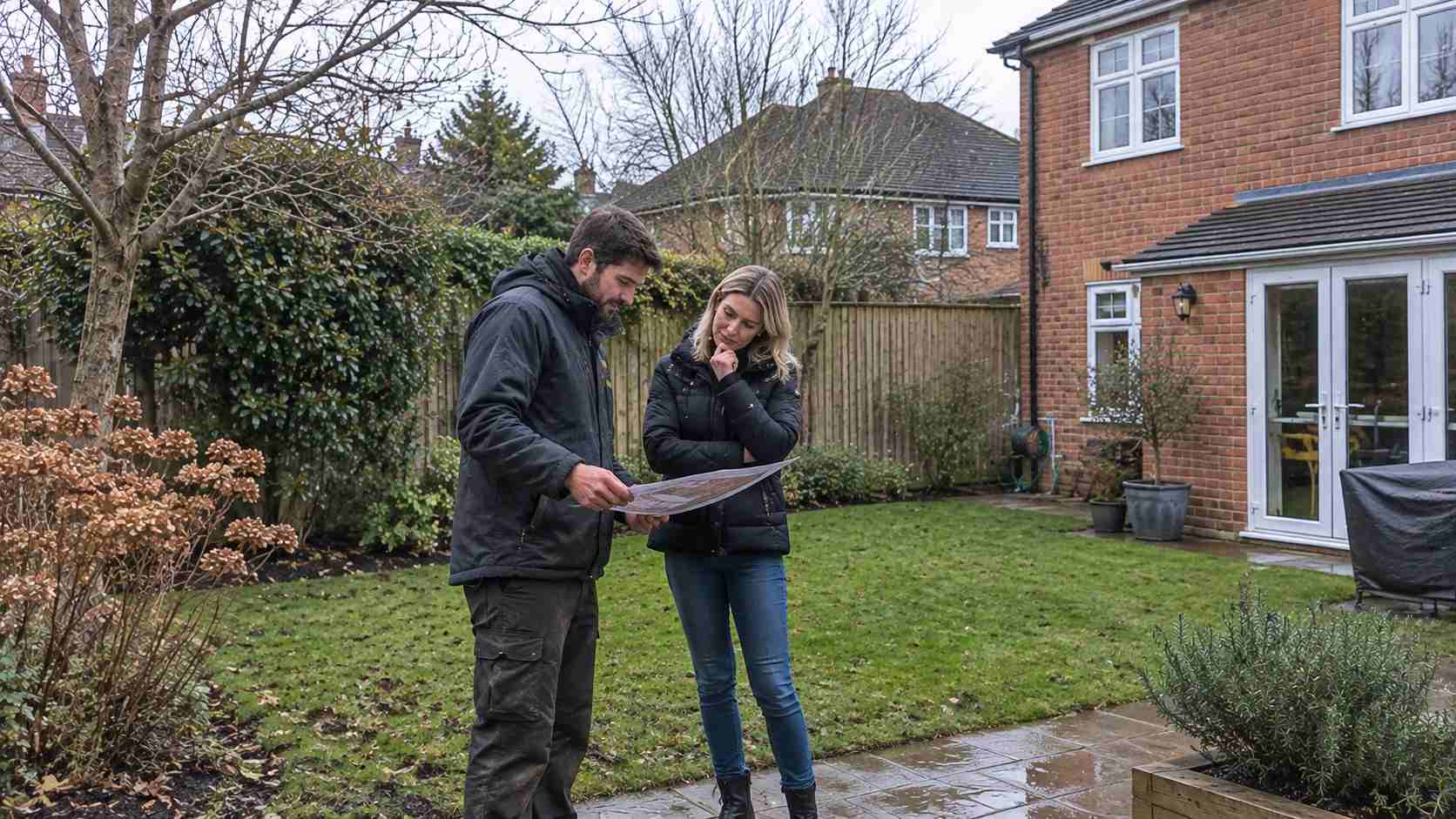
Winter is the best time to see exactly where water collects, so take photos after heavy rain. These are invaluable when planning drainage. Major groundwork is best done when the soil is workable rather than saturated, often in a dry spell, in spring or in early autumn. A sensible plan is to assess and design over winter, install drainage when conditions allow, then lay new turf in spring or autumn so it establishes on properly drained ground.
If you're already planning wider changes for next year, drainage should be designed in from the start rather than added afterwards. Our guide to planning a spring garden project in winter explains why winter planning pays off.
Different soils across London and Surrey
Drainage problems vary a lot across the areas we cover. Gardens on heavy London Clay, common around Wimbledon, Fulham and Kingston upon Thames, are the most prone to winter waterlogging and usually need soil improvement as well as drains. Riverside gardens around the Mole valley in Cobham and along the Thames and Wey in Weybridge can sit wet because of high ground water, where soakaways may not work and other outlets are needed. Sandy and chalky gardens, such as those around Oxshott and Epsom, drain freely and rarely waterlog unless the soil has been badly compacted.
Getting help with a waterlogged garden
For more on the causes of a wet garden, see why your garden floods and how to improve drainage, and for general seasonal care, our winter lawn care guide. If moss is taking over the wettest areas, why moss takes over a lawn explains how to tackle it once drainage is sorted.
When a lawn needs more than a quick fix, our lawn installation and turfing service covers drainage, soil improvement and new turf as one job, and our garden design and landscaping service plans levels, paving and drainage together on larger projects. If you'd like someone to look at your garden, get in touch for a free site visit. Winter, when the problem is easiest to see, is the ideal time.
Frequently asked questions
Yes. Walking on saturated grass compacts the soil, which makes drainage worse and damages the roots. Use boards or stepping stones for routes you have to use until the lawn firms up.