Planting · 10 min read
Planting for Privacy: Screening Your Garden Without a Fortress
By House of Horticulturists · 25 July 2026 · Updated 28 September 2026
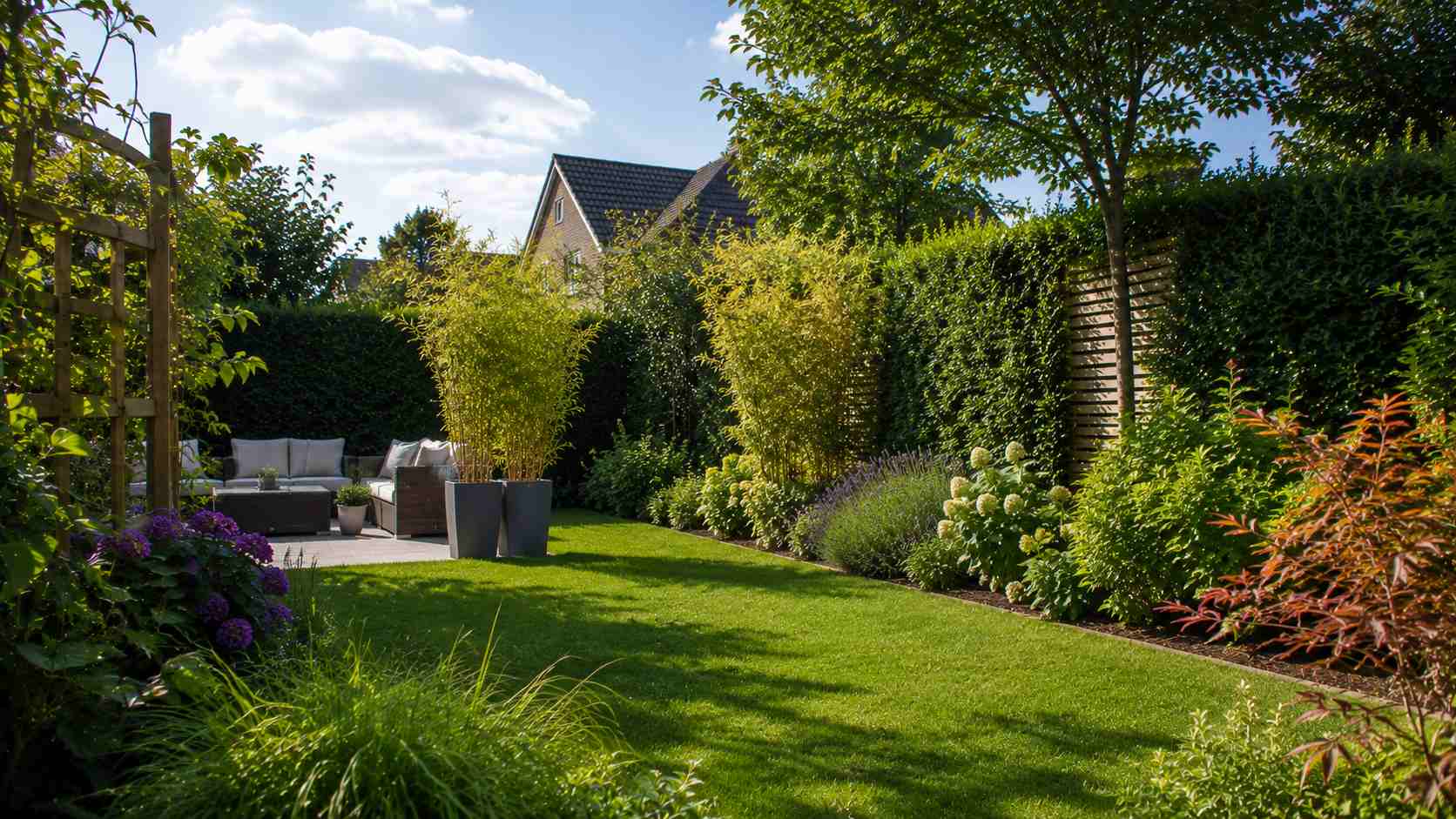
Almost everyone wants a bit more privacy in their garden, whether that's blocking a neighbour's upstairs window, screening a road or path, or simply creating somewhere that feels enclosed enough to relax in. The instinctive answer is a taller fence, but a solid wall of timber can feel oppressive, casts shade, and does nothing for wildlife or atmosphere. Planting offers a softer, more attractive alternative, and often a better one. Here's how to screen a garden using hedges, climbers, trees and tall planting, without ending up with something that feels like a fortress.
Start by working out what actually needs screening
Before choosing any plants, it's worth identifying exactly what you're screening and from where. A window overlooking the garden from an upper floor needs screening at a very different height to a neighbour's ground-floor sightline through a low fence, and the two call for different solutions. Standing in the spots where you sit, dine or relax, and noting where the sightlines fall, tells you far more than guessing at a general boundary height.
This also helps avoid over-screening. Often you don't need to enclose the whole garden, just to block two or three specific lines of sight, which leaves the rest of the space feeling open and light while still giving you genuine privacy where it matters most.
Evergreen hedging: the most reliable screen
For year-round privacy, evergreen hedging remains the most dependable option, holding its leaves through winter when deciduous planting leaves gaps. Yew, laurel, privet, photinia and holly all form dense screens, each with different growth rates, costs and maintenance needs, and our guide to choosing the right hedging plant compares the main options in detail.
Growth rate is the key trade-off. Faster-growing hedges give quicker privacy but need trimming more often, while slower species like yew take longer to establish but hold a crisp shape with less frequent attention. Very fast-growing conifers should be approached with caution, since left unchecked they can outgrow their space and cause problems for you and your neighbours.
Mixed and deciduous hedges
A mixed or deciduous hedge, hawthorn, hornbeam, beech, hazel and field maple among the classic choices, offers seasonal interest, flowers, berries and autumn colour, and it's far better for wildlife than a solid evergreen wall. Beech and hornbeam are worth particular mention because they hold their brown leaves through winter when clipped, giving a good degree of screening even when technically deciduous.
The trade-off is slightly less winter cover than a true evergreen, so a mixed hedge suits gardens where privacy matters most through the growing season. It also suits anyone wanting a softer, more informal boundary that supports birds and insects, as covered in our guide to making your garden more wildlife-friendly.
Climbers on trellis and fences
Where there isn't room for a hedge, climbers trained up a fence, trellis or wires give a screen in a fraction of the width, often just a few centimetres. Evergreen climbers such as ivy and evergreen honeysuckle keep cover through winter, while flowering climbers like clematis and jasmine bring colour and scent. Wisteria and climbing hydrangea can cover larger structures once established.
If the boundary is shaded, plant choice matters, and our guide to the best climbing plants for shade covers options that cope with low light. Climbers need sturdy support and a little training early on, but they're among the most space-efficient ways to add privacy to a narrow garden.
Screening trees and tall planting
Trees can block a specific high-level sightline, such as an upstairs window, more effectively than a hedge or fence ever could. Slim, upright species and pleached trees, which are trained on a clear stem with a flat screen of foliage above, give elevated screening without taking much ground space, and work well above a lower fence or wall.
Ornamental grasses and clumping bamboo in large containers offer flexible, movable screening for patios and seating areas. Choose clumping bamboos rather than running types, which spread aggressively, and keep containers well watered, since these plants can dry out quickly in summer.
Combining fencing and planting
The best privacy schemes often use both. A good-quality fence gives instant screening while planting establishes, and then the planting softens it, adds height and turns a hard boundary into something attractive. This combination also solves the height problem, since a lower fence topped with trellis and climbers or fronted by a hedge can reach a good screening height without a single, imposing panel.
Our Fencing & Screens service can install the structural boundary, and our Hedges, Pruning & Planting team can plant and establish the green screening alongside it, so the two work together as one scheme.
Privacy in small gardens and courtyards
In a compact garden, planting for privacy has to work within tight limits, and a bulky hedge can eat into precious floor space. Vertical planting, climbers on trellis, slim evergreen shrubs and tall planters with upright plants give screening without sacrificing usable area, and our guide to small garden design ideas covers more ways to make a compact space feel private and spacious at once.
In dense urban settings such as Chelsea, where townhouse gardens are often overlooked from several sides, a combination of trellis screens, evergreen climbers and a few carefully placed specimen shrubs usually gives the most privacy for the least footprint.
When and how to plant for the best result
Autumn is the ideal time to plant hedging and screening, when soil is still warm and roots can establish over winter, as we explain in our guide to why autumn is the best time to plant. Bare-root hedging planted during the dormant season is also the most economical way to plant a long run.
Getting the basics right makes a big difference: prepare the ground well, plant at the correct spacing and depth, water through the first spring and summer, and choose species suited to your soil and aspect. A hedge given a good start establishes far faster and needs less remedial work later.
Keeping screening healthy and in check
- ›Trim hedges at the right time of year, avoiding the main bird nesting season.
- ›Feed and mulch newly planted screening to speed establishment.
- ›Keep climbers tied in and pruned so they don't become top-heavy or damage fences.
- ›Watch the height of boundary hedges, since very tall hedges can cause disputes and may be subject to complaint rules, so it's worth checking current guidance if a hedge is growing beyond a couple of metres.
- ›Book regular maintenance so screening stays dense and tidy rather than gappy and overgrown.
Getting privacy planting right for your garden
The right screening depends on your garden's size, aspect, soil and what you're hiding from, which is why a proper assessment beats a generic answer. Our Garden Design & Landscaping service can plan privacy planting alongside the wider layout, and our Garden Maintenance plans keep hedges and climbers trimmed and healthy through the year.
This applies whatever the setting, from an overlooked terraced plot in Surbiton to a larger garden with long boundaries, and the same principle holds: screen what needs screening, keep the rest open, and let plants do the work rather than building a fortress.
Frequently asked questions
Evergreen hedging such as yew, laurel, privet or photinia gives the most reliable year-round screening. In narrow spaces, evergreen climbers on trellis such as ivy or evergreen honeysuckle give privacy in very little width.