Garden Design · 7 min read
Winter and Christmas Garden Lighting Ideas
By House of Horticulturists · 25 November 2026
From late November, it's dark before most of us get home, and the garden disappears from view for weeks. A little well-placed lighting changes that completely. It makes the garden part of the house again, turns bare winter shapes into something beautiful, and gives a festive welcome at the front door. This guide brings together lighting ideas for winter and Christmas, from quick seasonal touches to ideas worth keeping all year, along with the safety and practical points that make outdoor lights work properly.
Start with the view from indoors
In winter, you'll see your garden far more often from the kitchen, living room or garden room window than from outside. So before buying any lights, stand at the window you use most in the evening and decide what you'd like to look at. One or two well-lit features, such as a tree, a sculptural shrub or a garden room, usually look better than lights scattered everywhere. Lighting the far end of the garden also makes it feel bigger, as it draws the eye away from the window.
Make the most of bare winter shapes
- ›Uplight a tree: a single spotlight at the base of a multi-stem birch, an acer or an old fruit tree shows off its branches beautifully once the leaves have gone.
- ›Highlight bark and stems: silver birch, red and yellow dogwood and coloured willow glow in low light, and look dramatic lit from the front.
- ›Light seed heads and grasses: frost and low light on grasses and seed heads left standing for winter can look magical.
- ›Wash a wall or fence with soft light to give the garden a backdrop and depth.
- ›Pick out evergreen structure, such as clipped box, yew or topiary, which holds its shape all winter.
Festive ideas for Christmas
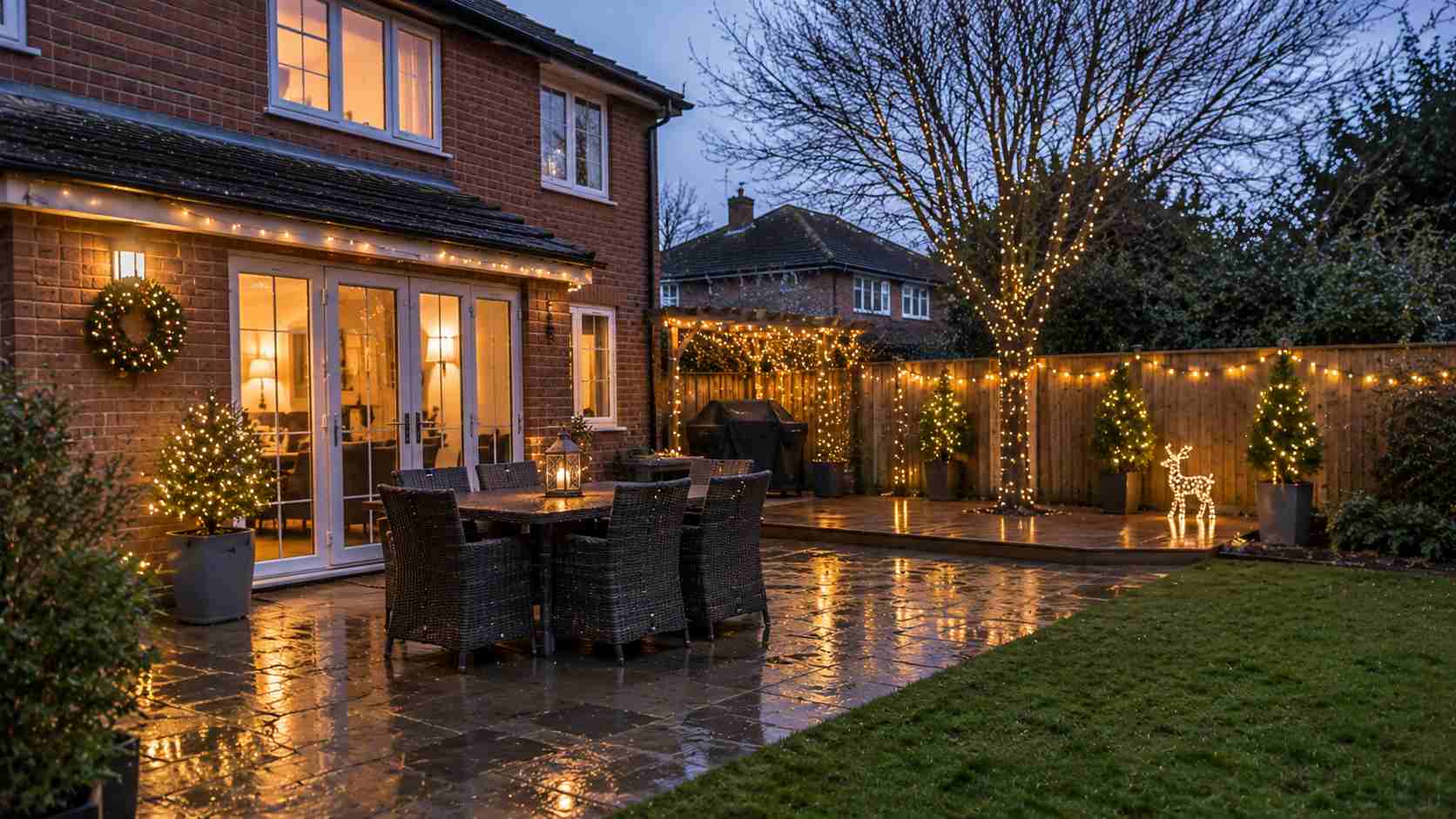
- ›Fairy lights through a hedge or evergreen shrub: drape them loosely over the surface for a soft glow rather than wrapping tightly.
- ›A living Christmas tree in a pot on the patio or by the front door, lit with outdoor-rated lights. After Christmas it can stay in its pot or be planted out.
- ›Festoon lights over a patio, pergola or deck, which double as useful lighting for winter gatherings.
- ›Lanterns with LED candles lining a path or the front steps.
- ›Lit wreaths and garlands on the front door, gate or garden room.
- ›Warm white lights in large containers or planters, which brighten the patio without much effort.
- ›Star or snowflake projections and lit figures can be fun for families, but keep them in proportion with the garden.
Warm white or coloured?
For most gardens, warm white works best. It suits brick, stone and planting, looks calm and natural, and won't look dated when Christmas is over. Coloured or twinkling lights can be fun for a short festive period, especially at the front of the house, but they rarely work as permanent garden lighting. If you want both, use warm white for the main garden features and keep coloured lights to temporary decorations you take down in January.
Lighting for winter evenings outside
If you use the garden in winter, for a fire pit, a hot tub or simply stepping out with a drink, combine decorative lighting with some practical light. Low-level path and step lights make the way safe on dark, wet evenings, and soft lighting around a seating area makes it feel enclosed and cosy. If you're planning a fire pit, see fire pits and outdoor heating, and for surfaces that get slippery in winter, our guide to slippery patios and decking.
Keep outdoor lights safe
- ›Only use lights and connectors sold for outdoor use, and check the IP rating. IP44 is the minimum for sheltered spots; fully exposed lights need a higher rating, such as IP65.
- ›Plug outdoor lights into a socket protected by an RCD, which cuts the power quickly if something goes wrong.
- ›Keep plug connections off the ground and away from puddles, ideally in a weatherproof box, and don't overload extension leads.
- ›Check cables and bulbs for damage every year before putting them up.
- ›Don't staple or nail through cables, or nail lights into trees. Use soft ties, and remove them after the season so they don't cut into growing branches.
- ›New permanent outdoor sockets or circuits should be installed by a registered electrician, as this is notifiable electrical work.
Solar, timers and running costs
LED lights use very little electricity, and a simple timer or smart plug means they're only on when you'll see them, for example from dusk until 10 or 11pm. Solar lights are handy where there's no power, but be realistic: in December and January the sun is low and days are short, so solar lights often give only a few hours of dim light. For reliable winter lighting, mains or low-voltage plug-in systems work better.
Be kind to neighbours and wildlife
Angle lights downwards and towards what you want to see, rather than into neighbours' windows or the sky. Bright, all-night lighting can disturb wildlife, including bats and nocturnal insects, so use timers, keep light levels soft, and leave some darker corners of the garden. These habits also tend to make the lighting look more elegant.
Keep the best ideas all year
Many people discover over Christmas how much they enjoy seeing the garden at night. If that's you, it's worth planning permanent lighting with the rest of the garden, so cables run neatly under paths and borders rather than across them. Our garden lighting guide explains layering, fixtures and low-voltage systems, and winter interest planting covers plants that look their best under winter light. Lighting also helps security, as explained in garden security in winter.
We build lighting into our garden design and landscaping projects, alongside new patios, decking and garden rooms, with cables and power planned before any paving or decking goes down. If you're thinking about a new garden next year, winter is a good time to plan it. Get in touch to arrange a free visit.
Frequently asked questions
No. Only use lights, extension leads and connectors made for outdoor use, with a suitable IP rating, and plug them into an RCD-protected socket.