Seasonal Gardening · 8 min read
Garden Security in Winter: How to Protect Your Shed, Garden and Home
By House of Horticulturists · 23 November 2026
Winter is when gardens are at their most vulnerable. It's dark by late afternoon, we spend less time outside to notice what's changed, storms loosen fence panels, and bare hedges reveal sheds and side gates that are hidden in summer. A garden is also often the easiest route to the back of a house. The good news is that most garden security comes down to straightforward, inexpensive steps. This guide covers how to secure your boundaries, gates, shed and garden room this winter, and which measures make the biggest difference.
Why winter brings extra risk
- ›Long, dark evenings give cover from around 4pm, when many homes are still empty.
- ›Gardens are used less, so damage or tampering can go unnoticed for weeks.
- ›Storms and high winds break fence panels and posts, leaving gaps in boundaries.
- ›Leaf fall thins hedges and planting, exposing sheds, bikes and side access that are screened in summer.
- ›Holidays and Christmas travel mean houses are left empty for longer periods.
Start with a walk round
The most useful thing you can do is walk round your garden on a dark evening and look at it the way an opportunist would. Could someone see into your shed? Is there anything to climb on, such as a wheelie bin by the fence, a ladder or a low wall? Is the side gate locked, and could it be reached over? Are there dark corners next to the house? Make a short list of weak spots. It's usually only a handful of things, and fixing them makes a real difference.
Boundaries: fences, walls and hedges
A solid, well-maintained boundary is your first line of defence. After winter storms, check every panel and post: a single loose panel can leave a gap big enough to walk through. Repair damage promptly rather than waiting for spring. Our guide to storm-damaged fences explains what to look for and when posts need replacing.
In England, a fence or wall in a back garden can usually be up to 2 metres high without planning permission, including any trellis on top. Next to a road or footpath, the limit is usually 1 metre. Trellis on top of a fence is a good deterrent because it's awkward to climb and doesn't take much weight. If you're choosing a new fence, see choosing a garden fence for the options.
Side gates and access routes
- ›Make side gates the same height as the fence, with no horizontal rails on the outside that act as a ladder.
- ›Position gates flush with the front of the house where possible, so there's no hidden recess to work in.
- ›Fit strong bolts at the top and bottom on the inside, plus a lock that can't be reached over the top.
- ›Check hinges are secured with coach bolts or security screws, not ordinary screws that can be undone from outside.
- ›Keep the area beside the gate clear of bins and anything else that could be used to climb over.
Securing your shed
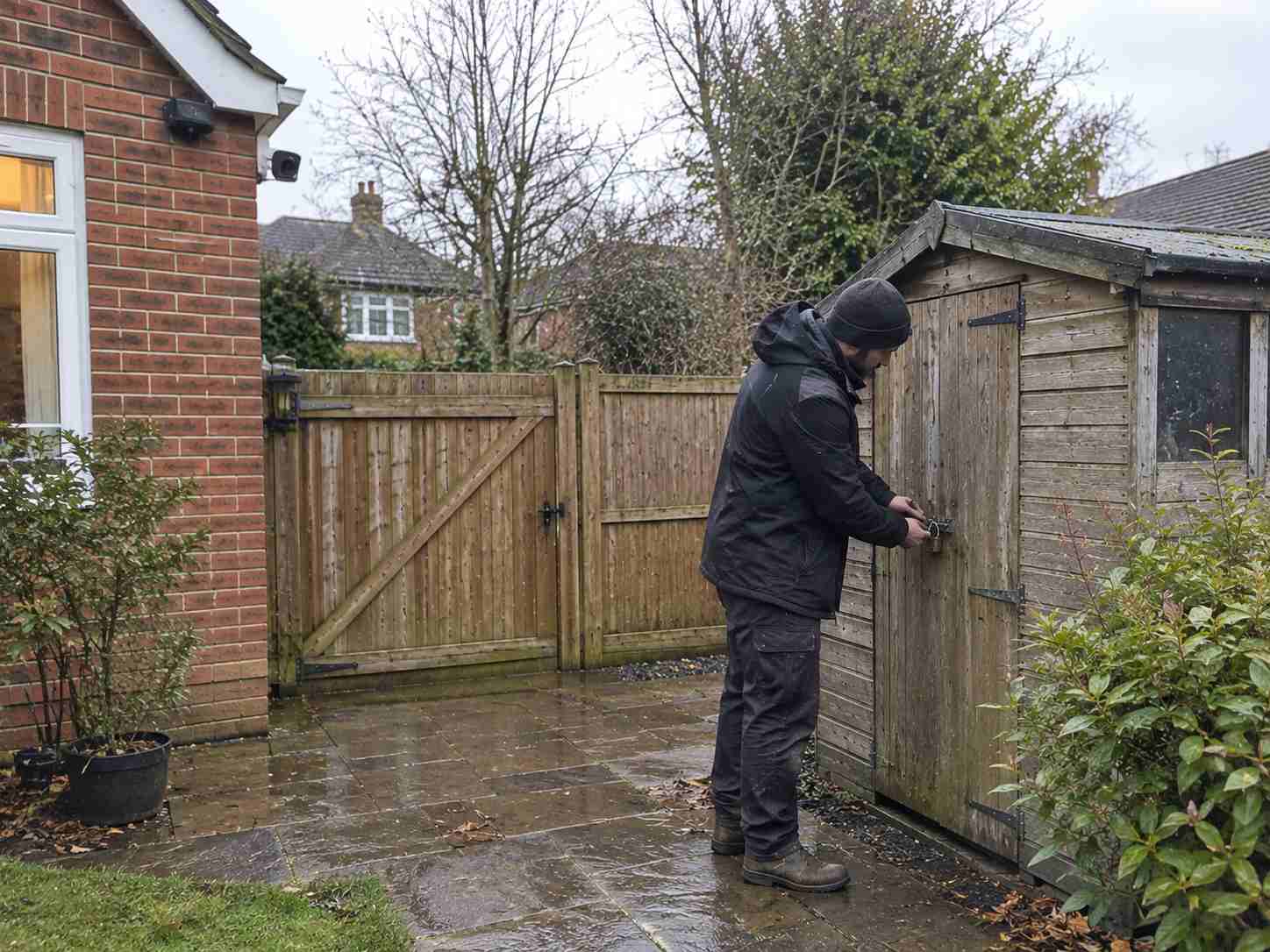
Sheds often hold bikes, power tools and mowers worth far more than the shed itself, and many have flimsy fittings. A few upgrades make a big difference:
- ›Replace the standard hasp and staple with a heavy-duty one fixed through the door with coach bolts, and use a good closed-shackle padlock. Look for locks independently rated for security, such as those with a Sold Secure rating.
- ›Fit hinge bolts or replace hinge screws with non-return screws, so the door can't be taken off its hinges.
- ›Cover or frost shed windows so valuables can't be seen, and consider a battery shed alarm.
- ›Lock bikes to a ground or wall anchor inside the shed, and register them on a bike-marking scheme.
- ›Mark tools with your postcode or a UV marker, and photograph serial numbers.
- ›Check the door, frame and floor for rot. A soft frame is easy to force. Our guide to maintaining a timber shed covers this.
Garden rooms and offices
A garden room holding a computer, gym equipment or furniture deserves the same security as the house: proper multi-point locks on doors, laminated or toughened glazing, window locks, and ideally connection to your house alarm or a separate alarm. Keep blinds closed when it's empty, and don't leave laptops or equipment on view. It's also worth checking how your home insurance covers outbuildings and their contents, as many policies have specific lock requirements.
Lighting that deters, not dazzles
Good lighting is one of the most effective deterrents, but brighter isn't always better. A harsh floodlight can create deep shadows and annoy neighbours. A better approach is a combination of low-level dusk-to-dawn lights on paths and by doors, plus motion-sensor lights at side gates, the shed and the back of the house. Angle lights downwards and away from neighbouring windows. Solar lights are useful where running cables isn't practical. For design ideas, see our garden lighting guide.
Don't leave the tools out
- ›Lock away ladders, or chain them securely, as they give access to upper windows.
- ›Store spades, forks and other tools that could be used to force doors or windows.
- ›Move wheelie bins away from fences and gates, or secure them, so they can't be used to climb.
- ›Bring in or secure valuable items such as expensive pots, garden furniture and barbecues, which are sometimes taken from front and back gardens.
Planting for security
Plants can do a lot of the work. Prickly shrubs such as pyracantha, berberis and holly along boundaries and under accessible windows make them much less inviting, and evergreen hedging keeps that protection all year. At the front, the opposite applies: keep planting low so the house and path can be seen from the street, as hidden entrances are more attractive to intruders. Our guide to planting for privacy explains how to balance screening and security. Winter is the ideal time to plant bare-root hedging, so a new defensive hedge can be in the ground before spring.
Cameras and video doorbells
Cameras and video doorbells can deter intruders and help if something does happen. If a camera records beyond your own property, for example a pavement, road or a neighbour's garden, data protection rules can apply to you, so position cameras to cover your own garden and entrances as far as possible. The Information Commissioner's Office publishes guidance for homeowners using domestic CCTV.
Getting help this winter
If your garden needs more than a few quick fixes, we can help. Our fencing and boundary screens service covers repairing storm damage, new fences and secure gates, with local pages for areas such as Fulham and Wandsworth. Our garden rooms and sheds service includes sturdy, well-fitted sheds and secure garden offices, including in Wimbledon and Kingston upon Thames. For defensive hedging and planting, see hedges, pruning and planting. Regular winter visits also mean someone is keeping an eye on your garden, as explained in do you need a gardener in winter?. If you'd like advice on your own garden, get in touch.
Frequently asked questions
Fit a heavy-duty hasp fixed with coach bolts and a quality closed-shackle padlock, secure the hinges, cover the windows, and anchor bikes inside. A battery shed alarm and marking your tools add further protection.