Garden Design · 10 min read
Fire Pits and Outdoor Heating: Extending the Garden Season
By House of Horticulturists · 16 September 2026
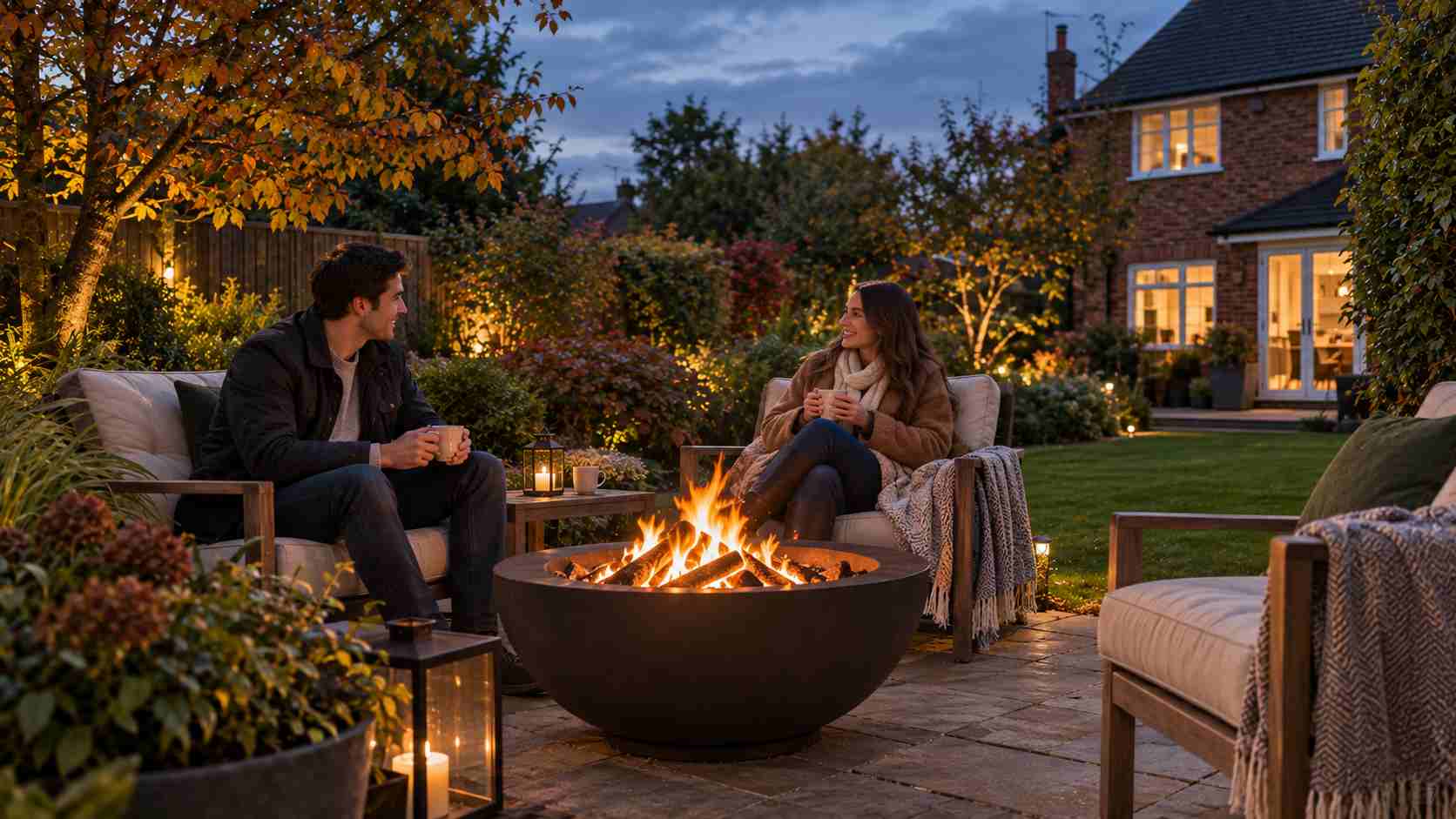
Most gardens get properly used for a few short months a year, then sit largely unvisited from autumn through to late spring. Outdoor heating changes that calculation considerably, a well-chosen fire pit or heater extends the usable season by months at either end, turning cool spring evenings and crisp autumn nights into time genuinely spent outside rather than looking at the garden through a window. The key is choosing the right type for how you'll actually use it, and building it into the garden properly rather than treating it as an afterthought dropped onto an existing patio.
Why outdoor heating is worth considering
The practical case is straightforward, a garden that's comfortable to sit in from March through to November rather than just June to August is effectively doubling its usable season, which is a considerable return on a relatively modest addition compared with most landscaping investments. For anyone who's spent money on a patio, decking or a garden redesign, heating is often what turns that investment into something used regularly rather than seasonally.
There's also a genuine social element, a fire pit in particular naturally draws people together and becomes a focal point in a way a patio heater doesn't quite manage, which is why fire features remain so popular even in gardens that already have other heating options available.
Fire pits
Fire pits are the most characterful option and come in two broad categories, freestanding bowls and bought units that can be moved around, and built-in permanent features constructed as part of the hard landscaping. Freestanding pits are considerably cheaper, need no installation, and can be repositioned or stored away entirely, making them a sensible starting point for anyone unsure how much use they'll actually get.
Built-in fire pits, set into a patio or a dedicated seating area, look far more integrated and become a genuine design feature rather than an object sitting on the paving. They cost more and need planning into the hard landscaping from the outset, but they typically deliver a much better result in a considered garden design. Fuel matters too, wood-burning pits give the traditional experience with genuine flame and crackle but produce smoke and need ash clearing, while gas fire pits light instantly, produce no smoke and need far less cleaning, at the cost of some of the character.
Chimeneas and log burners
Chimeneas direct smoke upward through a chimney rather than letting it drift across a seating area, which makes them a practical choice for smaller gardens or anywhere close to neighbouring properties where smoke could genuinely become a nuisance. They generally throw less ambient heat than an open fire pit, since the design concentrates heat rather than radiating it in all directions, so they suit smaller groups sitting relatively close.
Outdoor log burners and enclosed stoves sit somewhere between a chimenea and a fire pit, offering better heat control and containment than an open fire while still providing visible flame, and they're worth considering where safety or smoke management is a particular concern.
Patio heaters: gas vs electric
Gas patio heaters produce strong, immediate heat over a decent area and don't need any electrical supply, making them flexible and easy to position anywhere in a garden. The trade-offs are ongoing gas bottle costs, the need to store and replace cylinders, and a bulkier physical presence than most electric alternatives.
Electric heaters, particularly infrared or halogen types, heat people and surfaces directly rather than warming the surrounding air, which makes them considerably more effective outdoors than their wattage might suggest. They're cleaner, quieter and produce no emissions at point of use, but they do need a suitable outdoor electrical supply, which is worth planning into a garden project from the outset rather than retrofitting later. Wall or ceiling-mounted electric heaters work particularly well under a pergola, covered seating area or veranda, where they're protected from the weather and can be positioned to heat a specific seating zone efficiently.
Choosing the right option for your garden
- ›Small garden or close neighbours: a chimenea or electric heater manages smoke and heat more precisely than an open fire pit.
- ›Entertaining larger groups: a built-in fire pit with surrounding seating works best as a genuine social focal point.
- ›Covered or partially covered seating: wall-mounted electric infrared heating is the most practical and efficient choice.
- ›Flexibility and low commitment: a freestanding fire pit or portable gas heater can be moved, stored or removed entirely.
- ›Frequent, convenient use: gas fire pits and electric heaters light instantly with no fuel preparation or ash clearing afterward.
- ›Character and atmosphere above all: a wood-burning fire pit remains hard to beat, provided smoke isn't a practical problem.
Positioning and safety
Positioning matters enormously for both safety and how much use a fire feature actually gets. Any fire pit or burner needs genuine clearance from fences, overhanging branches, garden buildings and seating, and should sit on a non-combustible surface, paving, stone or a purpose-built base, rather than directly on decking or a lawn. Prevailing wind direction is worth thinking about too, a fire pit positioned so smoke consistently blows toward the house or a neighbour's garden quickly becomes a source of irritation rather than enjoyment.
Timber decking needs particular care, a fire pit placed directly on decking is a genuine fire risk, and a heat-resistant base or a dedicated paved area within or adjacent to the deck is the safer approach. Our guides to keeping timber decking looking its best and choosing between composite and timber decking both cover how different decking materials behave, worth considering if you're planning a fire feature near or on a deck.
Building heating into a garden design
The most successful outdoor heating isn't added to a finished garden, it's planned in from the start, a built-in fire pit designed into the patio layout with seating arranged around it, or electrical supply run to a pergola before surfaces go down rather than retrofitted awkwardly afterward. Running cabling for electric heating is far easier and cheaper before paving and decking are laid, exactly the same principle that applies to garden lighting, which pairs naturally with heating to make an outdoor seating area genuinely usable after dark.
This is something we plan in as standard on Patio & Paving and Decking projects where a client wants year-round use, and it's a core part of how our Garden Design & Landscaping service approaches outdoor living areas, considering how a space will be used in October as much as July.
Practical considerations before you buy
- ›Check whether your garden falls within a smoke control area, which can restrict what fuels may be burned, worth confirming locally before investing in a wood-burning feature.
- ›Consider storage, wood needs keeping dry, gas cylinders need safe storage, and both need somewhere practical to live year-round.
- ›Factor in running costs, particularly for gas cylinders and electric heating over an extended season, not just the upfront purchase price.
- ›Think about how often you'll realistically use it, instant-lighting gas and electric options tend to get used far more frequently than wood fires needing preparation.
- ›Check any covering, pergola or structure above a heat source is genuinely rated and safe for that use, rather than assuming it will be fine.
Making the most of an extended garden season
Heating works best combined with the other elements that make a garden comfortable outside the peak summer months, shelter from wind, lighting for darker evenings, and a seating area positioned to catch whatever late afternoon sun is available. Gardens in more exposed settings, including some newer estates around Kensington, benefit particularly from windbreak planting or screening alongside heating, since wind strips warmth away far faster than low air temperature alone does.
In more compact, sheltered urban gardens, common across areas like Wandsworth, a smaller chimenea or wall-mounted electric heater is often more practical than a large fire pit, both for space reasons and for keeping smoke away from close neighbouring properties. Whichever route suits your garden, planning it alongside the hard landscaping rather than afterward consistently delivers a better, safer and more genuinely used result.
Frequently asked questions
Not directly, a fire pit placed straight onto timber or composite decking is a genuine fire risk. Use a purpose-made heat-resistant base, or better, position the fire pit on a paved area within or adjacent to the deck where there's no combustible surface beneath it.