Value · 10 min read
Does Landscaping Add Value to Your Home?
By House of Horticulturists · 9 August 2026
People often ask whether spending on the garden is worth it for their home's value. The honest answer is that a well-considered garden genuinely helps a home sell, and often sell faster and closer to asking price, but not every bit of garden spending pays off equally. Understanding which improvements buyers actually respond to, and which ones simply cost you money without shifting perception, makes the difference between landscaping that's an investment and landscaping that's just a personal indulgence.
Why gardens matter to buyers
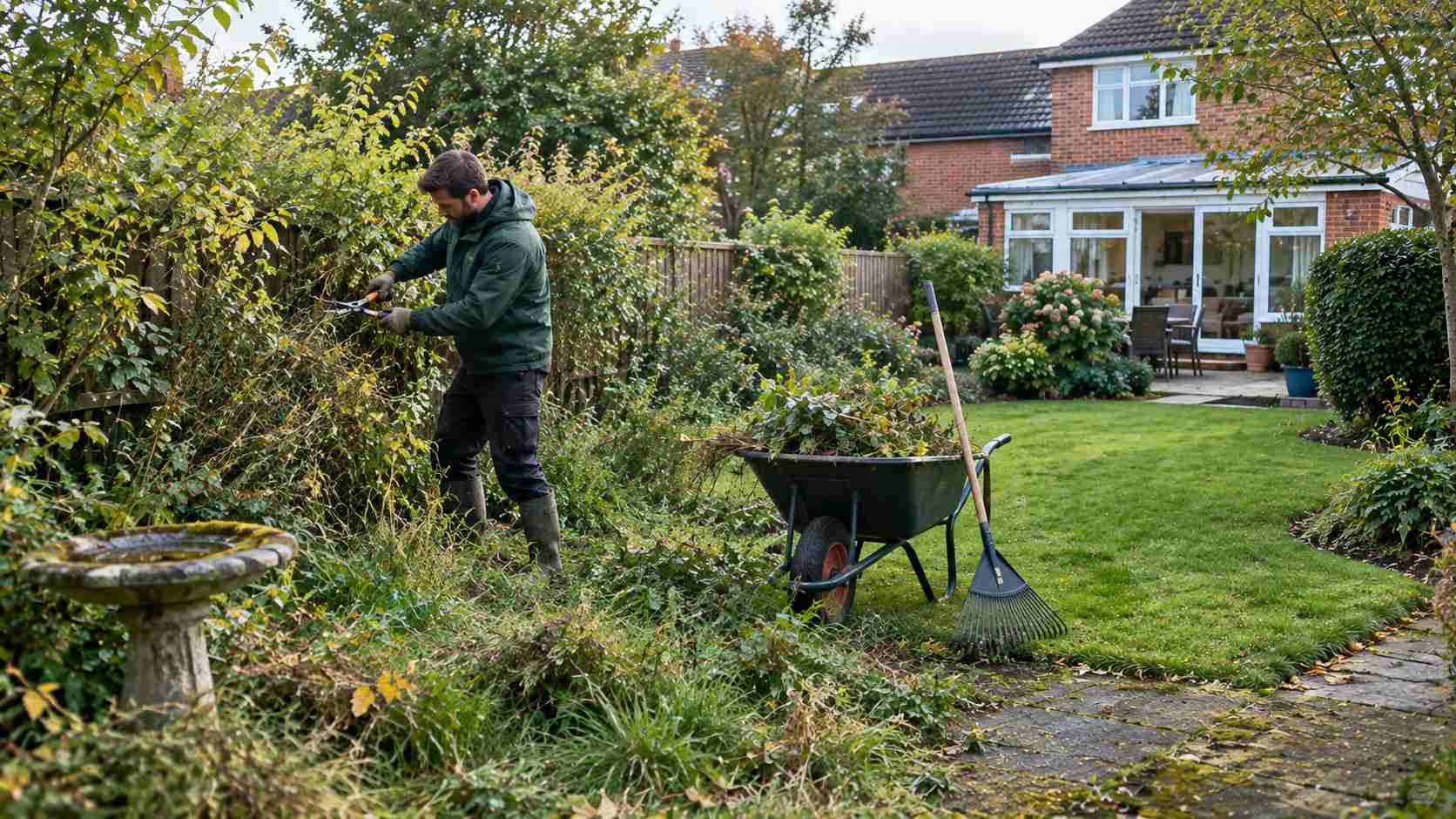
A garden is a major part of a property's overall appeal and, for a large number of buyers, a genuine deciding factor rather than an afterthought. First impressions count enormously in a viewing: a tidy, well-designed, low-maintenance garden makes a home feel cared-for and immediately more desirable, while a neglected one puts buyers off before they've even stepped through the front door.
It also has a knock-on psychological effect beyond the garden itself. Buyers tend to read a scruffy, overgrown or poorly maintained garden as a signal about the rest of the property, if the outside hasn't been looked after, they start wondering what else has been neglected indoors, under the surface, or behind the walls. A well-kept garden does the opposite, it builds confidence in the whole property before a single room has been viewed.
What tends to add value
- ›Strong kerb appeal, a smart, welcoming front garden that makes the right first impression from the street.
- ›A usable, well-built patio or seating area that effectively extends the home's living space outdoors.
- ›A tidy, low-maintenance design buyers can picture enjoying, not one that reads as a chore waiting to happen.
- ›Quality hard landscaping, paths, walls, steps, that looks solidly built and made to last.
- ›Good boundaries and privacy, fencing, hedging or walling that makes a garden feel like a genuine private space rather than overlooked.
- ›A well-maintained lawn, since a patchy, mossy or bare lawn is one of the fastest things to make a garden look neglected.
Kerb appeal specifically
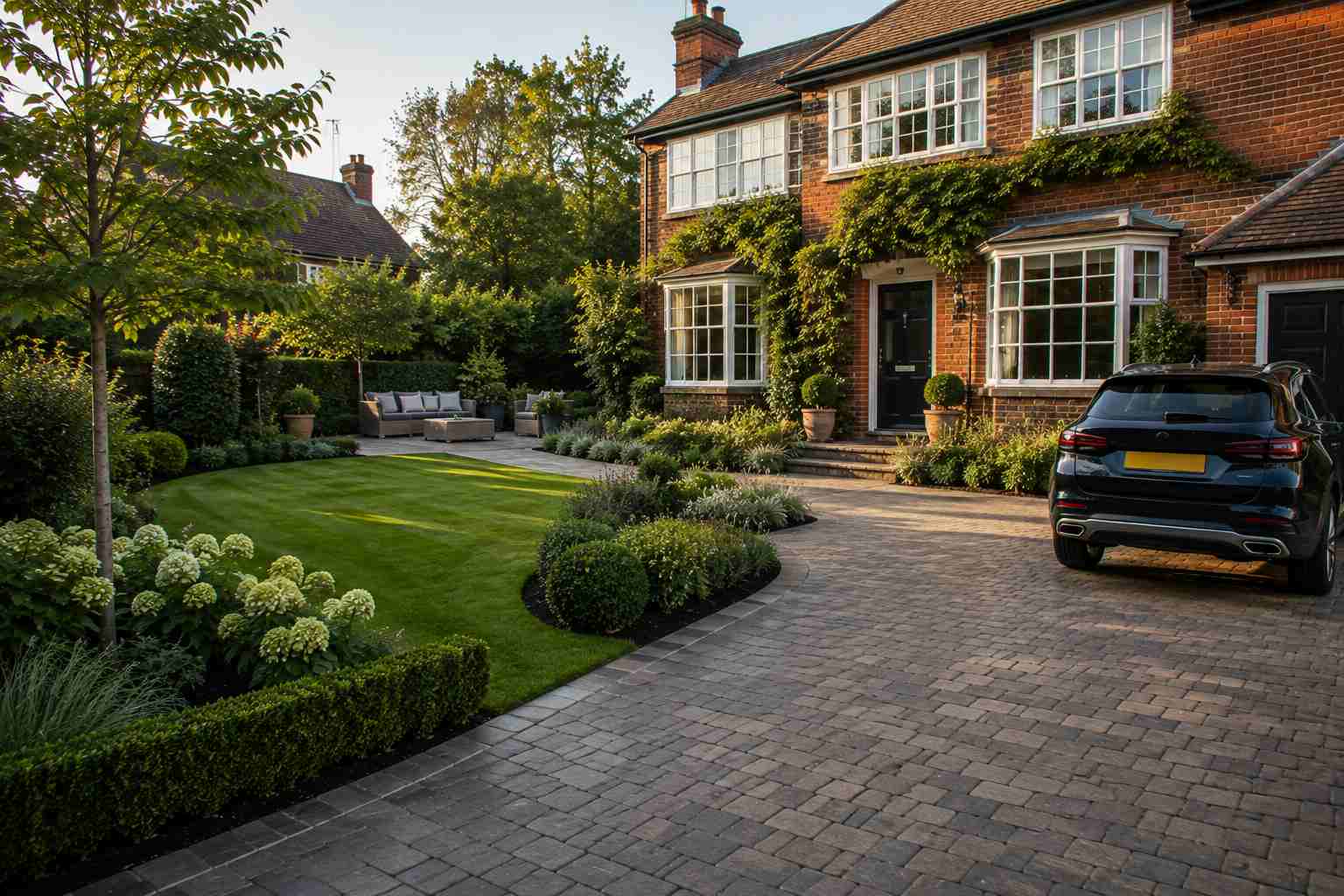
Kerb appeal deserves its own mention because it does a disproportionate amount of work. Buyers form an opinion within seconds of pulling up outside, often before the estate agent has even opened the front door, so a scruffy front garden, a cracked or weedy driveway, or overgrown hedging can undo good work done everywhere else on the property. Investing in a smart, well-maintained front garden, and a driveway that's properly laid rather than patched, is consistently one of the best-value improvements a homeowner can make before putting a property on the market.
How the back garden compares to the front
Front and back gardens tend to influence buyers differently. The front garden shapes that crucial first impression, while the back garden is judged more on usability, buyers are picturing themselves actually using the space, whether that's for a dining table, space for children to play, or simply somewhere quiet to sit. A back garden that photographs well and reads clearly as usable outdoor living space, rather than an ambiguous patch of grass, tends to add more perceived value than one that's purely decorative.
What to be cautious about
Not all garden spending pays back equally, and it's worth being realistic rather than assuming every improvement adds proportional value. Very personal, high-maintenance or unusual features, an elaborate pond, an ambitious water feature, or a design very much suited to one particular taste, can genuinely appeal to you as the homeowner while leaving buyers seeing ongoing work and cost rather than value. As a general rule, broad appeal, usability and low maintenance return more at resale than novelty or high personalisation.
It's also worth being cautious about over-specifying for the property. An elaborate, expensive landscaping scheme on a modest terraced home can look out of place and won't necessarily be reflected in the sale price, buyers calibrate their expectations to the type and size of property, and spending well beyond that expectation rarely returns pound for pound.
Common overspending mistakes
- ›Installing very high-maintenance planting or features that buyers will see as ongoing cost and effort rather than a benefit.
- ›Over-personalising the design, unusual colour schemes, quirky structures or very specific themes narrow rather than widen buyer appeal.
- ›Neglecting the basics, like lawn condition and boundary repair, while spending heavily on statement features.
- ›Choosing cheap materials or poor installation to cut costs, since buyers and surveyors both notice hard landscaping that's already cracking or settling unevenly.
- ›Ignoring the front garden entirely while investing heavily in the back, when kerb appeal is usually what gets buyers through the door in the first place.
Getting it right without overspending
The improvements that consistently perform well share a few things in common: they're low-maintenance, broadly appealing rather than personal, and properly built rather than a quick DIY fix. A well-designed garden design and landscaping scheme, planned around how the space will actually be used and how it will read to a buyer, tends to outperform ad-hoc spending on individual features. Similarly, a well-built patio or paving area reads as genuine, durable living space in a way that a tired, cracked or poorly laid surface never will, regardless of how much was originally spent on it.
This applies just as much to the front of the property as the back. A driveway that's cracked, sunken or overrun with weeds undermines kerb appeal fast, and refreshing it is often one of the more cost-effective improvements available before a sale, something worth considering alongside any wider garden work.
Does location change how much a garden adds?
To some extent, yes. In areas with larger plots and detached homes, like much of Richmond or Kingston upon Thames, the garden itself becomes a bigger part of the overall property and buyer expectations for landscaping quality tend to be correspondingly higher. In areas with smaller, terraced or semi-detached properties, a more modest but well-executed garden can have just as strong a proportional effect on buyer perception, since it's judged relative to what's typical for that type of home rather than against a countryside estate.
An honest caveat
We can't give you a reliable single figure for how much value landscaping adds, it varies hugely by property type, location and the state of the market at the time of sale, and any specific percentage you see quoted online should be treated with real caution rather than taken as fact. What's safe to say, based on what estate agents and buyers consistently respond to, is that a good garden helps a home sell faster and stand out against comparable properties, and a poor one genuinely holds it back.
And it's worth remembering that resale value is only part of the picture. Beyond any effect on a future sale, a garden you actually enjoy using has a value you benefit from every single day you live there, which is arguably the better reason to invest in it in the first place.
Frequently asked questions
There's no reliable single figure, it varies widely by property type, location and market conditions, so treat any exact percentage you see quoted with caution. What's dependable is that a tidy, well-designed garden helps a home sell faster and stand out, while a neglected one holds it back.