Garden Rooms & Sheds · 9 min read
Shed vs Summerhouse vs Garden Room: What's the Difference?
By House of Horticulturists · 2 September 2026
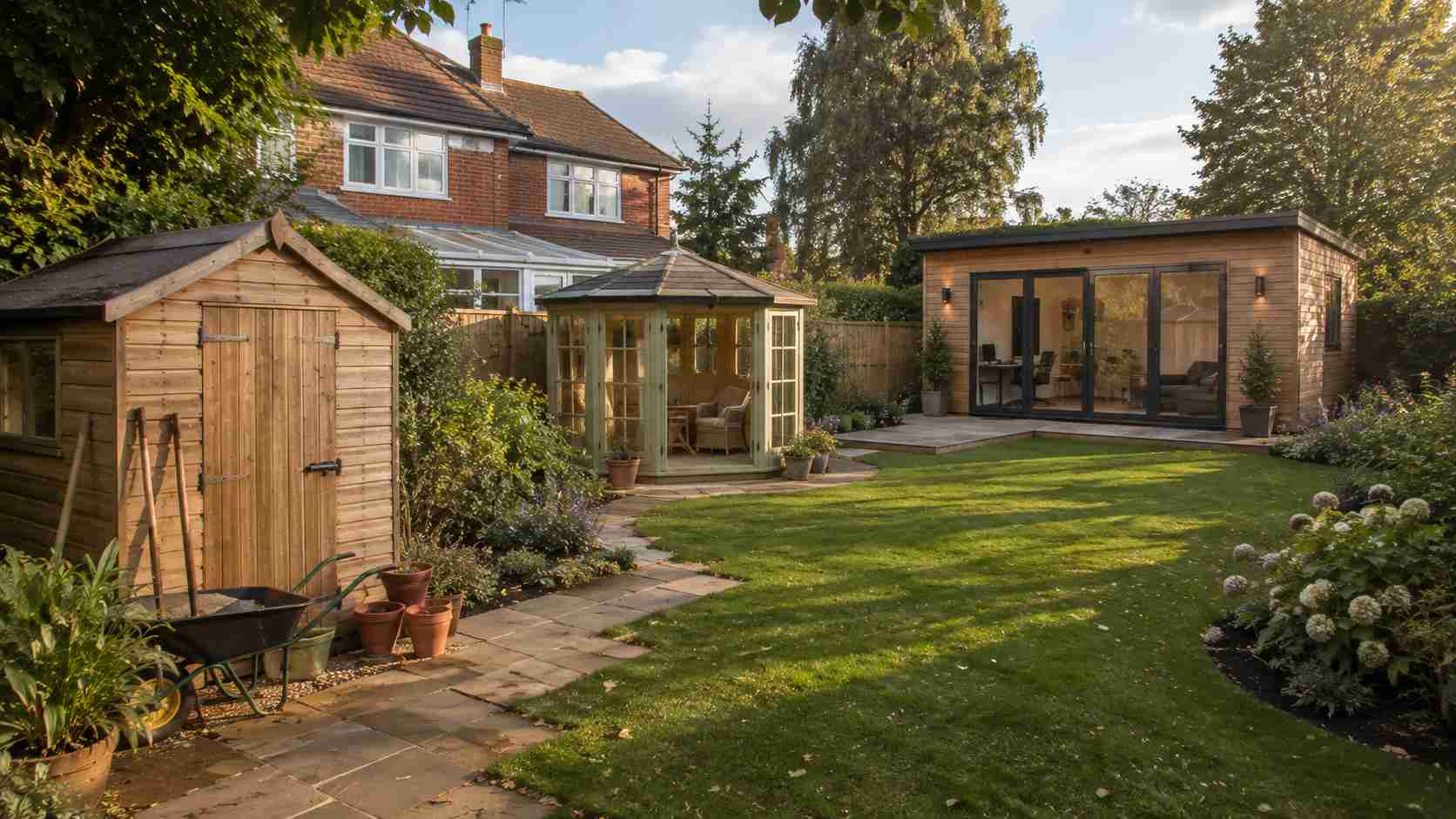
Shed, summerhouse and garden room get used almost interchangeably in everyday conversation, but they're genuinely different structures, built for different purposes, specified to very different standards, and priced accordingly. Picking the wrong one for what you actually need is an easy, expensive mistake, a beautiful summerhouse makes a poor tool store, and a basic shed makes a miserable home office. Here's how the three differ, and how to work out which one actually suits your garden and your plans for it.
What a shed actually is
A shed is, at its core, a functional storage structure, built primarily to keep tools, equipment, bikes and general garden clutter dry and out of the way rather than to be a space people spend time inside. Sheds are typically simpler in construction than summerhouses or garden rooms, less glazing, a more basic door, and little to no attention paid to how the interior feels, since it isn't designed to be occupied for any length of time.
This simplicity is exactly what keeps shed costs down relative to the other two categories, less material, less structural specification, and no need for insulation, glazing or finishing beyond keeping the weather out. A shed remains the right choice for anyone whose primary need is genuinely just storage.
What a summerhouse actually is
A summerhouse sits between a shed and a garden room, built to be sat in and enjoyed, typically with larger windows, a proper door, and a more considered interior finish, but generally without full insulation or power as standard, which means it's mainly suited to seasonal or fair-weather use rather than genuine year-round occupation.
Summerhouses tend to prioritise light and views, larger areas of glazing, sometimes a veranda or covered seating area, and a design intended to be looked at and enjoyed from inside as much as used practically. They suit garden rooms used for relaxing, reading or entertaining through spring, summer and early autumn, but without additional insulation and heating, most become impractical to use through the coldest months of the year.
What a garden room actually is
A garden room is built to be used year-round, properly insulated walls, floor and roof, double glazing, and mains electricity as standard, effectively a small extension of the house rather than a garden structure in the traditional sense. This is the category that covers home offices, garden gyms, studios and any space where genuine daily use through a British winter matters.
The higher specification naturally means a higher cost than either a shed or a summerhouse, but it's what makes the difference between a space that gets used for a few warm months a year and one that becomes a genuine extension of daily life, working from home comfortably in January is simply not something a standard summerhouse or shed can deliver without significant additional investment.
Comparing the three side by side
- ›Primary purpose: shed for storage, summerhouse for seasonal relaxation and entertaining, garden room for year-round occupied use such as work or exercise.
- ›Insulation and power: sheds have neither as standard, summerhouses rarely have proper insulation, garden rooms are built with both included.
- ›Glazing: sheds have minimal windows, summerhouses prioritise light with larger windows, garden rooms use double glazing suited to year-round comfort.
- ›Typical cost: sheds sit at the lower end, summerhouses in the middle, garden rooms at the top of the range due to their fuller specification.
- ›Year-round usability: sheds aren't meant to be occupied, summerhouses work well spring through autumn, garden rooms work in any season.
Which one actually suits your needs
The right choice comes down almost entirely to how you intend to use the space rather than budget alone, though budget naturally narrows the options too. If the goal is simply somewhere dry to keep a mower, tools and bikes, a shed does the job at a fraction of the cost of the other two, and spending more on a summerhouse or garden room for pure storage is money that would be better spent elsewhere in the garden.
If you want a pleasant space to sit in on warm evenings, read, or host friends through the summer without needing it to double as a functioning office, a summerhouse strikes a sensible balance between cost and enjoyment. But if the plan is genuinely daily use, working from home several days a week, a dedicated gym space, a music or art studio used regardless of season, a garden room is the only one of the three actually built to support that, and trying to make do with a summerhouse for this purpose usually ends in either discomfort through winter or an expensive retrofit of insulation and power further down the line.
Planning permission and building regulations considerations
All three categories can potentially fall under permitted development in many cases, meaning planning permission isn't automatically required, but this depends heavily on size, height, proximity to boundaries, and whether the property has already used up permitted development rights with other structures. Garden rooms, given their higher specification and potential for genuine residential-style use, are more likely to attract closer scrutiny, particularly around building regulations if electrics and insulation are involved.
It's genuinely worth checking current requirements for your specific property and plot before committing to a design, since rules vary by size and location and can change, rather than assuming a structure is automatically exempt because a similar one is common in your area.
A common misconception worth clearing up
A frequent assumption is that a summerhouse can simply be upgraded to a garden room later by adding insulation and power after the fact. This is sometimes possible, but it's rarely as straightforward or cost-effective as it sounds, retrofitting insulation into a structure not originally designed for it, and adding electrics to a building not specified for the load, often costs more in total than if the higher specification had been built in from the start.
If there's a real chance you'll want year-round use down the line, even if the immediate plan is more casual, it's usually worth investing in garden room specification from the outset rather than assuming an upgrade path will be simple or cheap later.
Choosing the right structure for your garden
The best choice also depends on how the structure fits the rest of the garden and how it will actually be used day to day. In family homes across areas like Kingston upon Thames and Wimbledon, we're increasingly seeing demand for garden rooms specifically as home offices and studios, reflecting how much more time people now spend working from home compared with a few years ago, while more traditional storage sheds remain the steady, practical choice for straightforward garden equipment storage regardless of location.
Our Garden Rooms & Sheds service covers the full range, from a simple storage shed through to a fully specified, insulated and powered garden room, and we can talk through which category genuinely fits your plans before you commit to a design or a budget. For anyone planning a new structure alongside wider garden changes, levels, planting, or a new patio nearby, our Garden Design & Landscaping service can plan it in as part of one coherent scheme rather than an isolated addition.
Frequently asked questions
It can for occasional or fair-weather use, but without proper insulation and power, most summerhouses become impractical through winter. For genuine year-round office use, a fully specified garden room is the better fit, since it's built with insulation and electrics included as standard.